 Nephrology
 Urology
 Andrology
 Fertility (IVF)
 General Nephrology
 Paediatric Nephrology
 Dialysis
 Renal (Kidney) Biopsy
 CRRT
 Peritonial Dialysis
 Robotic Surgery
 Urinary Incontinence
 Uro-Oncology
 Laparoscopic Urology
 Reconstructive Urology
 Anaesthesiology
 Radiodiagnosis
 Nutrition and Dietetics
 Pediatric and Immunization
 Cardiology
 Intensive Care Unit




Overview
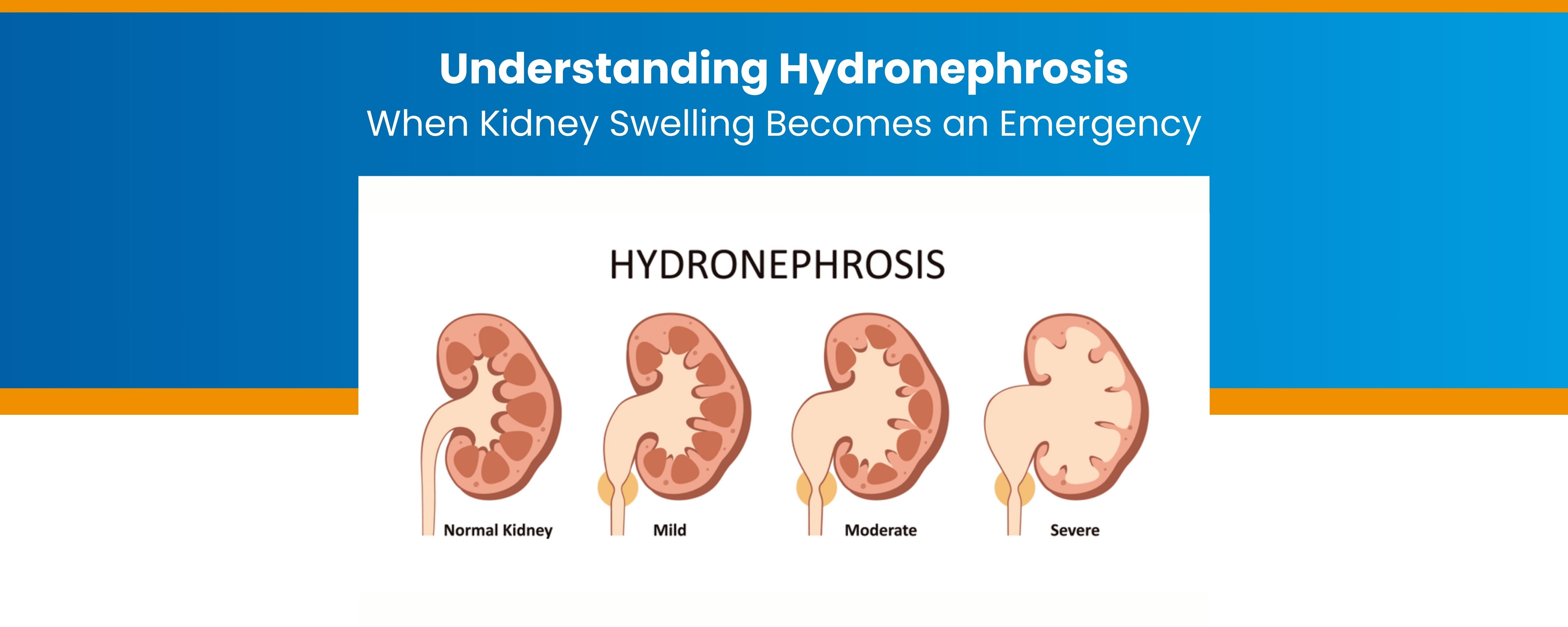
A functioning kidney is essential for removing waste products from the body, primarily by filtering and excreting them in urine. When this process is disrupted by an obstruction or blockage, it can cause problems, potentially even irreversibly damaging the kidneys function. One notable consequence of such a blockage is hydronephrosis, which occurs when urine backs up, causing the kidney to swell.
It’s crucial to remember that hydronephrosis isn't a medical condition, but a critical warning sign of an underlying obstruction. Understanding when this swelling shifts from a manageable issue to a medical emergency is vital for long-term health.
What is Hydronephrosis?
Hydronephrosis is the swelling of a kidney caused by urine buildup. To be more exact, in case urine does not pass properly, the renal pelvis - in which it accumulates before entering the ureter - swells. When this pressure is prolonged over a long period of time, it can lead to long-term damage such as kidney failure.
In many cases, the issue is caused by an obstruction at the Pelvi-Ureteric Junction (PUJ). This is a narrow point where the kidney attaches to the ureter. A constriction or bend at that point is referred to as a PUJ obstruction. Identifying the root cause is the first step toward effective kidney swelling treatment.
Is Kidney Hydronephrosis a Serious Condition?
The severity of any blockage depends entirely on the duration and the pressure exerted on the renal pelvis. While the body can often compensate for minor issues, prolonged hydronephrosis in adults creates increased pressure, which can quietly destroy the organ's function.
-
Risk of Atrophy: Persistent pressure from trapped urine can lead to the thinning of kidney tissue. This reduces its capacity to filter blood over time and will shrink the kidney.
-
Sepsis Vulnerability: Accumulated urine creates an ideal environment for bacterial growth. Once infection occurs behind the blockage, it may easily enter the bloodstream and lead to systemic problems.
-
Irreversible Damage: Some diseases cause swelling may fully recover, but chronic blockage leaves the kidney permanently scarred. This makes timely kidney swelling treatment very vital to avoid dialysis or a transplant in future.
-
Silent Progression: Chronic swelling is sometimes painless, so one develops a false sense of security as the kidney slowly loses function.
Causes of Hydronephrosis in Adults
The first step in the correct management of hydronephrosis is to identify the cause of the swelling. The causes of this condition may vary considerably, especially in adults, and identifying these factors helps clinicians determine whether monitoring is sufficient or immediate treatment is necessary.
The table below summarises the typical causes that result in a hydronephrosis:
Category |
Specific Cause |
Impact on the Kidney |
Obstructions |
Kidney Stones |
Blocks urine flow within the ureter or renal pelvis. |
Structural |
PUJ Obstruction |
Narrowing at the junction requires PUJ obstruction surgery. |
Compression |
Enlarged Prostate |
Presses against the urethra, causing bilateral urinary tract obstruction. |
Physiological |
Pregnancy |
The expanding uterus physically compresses the ureters. |
Malignancy |
Pelvic Tumors |
Growths in the bladder or cervix that obstruct drainage. |
When Kidney Swelling Becomes an Emergency
While some cases of mild hydronephrosis in adults can be monitored, some "trigger" symptoms necessitate an emergency visit. The consequences of undue delay in such cases can be sepsis or irreparable scarring to the kidney.
1. Fever and Chills
Fever, along with swelling of the kidney, signifies infection of an obstructed kidney, a real urological emergency. Stagnant urine creates an environment where bacteria can multiply rapidly, potentially leading to a life-threatening blood infection.
2. Inability to Pass Urine
Total or severe urine output reduction requires urgent decompression and can be a sign of total or partial (or unilateral) blockage (or a single functioning kidney). This necessitates emergency decompression.
3. Uncontrolled Pain and Vomiting
When the pain cannot be treated at home, and it is also accompanied by recurring vomiting, it demonstrates that the body is in severe stress and cannot maintain sufficient fluids or prescribed drugs. This may result in dehydration and additional kidney overload.
Recognising the Symptoms: When to Act
It is worth noting that swelling of the kidneys is not necessarily accompanied by sharp, evident pain. Sometimes it builds up quietly. But when symptoms do show up, they often mirror the distress of the urinary tract under pressure.
Common Warning Signs:
-
Sudden Flank Pain: An individual can experience sudden, severe pain in the side/back, often referred to as renal colic.
-
Nausea and Vomiting: The common reactions to the excessive pain and pressure are nausea and vomiting.
-
Urinary Changes: A desperate urge to urinate too often or a feeling that the bladder is not empty.
-
Fever: This is a dangerous sign - it usually indicates that the stagnant urine may have become infected.
Diagnosis and Modern Imaging
The diagnostic process is also simplified at specialised centres, such as NU Hospitals, to eliminate delays. Urologists typically use a combination of tools to assess the severity of the swelling.
-
USG KUB: An Ultrasound is a clear view of the renal pelvis and reveals precisely the degree of swelling of the pelvis.
-
Contrast-enhanced CT KUB: This is considered the "Gold Standard" of imaging, as it provides a very clear picture of the location of any obstruction, such as a 5mm stone, a congenital narrowing in the ureter, or a tumour.
-
DTPA Renal Scan: This is a functional test that determines how severely renal swelling has affected the kidney's blood flow and filtration.
Advanced Kidney Swelling Treatment Options
The possible treatment goals for kidney swelling are to lower pressure in the kidneys and address the underlying cause of the obstruction.
Conservative Management
In case the swelling is due to a small stone (around 5mm), Medical Expulsive Therapy (MET) can be prescribed. This involves using a medication that dilates the ureter and reduces swelling.
Surgical Intervention
In case the blockage is structural in nature (e.g., chronic PUJ obstruction), surgery should be done to preserve the kidney.
The NU Hospitals Approach to Hydronephrosis Treatment
The quality of surgical repair determines the long-term health of the kidney after a diagnosis of a physical block (such as a PUJ obstruction). More developed, specific techniques are being introduced in place of traditional methods at NU Hospitals. The most innovative technique is robotic pyeloplasty, a robotic procedure that provides a surgical practitioner with a three-dimensional, magnified view of the renal pelvis and adjacent structures. It enables accurate reconstruction of the urinary system, creating a wider, longer-lasting drainage passage.
The application of robotic technology at NU Hospitals has led to much less invasive surgery with significantly reduced postoperative pain, allowing patients to resume their normal daily lives soon after. This professional practice not only clears the existing blockage but also aims to prevent its recurrence in the future by providing high reconstructive quality.
Prevention Strategies: Reducing the Risk of Future Obstructions
Although congenital structural causes exist, most causes of adult hydronephrosis are preventable. Hydronephrosis can be prevented to a great extent through proper lifestyle management and regular health check-ups.
-
Optimal Hydration: It is better to drink sufficient water to prevent minerals from forming crystals; therefore, the risk of developing a stone that may obstruct the renal pelvis will be minimised.
-
Prostate Monitoring: In male patients, frequent prostate check-ups are necessary to treat BPH before it gets blocked.
-
Timely UTI Treatment: Early intervention for UTIs can prevent inflammation and scarring that may lead to PUJ stenosis or ureteral constriction.
-
Sodium and Oxalate Control: A healthy urinary tract can be maintained by adjusting one's diet to reduce salt intake and limit foods that can cause stones.







