 Nephrology
 Urology
 Andrology
 Fertility (IVF)
 General Nephrology
 Paediatric Nephrology
 Dialysis
 Renal (Kidney) Biopsy
 CRRT
 Peritonial Dialysis
 Robotic Surgery
 Urinary Incontinence
 Uro-Oncology
 Laparoscopic Urology
 Reconstructive Urology
 Anaesthesiology
 Radiodiagnosis
 Nutrition and Dietetics
 Pediatric and Immunization
 Cardiology
 Intensive Care Unit





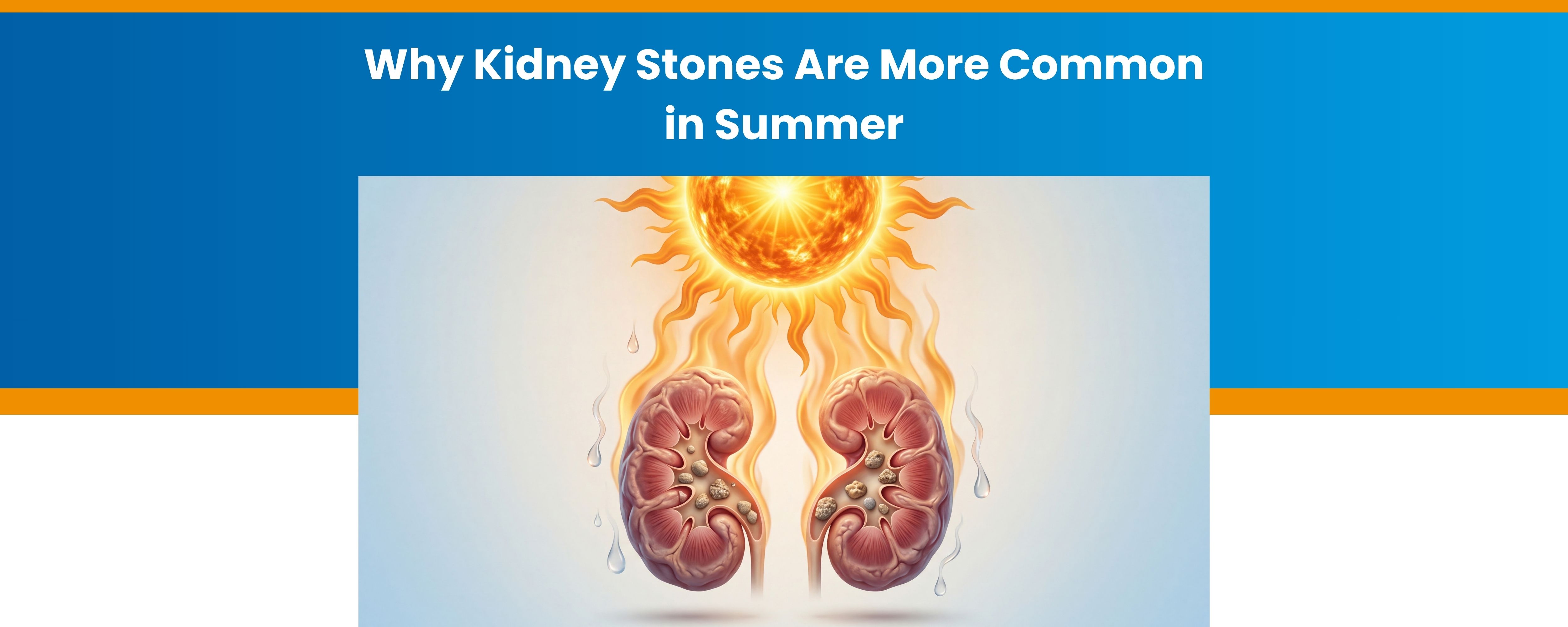
Summer in India is quite brutal. The sun is always too harsh, making us tired and thirsty most of the time.
This makes our body dehydrated even when we do not realize it.
Every year, doctors across our country see a sharp rise in kidney stones during the hotter months. This rise in kidney stones in summer is not random.
When our body loses fluids through sweat and does not get enough water, our urine becomes concentrated. Minerals and salts that get flushed out now start sticking together. Over time, these crystals grow into stones, increasing your risk of kidney stones.
At NU Hospitals, Bengaluru, our urologists notice this seasonal trend year after year. A large number of patients who do not drink enough water during the heat go through this condition.
However, the good news is that most summer-related kidney stones are quite preventable. Making changes in your diet and daily habits can help you lower the chances of stone formation.
Follow this guide to learn more about how you can prevent kidney stones in summer.
Why Summer Increases the Risk of Kidney Stones in India
The Indian summer is quite challenging as temperatures rise, and our bodies lose moisture faster. In India, the combination of high temperatures and regional dietary habits increases the risk of kidney stones between March and July.
What Are Kidney Stones? – Medical Overview by NU Hospitals
Kidney stones (nephrolithiasis) are hard deposits of minerals and salts that form inside your kidneys.
How Kidney Stones Form in the Urinary Tract
When your urine contains more crystal-forming substances, such as calcium, oxalate, and uric acid, these crystals stick together, forming small "stones."
Over time, more minerals attach to the small stones, creating a stone that can range from a grain of sand to a golf ball.
Types of Kidney Stones Commonly Diagnosed
-
Calcium oxalate stones
-
Uric acid stones
-
Struvite stones
-
Cystine stones
Why Are Kidney Stones More Common in Summer?
Dehydration in Hot Weather Concentrates Minerals in Urine
When you are dehydrated, your kidneys conserve water.
This results in dark, highly concentrated urine.
In this thick urine, minerals such as calcium and oxalate bump into each other and bond together.
Excessive Sweating Reduces Urine Output
Sweating is your body's cooling mechanism, but it diverts water away from your kidneys.
Less water passing through your kidneys means less flushing of waste products, increasing the risk of kidney stones.
High Salt Intake in Summer Increases Calcium Excretion
Indian summer snacks are filled with sodium.
High salt intake forces your kidneys to excrete more calcium into your urine.
This makes calcium stones form faster.
Sugary Drinks and Summer Diet Habits That Raise Stone Risk
-
Soft drinks and packaged juices are high in sugar. This increases stone-forming chemicals.
-
Low water intake can worsen your dehydration.
Heat Exposure, Outdoor Work, and Travel During Indian Summers
-
Construction workers, drivers, and delivery staff travel long hours without water.
-
High exposure equals a higher risk of kidney stones.
Early Signs and Symptoms of Kidney Stones
Knowing the early symptoms of a kidney stone can help to protect you from emergencies.
Common Early Symptoms You Should Not Ignore
-
Burning sensation while urinating
-
Frequent urge to urinate
-
Mild lower back or side pain
-
Cloudy or foul-smelling urine
You must not ignore these early symptoms of kidney stones.
Warning Signs That Require Immediate Medical Attention
-
Severe back pain
-
Blood in urine
-
Fever with chills
-
Vomiting and nausea
Who Is at Higher Risk of Kidney Stones During Summer?
You are at risk of getting a kidney stone if you fall under these categories.
-
People With a Previous History of Kidney Stones
-
Patients With Diabetes, Obesity, or Gout
-
Children, the elderly, and Outdoor Workers in Hot Climates
-
Professionals With Long Working Hours and Poor Hydration
How to Prevent Kidney Stones in Summer – Doctor-Recommended Tips
How Much Water Should You Drink Daily to Prevent Kidney Stones?
-
Ask your doctor what the perfect amount of water is for you, as it varies from person to person.
-
Drink an adequate amount of water each day, enough to pass clear or pale-yellow urine.
Best Fluids to Reduce Kidney Stone Risk in Summer
-
Plain water
-
Lemon water
-
Coconut water (in moderation)
-
Buttermilk
Dietary Changes to Prevent Kidney Stones in Hot Weather
-
Reduce salt intake
-
Limit processed and fast foods
-
Avoid excess spinach, nuts, and chocolates
-
Eat seasonal fruits with high water content
Simple Hydration Habits to Protect Kidney Health
-
Carry a water bottle
-
Set reminders for drinking water
Can Kidney Stones Be Prevented With Lifestyle Changes?
Role of Diet, Hydration, and Regular Health Check-Ups
-
Consistent hydration is very important
-
A balanced diet helps to lower your risk of kidney stones
-
Annual urine and kidney scans help with early detection
When Preventive Medication May Be Required
-
Constant stone formation
-
Metabolic abnormalities
Indian Dietary Habits Linked to Kidney Stone Formation
-
Most indian food contains high amounts of salt
-
Excess tea and sugary drinks also lead to kidney stones.







