 Nephrology
 Urology
 Andrology
 Fertility (IVF)
 General Nephrology
 Paediatric Nephrology
 Dialysis
 Renal (Kidney) Biopsy
 CRRT
 Peritonial Dialysis
 Robotic Surgery
 Urinary Incontinence
 Uro-Oncology
 Laparoscopic Urology
 Reconstructive Urology
 Anaesthesiology
 Radiodiagnosis
 Nutrition and Dietetics
 Pediatric and Immunization
 Cardiology
 Intensive Care Unit




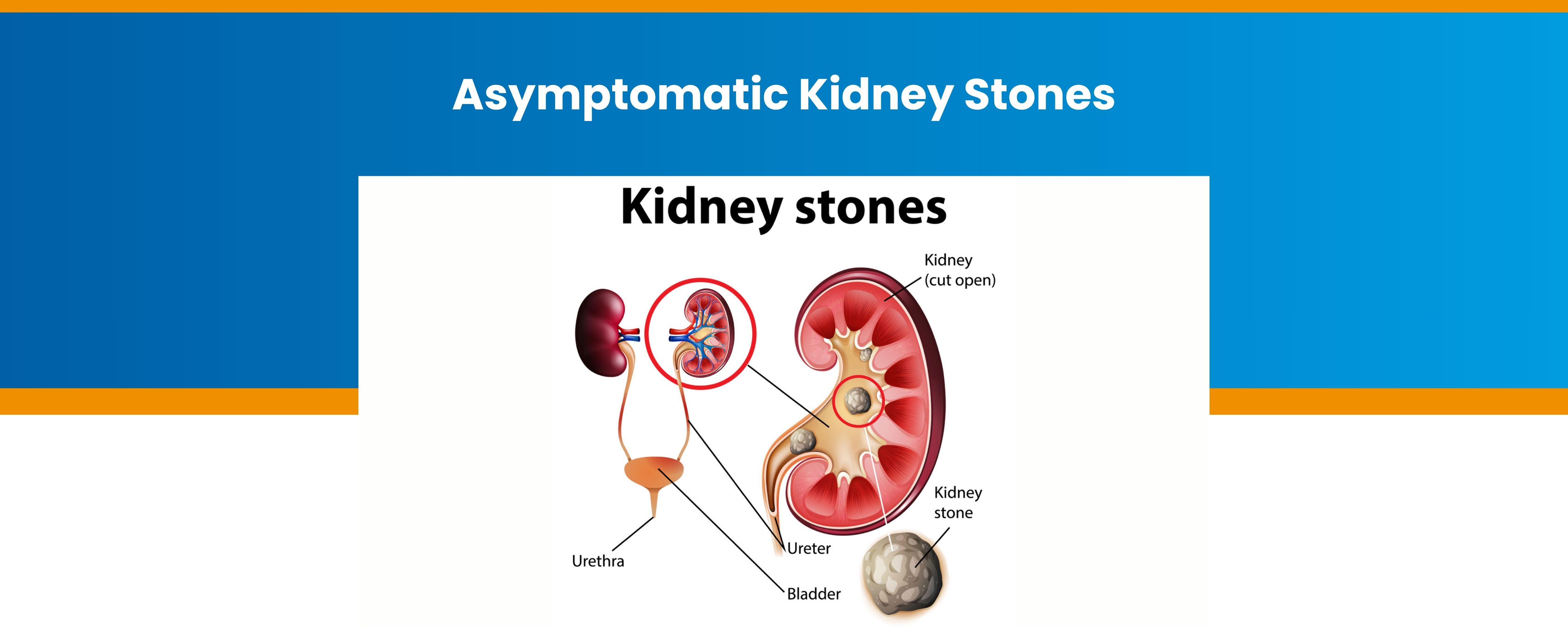
Kidney stones generally cause mild to severe pain; however, in some cases, they may cause no pain. There are instances where the kidney stones grow without pain and symptoms gradually until people understand what happened to their kidneys from chronic infection and structural damage caused by the stone. Silent stones may remain in your body for years before being discovered during routine ultrasound imaging or a CT scan. A very large kidney stone, such as a Staghorn Calculus, can cause hydronephrosis, renal parenchymal thinning, obstructive uropathy, leading to complete loss of function without symptoms. In this article, we will look at asymptomatic kidney stones, the diagnosis of a kidney stone, the complications of having an asymptomatic kidney stone, and the importance of detecting asymptomatic kidney stones using preventive imaging to prevent irreversible kidney damage or nephrectomy.
What are Asymptomatic Kidney Stones?
"Silent" stones typically don't cause any pain or bleeding, and very often do not produce any urinary symptoms. As a result, many people do not realise they have these stones until they are detected by ultrasound imaging or a CT scan. Whether to treat or monitor these asymptomatic stones depends on the size, type, and location of the stone.
On the other hand, symptomatic stones cause intense flank pain while passing through the urinary tract. Silent stones may stay where they are for many years. The absence of pain from kidney stones does not indicate an absence of risk. Silent stones can continue to grow larger, harbour bacteria, or progressively block drainage from the kidney, ultimately leading to permanent kidney damage.
How are Silent Kidney Stones Detected?
Imaging conducted for other medical conditions frequently shows asymptomatic kidney stones.
Stones may be discovered through an ultrasound examination of the abdomen for liver, gallbladder, or gynecologic issues, in which case they were observed as echogenic foci with acoustic shadows.
Abdominal CT scan for appendicitis, trauma evaluation, or cancer screening may detect silent kidney stones.
When preoperative imaging is performed before abdominal or pelvic surgery, stones that were never known may be detected.
After detection of the stones, the next step is proper evaluation, regardless of whether renal symptoms are present.
Silent vs. Symptomatic Stones
Feature |
Silent stones |
Symptomatic stones |
Pain level |
No pain |
Severe colicky pain |
Obstruction |
Often absent initially |
Acute obstruction is common |
Detection |
Detected during incidental imaging |
Emergency presentation |
Infection risk |
Chronic low-grade infection may occur |
May be occasionally associated with acute UTI |
Stone size |
Can grow very large |
Often detected early |
Kidney damage |
Slow progressive damage |
Acute symptoms lead to early detection and care |
The Silent Damaging Effects of Untreated Kidney Stones
As kidney stones get bigger, they can sometimes disrupt the normal flow of urine, causing both long-term and serious complications by quietly damaging kidney structures as time goes on.
Hydronephrosis is the result of the build-up of pressure in the kidney when a stone blocks the normal flow of urine through the kidney. The increased pressure within the kidney can cause swelling of the kidney tissue. With prolonged pressure, the kidney blood supply can be compromised, leading to damage to functional kidney structures.
Chronic pressure and inflammation from stones can lead to a gradual reduction in renal parenchymal thickness. The renal parenchyma filters blood; therefore, loss of renal parenchyma leads to eventual loss of kidney function.
Even a partial obstruction of urine flow can lead to chronic back pressure changes, which may result in declining kidney function, recurring urinary tract infections, and progressive filtration decline.
One seriously worrisome effect of untreated stones is that the loss of kidney function can happen without any symptoms on the patient's part. Patients may not realise they are losing kidney function until tests show the abnormalities.
In situations where there is infection and structural damage, it may be necessary to perform surgery on the affected kidney and remove it. The removal of the kidney (nephrectomy) will prevent further complications and a systemic infection from occurring.
Diagnostic Triggers for Silent Stones
Diagnostic trigger |
Why is imaging done? |
Stones details |
Routine ultrasound |
General checkup |
Small or large stones seen incidentally |
CT scan for back pain |
Musculoskeletal evaluation |
Small or large stones detected |
Preoperative imaging |
Surgical clearance |
Incidental stone detected |
Recurrent UTIs |
Infection workup |
Stone likely source of UTI |
Abnormal kidney tests |
Elevated creatinine |
Thinning of renal parenchyma detected |
NU Hospitals Preventive Imaging Protocol
NU Hospitals' preventive imaging protocol is designed to provide early, structured screening for patients to detect and treat kidney stones before symptoms develop or permanent damage occurs. Routine renal ultrasound serves as the initial, first-line screening tool and may be combined with low-dose CT scans for additional diagnostic accuracy when necessary.
Ultrasound helps early identify kidney stones and hydronephrosis, while CT scans can also detect very small, radiolucent stones that may otherwise be classified as "silent."
Early identification allows the clinician to pursue a variety of therapies, including hydration plans, dietary changes, pharmacotherapy, or minimally invasive procedures, before complications develop.
This proactive imaging approach helps prevent progressive kidney obstruction caused by stones and, by reducing the likelihood of irreversible renal scarring or chronic infection, significantly reduces the incidence of avoidable nephrectomy.
The benefits of routine imaging are particularly pronounced in patients with high-risk symptoms such as recurrences of urinary calculi, metabolic abnormalities, or a history of urinary tract infection, as these patients will have an increased risk for suffering long-term renal damage if the condition goes unmonitored.








