 Nephrology
 Urology
 Andrology
 Fertility (IVF)
 General Nephrology
 Paediatric Nephrology
 Dialysis
 Renal (Kidney) Biopsy
 CRRT
 Peritonial Dialysis
 Robotic Surgery
 Urinary Incontinence
 Uro-Oncology
 Laparoscopic Urology
 Reconstructive Urology
 Anaesthesiology
 Radiodiagnosis
 Nutrition and Dietetics
 Pediatric and Immunization
 Cardiology
 Intensive Care Unit




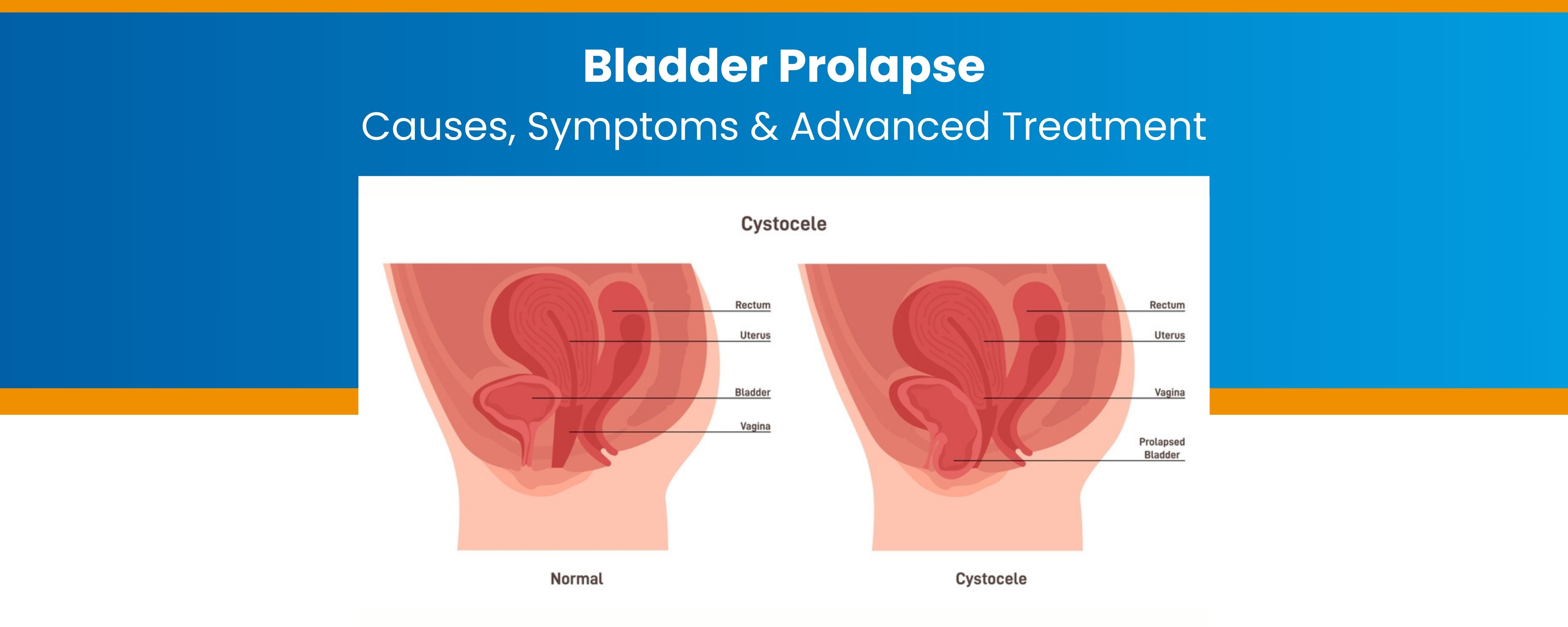
Bladder prolapse (cystocele) simply means stretched pelvic tissues (after birth/ageing) allow the bladder to descend into the vagina. While the symptoms are uncomfortable and it can be advanced, this is a common issue. The good news is that treatment successfully restores your comfort and function. Read on to get answers to questions like “What is Cystocele (bladder prolapse)?” and how it can be treated.
What is a cystocele?
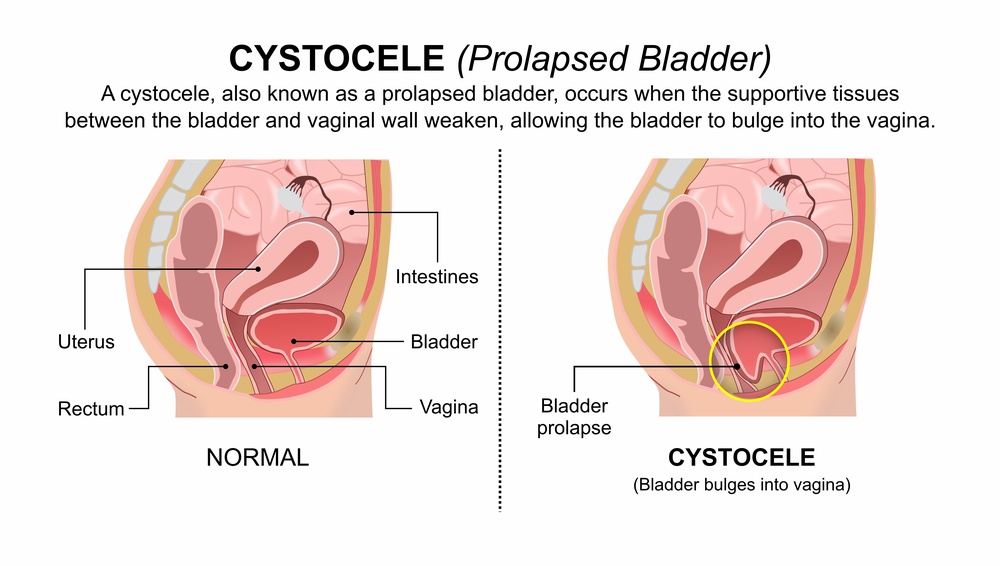
A cystocele (fallen bladder) occurs when the muscles and tissues that support the bladder lose strength. This causes the bladder to sag and push into the vagina. It is one type of pelvic organ prolapse.
There are three types of Cystocele:
-
Grade 1 (mild): The bladder drops a small distance into the vagina.
-
Grade 2 (moderate): The bladder reaches or slightly passes the vaginal opening.
-
Grade 3 (severe): The bladder protrudes well beyond the vaginal opening.
Causes of a prolapsed bladder
Your pelvic floor offers essential support. If tissues weaken over time (such as after childbirth or repeated straining), the bladder may descend and bulge, resulting in anterior prolapse. Be kind to yourself, and identify the causes and risk factors.
Common sources of stress include:
-
Vaginal delivery and pregnancy
-
Excess body weight or obesity
-
Heavy lifting, done repeatedly
-
Straining from chronic constipation
-
Persistent cough or bronchitis
Symptoms of a Cystocele
Cystocele common symptoms may include:
-
A bulge felt or seen at the vaginal opening.
-
Pelvic heaviness or pressure that may worsen when standing, lifting heavy objects, coughing, or later in the day.
-
Needing to urinate more often than usual.
-
Difficulty fully emptying the bladder.
-
Frequent urinary tract infections.
-
Trouble inserting tampons or menstrual cups.
Risk Factors of Prolapse Bladder
The factors that increase the risk of having a prolapsed bladder include:
-
Childbirth: Childbirth is a significant risk factor. Vaginal or assisted deliveries, especially with large babies, severely weaken pelvic muscles.
-
Ageing: Risk increases as you age, especially after menopause.
-
Hysterectomy: Some women may experience pelvic floor weakness after the removal of the uterus.
-
Genetics: Being born with weaker connective tissue raises the risk.
-
Obesity: Extra body weight puts more pressure on pelvic organs.
Diagnosis
Accurate diagnosis and testing are essential for determining severity and treatment needs. Prolapse is diagnosed via two immediate steps: taking your clinical history and conducting a pelvic exam. You must be prepared to assume different positions for the exam, including lying down, standing, or bearing down, so your provider can accurately measure the severity and map the affected vaginal areas. Further assessment of the pelvic floor may require supplemental tests. These include: cystoscopy, urodynamics, X-rays, ultrasound, and MRI.
Bladder Prolapse Treatment
Several treatment and prevention options are available depending on symptoms and stage. Treatment options include:
Conservative Management
If prolapse isn't painful or causing urinary problems, you may not need treatment. Simple care uses exercises, physiotherapy, and pessaries for support. Sometimes oestrogen helps make tissues stronger.
Surgery
The ultimate aim of this surgery is the correction of physical defects and the immediate improvement of your existing symptoms. The operation may utilise either a vaginal or an abdominal access route. Here are the precise ways the surgical correction can be performed:
-
Open Surgery: Requires a single, traditional incision (cut) made through the abdominal wall.
-
Minimally Invasive Surgery (MIS): Achieved using several small incisions (cuts) placed in the abdomen.
-
Laparoscopic Surgery: The doctor manually guides special tools through small incisions in the abdominal wall.
-
Robot-Assisted Laparoscopic Surgery: Highly articulated robotic instruments are placed through the abdominal wall. They are controlled entirely by the surgeon from a remote console, enhancing precision.
Reconstruction Material Choices:
-
Native Tissue Repair: Utilises only your body's existing, local tissue reinforced with standard sutures.
-
Augmentation with Surgical Material: Sometimes, they add a special, supportive surgical material to give the repair extra staying power.
-
Biological Graft: This uses a natural biological support material to reinforce the correction.
It is absolutely vital to have a long, in-depth, and honest conversation with your surgeon. You need to fully understand the potential risks, the significant benefits, and any other treatment options for your cystocele. Giving informed consent is essential. Remember, you should never sign anything until every single one of your questions has been answered to your complete satisfaction by your medical team.
If this prolapse is not treated, it may remain the same, but more often it worsens slowly over time. In rare but serious cases, a severe prolapse can press on the ureters, causing kidney obstruction or the inability to fully empty your bladder (urinary retention), which can lead to infection or kidney damage.
Cystocele Prevention
Bladder prolapse (cystocele) is a serious concern that compromises quality of life. The critical takeaway is that you can actively reduce your risk of recurrence. Prevention is not passive; it requires deliberate action and consistent lifestyle modification. Implement these changes now to secure better pelvic stability and long-term health.
Take immediate action with these key preventive strategies:
-
Start Pelvic Floor Strengthening: Immediately integrate Kegel exercises into your daily routine. This directly builds the muscle and nerve strength needed to control symptoms and halt prolapse progression.
-
Keep a Healthy Weight: Too much weight pushes down on your pelvic area. Eat more fruits and veggies and exercise often to keep your body weight in the best range.
-
Lift Light and Lift Smart: Heavy lifting can damage the tissues that hold up your bladder and other organs. Avoid lifting heavy weights or use the proper lifting technique.
-
Fix Constipation: Straining to go to the bathroom can cause prolapse. Always try to prevent constipation and never push hard when you are having a bowel movement.
-
Control Your Cough: Coughing pushes the pelvic floor down. If you cough a lot or hard, it stretches the support tissues. Get a chronic cough checked and managed.
Conclusion
Bladder prolapse is a prevalent condition that is effectively managed. No need to feel embarrassed! It’s simply a result of factors like giving birth or getting older. You have many paths to feeling better, from easy methods like Kegels and pessaries to highly successful surgery. Knowing when to consult a urologist ensures timely diagnosis and care. The most important thing is reaching out to a professional who can confirm your needs and plan your return to comfort.








