 Nephrology
 Urology
 Andrology
 Fertility (IVF)
 General Nephrology
 Paediatric Nephrology
 Dialysis
 Renal (Kidney) Biopsy
 CRRT
 Peritonial Dialysis
 Robotic Surgery
 Urinary Incontinence
 Uro-Oncology
 Laparoscopic Urology
 Reconstructive Urology
 Anaesthesiology
 Radiodiagnosis
 Nutrition and Dietetics
 Pediatric and Immunization
 Cardiology
 Intensive Care Unit





Overview
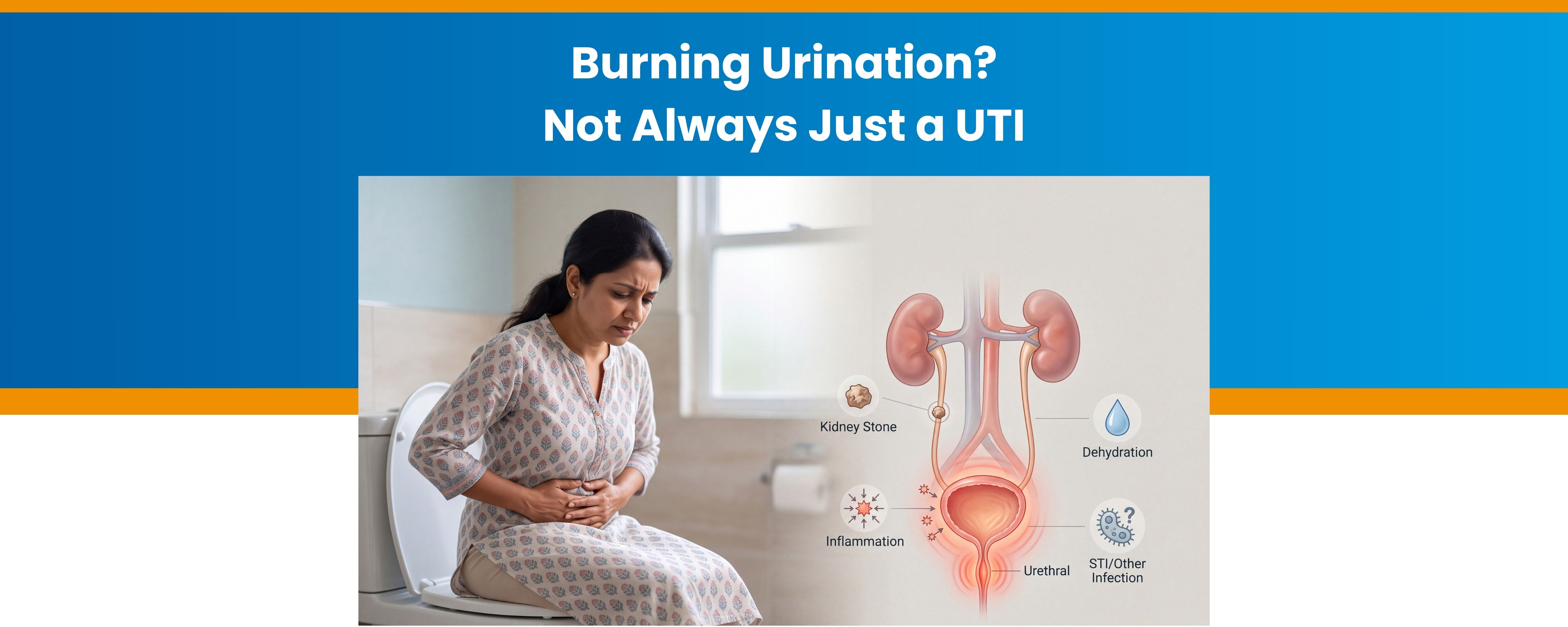
Burning while passing urine is often linked to a urinary tract infection (UTI). However, that is not always the only possible reason. Burning urination causes can also include urethral irritation, bladder inflammation, vaginal infections, or even stones in the urinary tract.
That is why it is important not to assume every episode is a simple UTI. While urinary infection signs may include urgency, frequency, cloudy urine, lower abdominal discomfort, and burning, these symptoms can overlap with other conditions. Hence, a proper diagnosis from a reliable healthcare institution, such as NU Hospitals, becomes very important.
What is a Burning Sensation While Urinating?
The burning sensation is a type of pain or discomfort that may feel like a stinging sensation when a person passes urine. It is more commonly reported in women. This usually happens when the urinary tract becomes swollen or sore.
What are the Symptoms that Occur With Burning Urination?
Burning urination comes along with several other symptoms, which are not only UTI symptoms, such as -
-
Frequent Urination, which may suggest bladder irritation
-
Urinary urgency that indicates bladder or urethral inflammation
-
Pain during urination; usually linked to cystitis or urethritis
-
Blood in the urine, which may be caused by inflammation or a serious urinary issue
-
Back or flank pain, often indicating possible kidney issues
Understanding Burning Urination Causes
Here is a tabular representation of some painful urination causes -
Causes |
How it Leads to Burning Urination |
Urinary Tract Infection |
Infection in the bladder or urinary tract can irritate the lining and cause a burning feeling while urinating. |
Urethritis |
Inflammation of the urethra can cause sharp burning during urination and may sometimes be linked with discharge. |
Bladder Inflammation (cystitis) |
Inflammation of the bladder, often due to infection, can make urination painful and uncomfortable. |
Kidney Infection |
A kidney infection can cause painful urination along with fever, back pain, chills, or nausea. |
Kidney Stones or Urinary Stone |
Stones can irritate the urinary tract lining and cause burning, pain, or blood in urine. |
Sexually Transmitted Infections (STIs) |
Some infections affecting the urethra can lead to irritation, inflammation, and burning while passing urine. |
Dehydration and Concentrated Urine |
Sometimes drinking a little water can cause the urine to become concentrated |
Yeast Infection |
It can inflame and irritate the vaginal and vulvar tissues, so urine passing over the irritated area may cause burning. |
Prostatitis |
Prostatitis is inflammation or infection of the prostate. Because the urethra passes through the prostate, swelling and irritation can cause painful or burning urination. |
Genital Herpes |
Genital Herpes can cause blisters, ulcers, and inflamed skin around the vagina. When urine touches these sores, it can cause sharp, burning pain. |
Gonorrhea |
It can infect and inflame the urethra, causing irritation, discharge, and a burning sensation while passing urine. |
Medical or Chemical Irritation |
Certain medicines and products, such as soaps, feminine hygiene products, or spermicides, can irritate the urethra. |
When to See a Doctor?
It is advised to see a doctor if a patient experiences burning while urinating, in addition to other symptoms, such as frequency, urgency, chills, fever, or back pain. This is because burning urination causes discomfort, which might also affect daily life. If required, the doctors may conduct -
-
Urine Tests: These are done to check for signs of infection, pus cells, blood, protein, crystals, and other abnormalities that may explain burning urination.
-
STD Screens: This helps determine if the burning pee reason is STDs. To determine the root cause, the doctor might advise urine tests, genital swabs, blood tests, or a physical examination.
-
Imaging Tests: Ultrasound and other imaging tests can be performed to identify problems when basic urine tests do not detect them. Sometimes RGU (retrograde urethrogram) and MCU (micturating cystourethrogram) is needed if suspecting stricture urethra or urethral diverticulum.
-
Cystoscopy: Doctors may use a thin, camera-equipped tube to examine the urethra and bladder. This is usually done if symptoms recur or blood appears in the urine.
Why is it Important to Address Burning Urination Symptoms?
Burning urination causes severe discomfort, in addition to pain and a tingling sensation while urinating. Hence, it is advised to seek immediate medical help to reduce the painful urination symptoms -
-
If the symptoms are ignored, the burning urination may keep returning, causing disturbance in daily life.
-
It might indicate a more serious urinary problem, such as bladder stones, prostatitis, sexually transmitted infections, kidney dysfunction, etc.
-
If the treatment is delayed, it may allow the infection to spread upward. Thus, increasing the risk of kidney involvement.
-
Burning urination with blood, fever, or back pain needs prompt medical attention, as these are red-flag symptoms.
-
Timely and proper diagnosis helps identify the exact cause. This allows proper treatment based on the condition and the symptom.
-
Prompt medical care can reduce pain and prevent complications. This mostly helps if painful urination is linked to infection or inflammation.
-
It helps rule out non-UTI causes. This is because burning while urinating is not always caused by a urine infection.
How to Prevent Burning Urination?
Here are a few ways to prevent and manage burning urination -
-
Get the Right Diagnosis
There are several reasons for burning urination, such as STIs, UTIs, stones, prostate issues, etc. It is important to first determine the cause through a routine urinalysis, a urine culture, STI testing, or imaging, as needed.
-
Stay Hydrated
Adequate fluid intake helps flush the urinary tract and may reduce the risk of bladder infections and irritation. Water is generally the best option.
-
Do Not Hold Urine
Passing urine on time is also important. This is because holding urine for too long can allow bacteria to remain in the bladder longer. If you feel the urge to urinate less frequently than usual, consider consulting a doctor.
-
Quit Smoking
Smoking can worsen burning urination indirectly by irritating the bladder and making urinary infection symptoms feel worse. It is also a major risk factor for bladder cancer, and bladder cancer can sometimes cause pain or burning during urination. Quitting smoking is recommended in bladder pain conditions because it can reduce bladder irritation and improve overall urinary health.
-
Avoid Irritants
Always be wary of chemical or product-related irritation when trying a new product. Deodorants, intimate wash, powders, harsh soaps, etc, can irritate the genital area and urethral opening. Limiting their use, or not using them at all, can help prevent burning urination.
A burning sensation while urinating is not something to ignore. Though it may occur for several reasons, it is always best to consult a doctor. The discomfort may be caused by minor factors, such as dehydration, or by more serious conditions, such as infections or sexually transmitted diseases.
How Can NU Hospitals Help With Burning Urination?
NU Hospitals helps manage burning urination through accurate diagnosis, specialist evaluation, and treatment tailored to the actual cause behind the symptom. While many people assume it is only a UTI, burning pee reasons can include bladder infection, urethral irritation, prostate problems, stones, sexually transmitted infections, or other urological conditions.
NU Hospitals urology care pathway also includes urine testing, urine culture, imaging, and further diagnostic evaluation to identify the source of discomfort and plan the right treatment. Their patient education resources also highlight common urine infection signs such as burning while urinating, urgency, frequent urination, cloudy urine, and lower abdominal discomfort, helping patients recognise when to seek care early.







