 Nephrology
 Urology
 Andrology
 Fertility (IVF)
 General Nephrology
 Paediatric Nephrology
 Dialysis
 Renal (Kidney) Biopsy
 CRRT
 Peritonial Dialysis
 Robotic Surgery
 Urinary Incontinence
 Uro-Oncology
 Laparoscopic Urology
 Reconstructive Urology
 Anaesthesiology
 Radiodiagnosis
 Nutrition and Dietetics
 Pediatric and Immunization
 Cardiology
 Intensive Care Unit




Surgical removal of the penile foreskin is known as circumcision. Circumcision is typically performed on babies, although it is also possible for adults and older children.
Circumcision can be done for medical or religious purposes. It is a procedure where the foreskin covering the glans of the penis is removed.
Newborn babies undergo circumcision within a few days of birth. Did you know that 30% of the male population in the world is circumcised?
It is a prevalent religious practice in Judaism and Islam. The highest circumcision rates can be found in the US, the Middle East and South Korea.
Circumcision is to be performed with utmost precision. Our pediatric urologists at NU Hospitals, Bangalore, ensure your baby receives the best care during and post-surgery.
This blog is for parents like you who are looking for answers about circumcision in children.
Read on as we learn about the circumcision procedure, benefits, risks, aftercare, and recircumcision.
Why Choose Circumcision for Children?
Parents might choose to get their child circumcised for either medical or cultural reasons.
Circumcision is also practised in certain communities as a tradition by a religious leader.
After birth, doctors might advise circumcision if there are medical complications.
What Are the Medical and Cultural Reasons for Circumcision in Boys?
If your child is diagnosed with the following conditions, you would be advised to get a circumcision for them.
Phimosis (tight foreskin)
It is a condition where the foreskin cannot be completely retracted over the glans. This can cause pain, discomfort, and difficulty while urinating. It can be a congenital case or acquired due to infections, inflammation, or scarring.
Balanitis (penile inflammation)
The inflammation of the glans (head of the penis) is known as balanitis. This is usually seen in uncircumcised men due to poor hygiene or infections. It can also be caused by psoriasis or eczema or chemical irritation.
Recurrent UTIs (urinary tract infections)
Having urinary tract infections more than twice in 6 months or over 3 times in a year is called recurrent UTI.
What Is the Best Age for Pediatric Circumcision?
Most babies get a circumcision within the first 48 hours or the first week after birth. It is advised to be performed as soon as possible, as delaying the procedure can be risky.
In a Jewish religious practice, a trained leader called a mohel shall perform the circumcision when the baby is 8 days old. Other communities may perform at a later age according to their norms.
As even older children can get a circumcision, there are no specified age constraints, but getting it done in infancy or early childhood is better for recovery.
Is Circumcision Recommended for Boys in Bangalore?
Your baby boy will be advised for a circumcision when:
-
There are repeated foreskin infections
-
They find difficulty urinating due to a tight foreskin
-
They are diagnosed with medical conditions that require better genital hygiene
Pediatric Circumcision Surgery at NU Hospitals, Bangalore
Our expert urologists will walk you through every step of surgery, pre-surgery preparations and post-surgery care. We help you understand what stands ahead of you and help you with recovery.
How Should Parents Prepare Their Child for Circumcision?
-
A surgery will be scheduled after a consultation with our paediatric urology experts.
-
A few blood tests and health checks are done to check if your baby is fit for surgery.
-
You will be given a clear idea about anaesthesia and post-surgery care.
-
We would advise that your child fast the night before the surgery.
-
Inform about all medications your child is using (even herbal supplements)
-
Inform about all allergies (medical, latex)
Who Performs Circumcision at NU Hospitals in Bangalore?
An experienced pediatric urology surgeon performs the circumcision surgery at NU Hospitals. We ensure that your child receives the best care and better recovery in a safe environment.
Our pediatric urologists are globally trained and have decades of experience in circumcision surgeries. Be assured, your baby’s health is in safe hands.
What Happens During Circumcision Surgery for Children?
-
Circumcision surgery is a day procedure, where kids can go back home on the same day.
-
Depending on the age, general anaesthesia, local anaesthesia, or numbing creams are used.
-
Post-anaesthesia, your baby will be placed on their back.
-
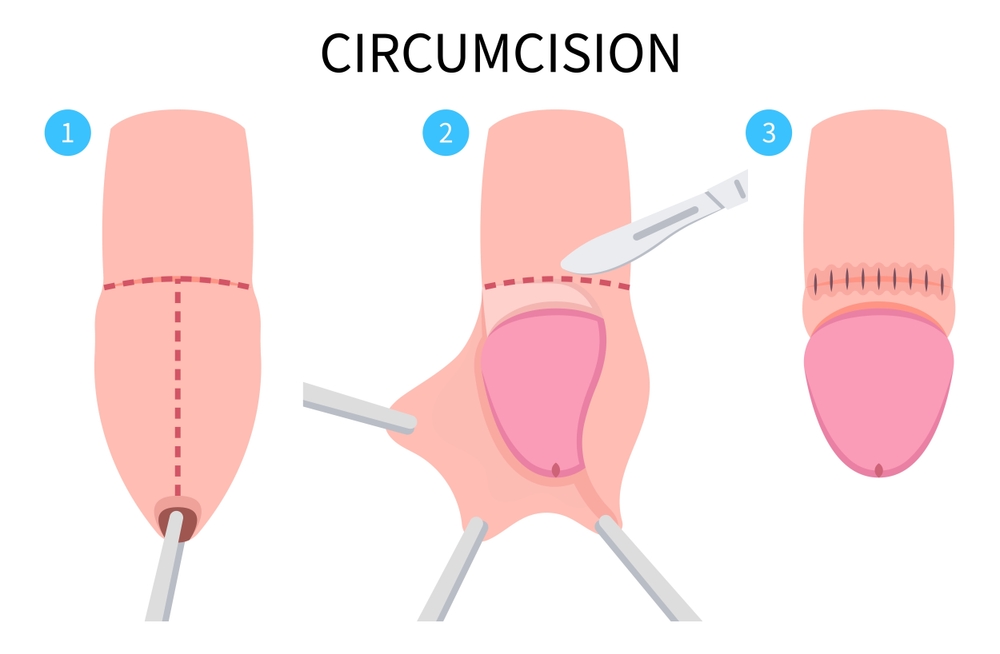
Surgeons will clean the penis
-
They separate the foreskin from the head of the penis
-
Use a scalpel to remove the foreskin
-
For older children, they might use dissolvable sutures
What Types of Circumcision Surgery Are Available at NU Hospitals?
There are three major types of circumcision, including:
1. Gomco clamp
The most common method, the clamp, separates the foreskin from the glans. It helps protect the penile head and stops bleeding.
2. Mogen clamp
Scissor-looking clamps or pliers are used to expose the glans.
3. Plastibell device
A plastic ring is placed between the foreskin and the glans. This is not a common method, as there are high chances of infection risks.
Circumcisions can be done in a conventional method with a scalpel and sutures, while laser and stapler circumcision can also be preferred.
Benefits of Pediatric Circumcision
Research has shown many benefits of a circumcised penis. It can be easier to clean in children and help overall penile health.
What Are the Health Advantages of Circumcision for Boys?
Circumcision helps lower the risk of:
-
Phimosis (inability to pull the foreskin back)
-
Paraphimosis (inability to push the foreskin down over the head of the penis)
-
Balanitis (inflammation of the foreskin and glans)
-
UTIs (Urinary tract infections)
Are There Long-Term Benefits to Childhood Circumcision?
Yes, circumcision can help reduce:
-
STIs
-
Cervical cancer in female partners
-
Improved sexual health
-
Better penile hygiene in adulthood
Circumcision Revision Surgery for Children in Bangalore
If the first surgery has not given the expected outcome, a revision will be advised.
When Is Circumcision Revision Needed in Children?
A revision is recommended if:
-
Too much of the foreskin or too little was removed.
-
There is scarring on the head of the penis.
-
There are cosmetic issues post-surgery.
-
You have found any functional problems after the first surgery.
How Is Revision Circumcision Performed at NU Hospitals, Bangalore?
A revision surgery is also performed by our expert surgeons. They reshape or correct the foreskin to aid proper functionality and appearance.
Recovery is similar to the first circumcision, and you will be guided on how to take care of your baby during their recovery journey.
Risks and Possible Complications of Circumcision in Babies and Children
Circumcision is usually a safe procedure, but like any surgery, there might be some risks involved.
What Are the Potential Side Effects or Risks after Circumcision?
A few potential side effects or risks include:
-
Mild swelling
-
Pain, which can be managed through medication
-
Redness in the surgical region
-
Temporary discomfort
-
Anesthesia complications
-
Irritation at the tip
-
Penile adhesion
-
Infections, bleeding or uneven foreskin removal are very rare complications.
How Safe Is Pediatric Circumcision at NU Hospitals, Bangalore?
Circumcision surgeries at NU Hospitals are the safest with low complications.
These surgeries are performed by our expert pediatric urologists with advanced equipment and child-friendly sterile conditions.
You need not worry about the safety and well-being of your child.
Recovery and Aftercare Following Circumcision
Most babies recover within 10 days after surgery. The penis might look swollen or red while healing.
How Should Parents Care for Their Child’s Penis after Circumcision?
Here is how you can help or care for your child’s penis:
-
Keep the area clean and dry.
-
Apply prescribed ointments and give them the prescribed medication to manage pain.
-
Avoid straddle toys, bicycles or swings. These games can cause pain and delay healing.
When Can the Child Resume School or Activities after Circumcision?
Your child will be able to go to daycare or school within a few days (5-7).
What Signs of Complication Should Parents Watch for after Circumcision?
Look out for:
-
Excessive bleeding that doesn't stop
-
High fever (>100 °F)
-
Persistent swelling
-
Pus or bad smell around the incision








