 Nephrology
 Urology
 Andrology
 Fertility (IVF)
 General Nephrology
 Paediatric Nephrology
 Dialysis
 Renal (Kidney) Biopsy
 CRRT
 Peritonial Dialysis
 Robotic Surgery
 Urinary Incontinence
 Uro-Oncology
 Laparoscopic Urology
 Reconstructive Urology
 Anaesthesiology
 Radiodiagnosis
 Nutrition and Dietetics
 Pediatric and Immunization
 Cardiology
 Intensive Care Unit




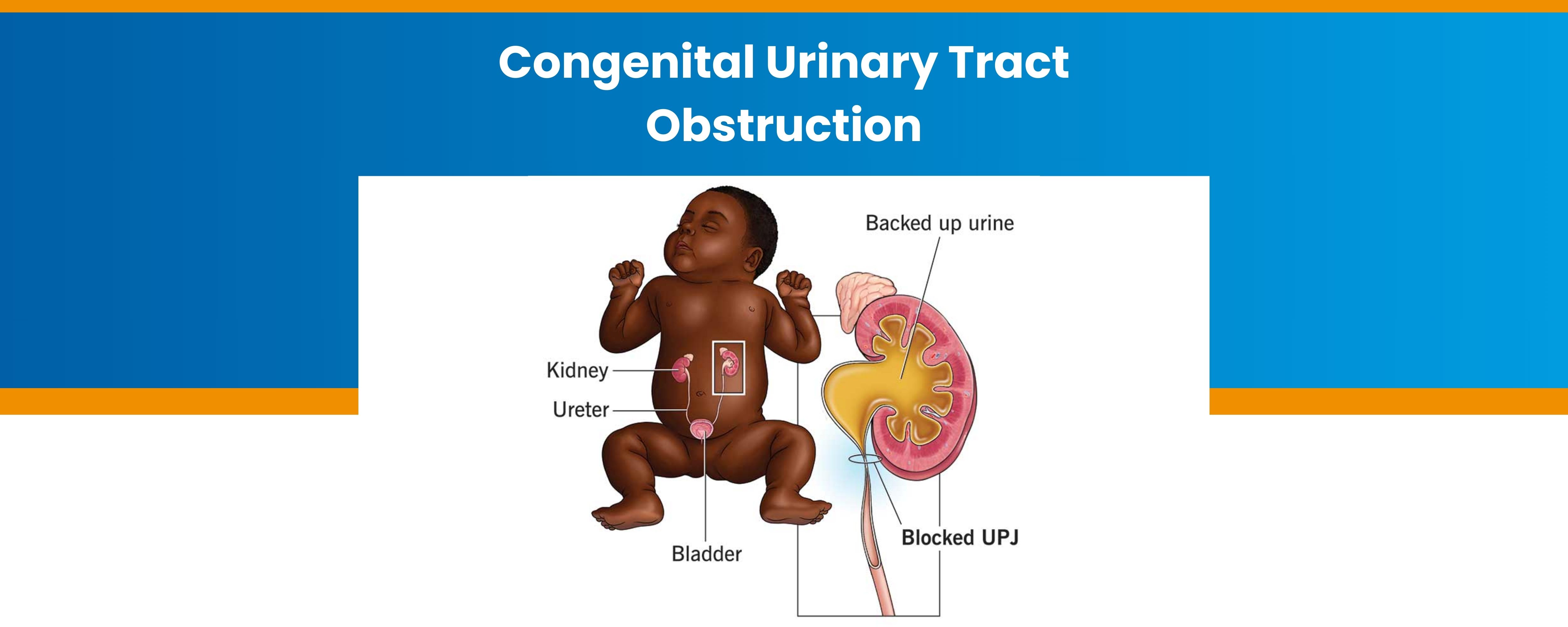
Has your little one been diagnosed with a congenital obstruction of urinary tract? Parents, this might be a scary experience for you. One minute you are holding your little one, and the next minute your doctor is saying terms like congenital obstruction of urinary tract for your little one.
But don't be scared, parents. We are here to help. With the right knowledge and extra care, most children live a healthy and active life. At NU Hospitals, Bangalore, we have dedicated pediatric urologists to take care of your little one if they are facing this condition.
Read through this blog to learn more about the symptoms, diagnosis, and treatment of congenital obstruction of the urinary tract
What is Congenital Obstruction of Urinary Tract?
Congenital obstruction of the urinary tract means there is a blockage in your baby’s urinary system. This blockage has been present right from birth. A blockage also means it will be hard for urine to flow out.
Sometimes this blockage can be mild and not cause any major problems. However, other times it can lead to swelling in your baby’s kidneys, infection, or other problems.
What are the Causes of Congenital Obstruction of Urinary Tract?
There can be several reasons that lead to congenital obstruction of urinary tract. Here are a few of the most common reasons.
-
Posterior Urethral Valves (PUV)
This is when extra flaps of tissue in your baby boy’s urethra cause the blockage.
-
Ureteropelvic Junction Obstruction (UPJ)
This happens when there is a narrowing where the kidney meets the ureter.
-
Ureterovesical Junction Obstruction (UVJ)
This blockage is formed where the ureter joins the bladder.
-
Ectopic Ureter
In this, your baby’s ureter does not connect normally to their bladder.
-
Birth defects
Certain birth defects of the bladder or kidneys can cause narrowing or poor urine flow for your baby.
What are the Symptoms of Congenital Obstruction of Urinary Tract?
The symptoms of congenital obstruction of urinary tract may vary for your baby depending on the severity and location of the blockage. For a few babies, they show signs even before birth; however, others show symptoms only after delivery.
Common Symptoms in Babies:
-
Swelling of the belly
-
Poor feeding or vomiting
-
Fever or irritability
-
Fewer wet diapers than normal
Symptoms in Older Children:
-
Pain in the side or back
-
Recurrent urinary tract infections (UTIs)
-
Difficulty or pain while urinating
-
Bedwetting beyond the usual age
How is Congenital Urinary Tract Obstruction Diagnosed?
Congenital urinary tract obstruction diagnosis often starts even before the birth of your baby. Therefore, early detection is important.
The condition can be diagnosed with the help of:
-
Prenatal Ultrasound
Prenatal ultrasounds can show swelling in your baby’s kidneys (hydronephrosis).
-
Postnatal Ultrasound
A postnatal ultrasound is done after your baby’s birth to confirm any blockage.
-
Voiding Cystourethrogram (VCUG)
A VCUG is an X-ray that checks for backflow of urine.
-
MRI or CT Scan
MRI or CT scans help to get a detailed image of your baby in complex cases.
-
Renal Scan
Renal scans help to see how well your baby’s kidneys are functioning.
Effective Treatments for Congenital Urinary Tract Obstruction
Parents, the good news for you is that there are several congenital urinary tract obstruction treatment options available for your little one. However, the treatment for your little one will depend on the type, location, and severity of their obstruction. A few of the common treatments for your little one are:
1. Monitoring
Keep a close watch for mild obstructions, especially if your baby’s condition is detected prenatally. Sometimes the condition can get fixed on its own as your baby grows. Regular ultrasounds are done to monitor the situation.
2. Antibiotics
Antibiotics will be given to your baby if they are at risk of UTIs. A low-dose antibiotics might help to prevent infections.
3. Surgical Intervention:
If your baby has constant obstructions, surgery is necessary. The procedure will remove the blockage and allow urine to flow freely.
-
Pyeloplasty
Pyeloplasty is a common surgery used for UPJ obstruction. In this procedure, the narrowed or obstructed part of your baby’s ureter is removed, and the healthy ends are reconnected.
-
Endoscopic Valve Ablation
If your baby boy has PUV, this procedure uses a cystoscope to snip away the obstructive valves in their urethra.
What are the Potential Complications and Long-Term Effects?
If left untreated, congenital obstruction of the urinary tract can lead to serious complications for your baby.
-
Kidney Damage/Failure
Constant pressure from backed-up urine can damage your child’s kidney tissue. This may lead to chronic kidney disease or even kidney failure for them.
-
Recurrent UTIs
Constant UTI can cause scarring and further damage to your baby’s kidneys.
-
High Blood Pressure
Damaged kidneys can affect your child's blood pressure.
-
Poor Growth and Development
Children with significant kidney problems may have growth problems.
But parents, don't be scared. With timely diagnosis and proper treatment, your little one will lead a healthy life too.
When Should You See a Paediatric Urologist?
Parents, if you notice any of these symptoms in your little one, you must visit a paediatric urologist soon:
-
The child passes less urine or strains while urinating.
-
There’s fever, blood in urine, vomiting, or severe pain.
-
Poor growth or weight gain is seen.
-
Abnormal findings come up on prenatal or postnatal scans
NU Hospitals, Bangalore, has few of the pioneering paediatric urologists of the town. Therefore, if your little one is showing any of the above-mentioned symptoms, don’t worry. The best paediatric urologists of the town are here to help.








