 Nephrology
 Urology
 Andrology
 Fertility (IVF)
 General Nephrology
 Paediatric Nephrology
 Dialysis
 Renal (Kidney) Biopsy
 CRRT
 Peritonial Dialysis
 Robotic Surgery
 Urinary Incontinence
 Uro-Oncology
 Laparoscopic Urology
 Reconstructive Urology
 Anaesthesiology
 Radiodiagnosis
 Nutrition and Dietetics
 Pediatric and Immunization
 Cardiology
 Intensive Care Unit




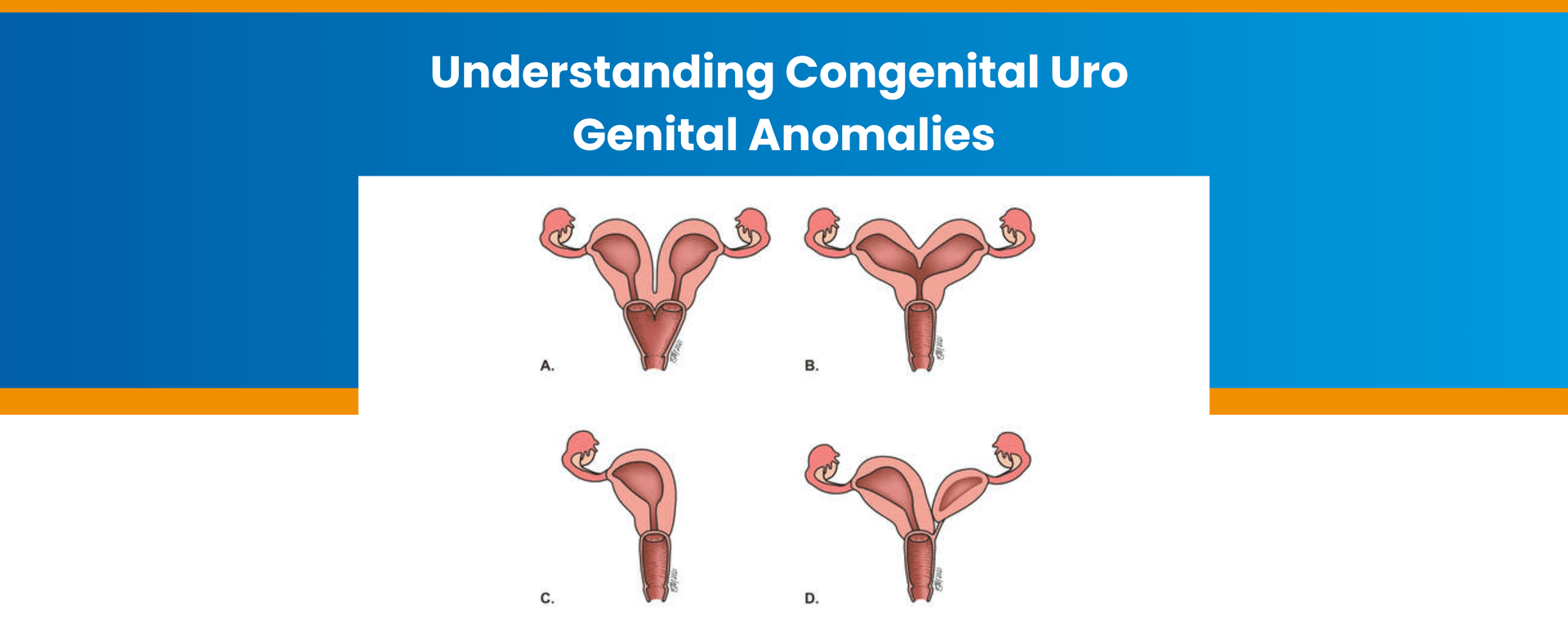
Urogenital organs refer to the urinary system and genital organs. Congenital anomalies refer to the structural or functional abnormalities of these organs since birth.
It could be abnormalities of the kidneys, bladder, ureters, urethra or the reproductive organs. Few minor abnormalities which do not cause any trouble with daily life or cause any health challenges need not be treated, but a few that cause trouble with the child’s urinary function, fertility and overall health require timely care and corrective treatments.
Did you know that 3-6% newborns in the world are affected by congenital anomalies?
It is estimated that 2-3 children in every 100 may be born with some sort of urogenital anomalies.
Getting treated soon is the key to better health. Early diagnosis can help in preventing long-term complications like kidney failure, urinary tract infections, etc.
Symptoms of Congenital Uro Genital Anomalies
Symptoms vary depending on the type and severity of the abnormality. Few congenital anomalies are detected during pregnancy scans, while others can be detected after birth or later in childhood.
A few common symptoms include:
-
Urine flow abnormalities
- Weak urine stream
- Trouble urinating
- Dribbling of urine
-
Recurrent UTIs (Urinary tract infections)
-
Swelling in the abdomen
-
Swelling in the flank region
-
Visible genital differences
-
-
Ambiguous genitalia
-
Hypospadias
-
Undescended testis
-
-
Bedwetting (Nocturia)
-
Blood in urine
-
Pain while urinating
-
Delayed growth
-
Fatigue
-
High blood pressure
When to See a Urologist for Uro Genital Anomalies in Bangalore
Consult an expert pediatric urologist if:
-
Your child faces difficulty while urinating
-
Your child is struggling with urine leakage
-
There is swelling of the belly, scrotum, or genital area
-
Prenatal scans suggest hydronephrosis or other anomalies
-
Your child frequently develops UTIs
-
There are concerns about the genital appearance and functions of your child
Remember, consulting our experts will ensure your child receives an accurate diagnosis and the right treatment.
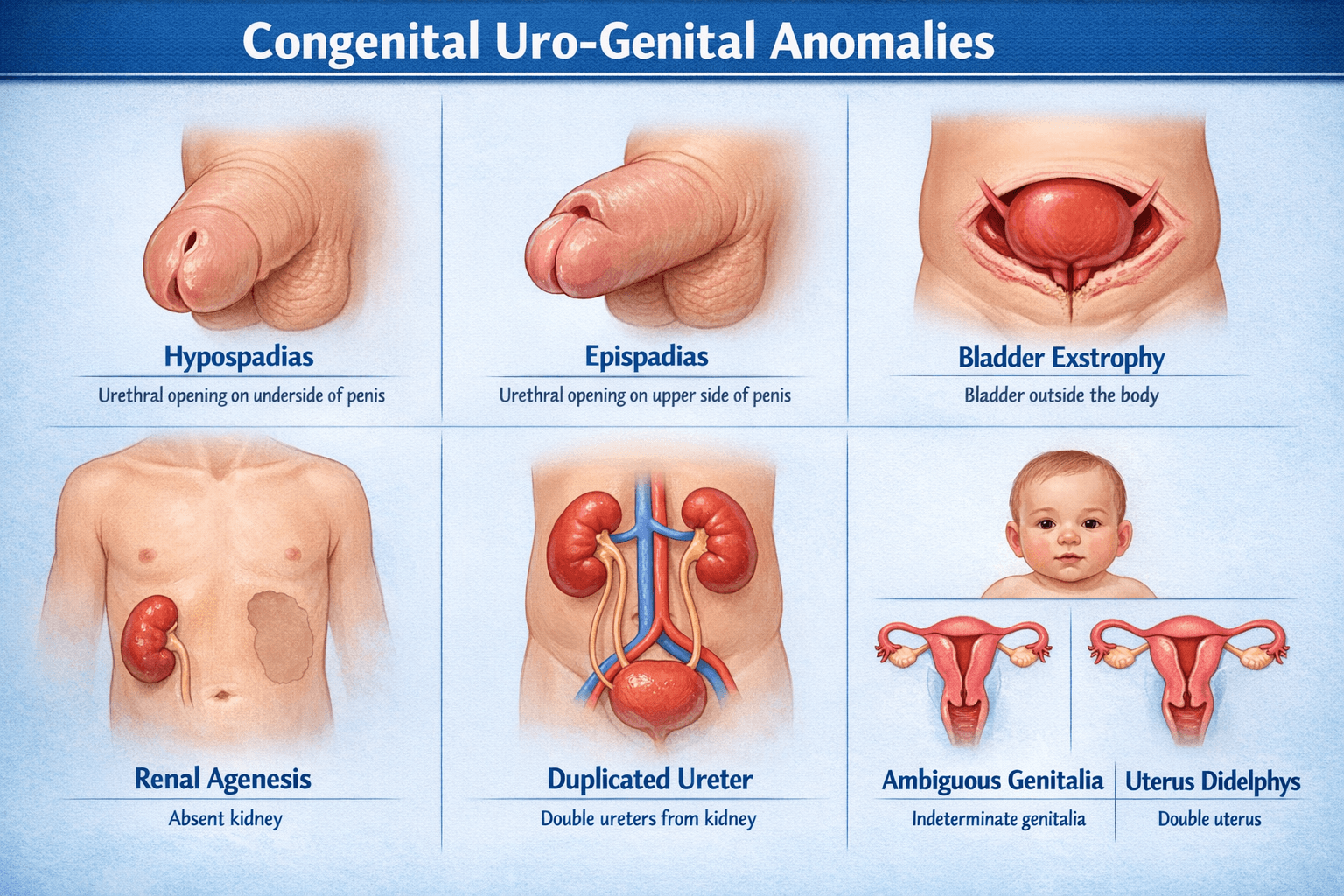
How are Congenital Uro Genital Anomalies Diagnosed?
Depending on the symptoms, our experts will conduct a thorough physical examination, considering the medical history and family history of anomalies.
Our specialists would recommend the following tests to confirm or rule out any congenital anomalies in your child, such as:
-
Ultrasound (USGs)
The first line of imaging is done to check for anomalies of the kidneys, bladder and genital organs.
-
Voiding cystourethrogram (VCUG)
It is an X-ray done to understand the reflux (urine reflux from the bladder to the kidneys)
-
MRI or CT scan
To understand the organ structure and the complexity of the abnormality
-
Nuclear Renal Scan
To check for urine drainage and kidney function.
-
Blood tests
To evaluate kidney functions and infections
-
Urine tests
To identify any abnormal substance, blood, or protein in the urine
-
Cystoscopy
An endoscopic evaluation of the urinary tract to diagnose any problem with the urinary system.
Treatment and Management of Congenital Uro Genital Anomalies
Treatment varies depending on the type of anomaly, the child’s overall health and the severity of the condition.
A few common treatment options include:
1. Medication
-
Antibiotics to prevent and control infections
-
To manage bladder function
-
Manage blood pressure
2. Minimally Invasive Procedures
-
Repair/ correction of urethral valves
-
Endoscopic/laparoscopic procedures to correct reflux conditions
-
Catheter placement for temporary urine drainage
3. Surgical reconstruction
-
Hypospadias repair
To correct the abnormal urethral opening in young boys -
Orchiopexy
Surgical correction of an undescended testis -
Bladder reconstruction
-
Ureteral reconstruction
-
Genital reconstructive surgery
For ambiguous genitalia
4. Dialysis
Required if anomalies have progressed to CKD (chronic kidney disease) or ESRD (end-stage renal disease)
5. Kidney Transplant
When the kidneys are not functioning anymore, and you want a better treatment option with better outcomes, a kidney transplant is suggested.
Lifestyle Modifications and Supportive Therapies
Lifestyle modifications aid in better recovery and are supportive therapies if your child has been diagnosed with congenital anomalies. Follow these tips for better treatment outcomes;
-
Ensure your child consumes an adequate amount of water
-
Maintain a balanced diet with less sodium and avoid processed foods
-
Monitor your child’s growth and development
-
Follow up with your paediatricians at regular intervals
-
Toilet train your child if they are detected with bladder anomalies
-
You are your child’s best friend, be their psychological support, which helps in improving the self-esteem and confidence of your child (especially for children with genital anomalies)
Why NU Hospitals is the Best Choice in Bangalore for Congenital Uro Genital Anomalies
We at NU Hospitals are the pioneers in reconstructive pediatric urological surgeries in India. We offer comprehensive care for all congenital urogenital disorders.
Why Choose NU Hospitals for Congenital Uro Genital Anomalies?
-
No. 1 Hospital for Pediatric Urology Care In India and Bangalore
-
Pioneers in Congenital Uro Genital Anomalies Surgery
-
Legacy of Innovation and Trusted by Millions
-
Protocolized Evidence-based Care
-
Renowned Team of Experts with a Multi-Disciplinary Approach and Decades of Experience
-
Exceptional Care and World-class Technology (Laparoscopic and Robotic surgeries
-
Child-Friendly Environment
-
High Success Rates In Complex Reconstructive Surgeries
-
Advanced Diagnostic Tools (Fetal USG, Ureflometry, Nuclear scans)








