 Nephrology
 Urology
 Andrology
 Fertility (IVF)
 General Nephrology
 Paediatric Nephrology
 Dialysis
 Renal (Kidney) Biopsy
 CRRT
 Peritonial Dialysis
 Robotic Surgery
 Urinary Incontinence
 Uro-Oncology
 Laparoscopic Urology
 Reconstructive Urology
 Anaesthesiology
 Radiodiagnosis
 Nutrition and Dietetics
 Pediatric and Immunization
 Cardiology
 Intensive Care Unit




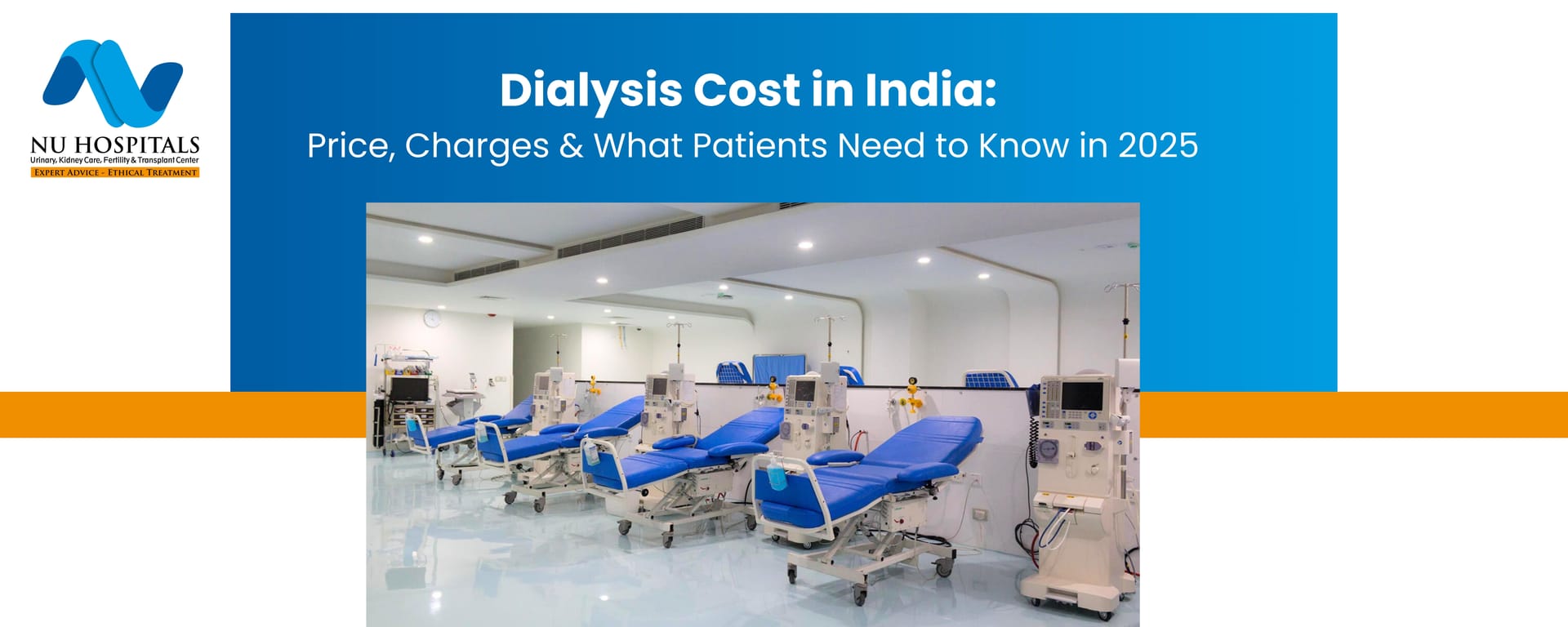
Dialysis Cost in India: Price, Charges & What Patients Need to Know in 2025
Kidney diseases are on the rise in India. The prevalence has risen from 11.2% to 16.38% in 2025. The dialysis numbers are increasing from 28,000 (2019) to approximately 50,000 (2024).
An article from the Wiley Online Library reveals that Kidney disease (CKD) in India in the future might reach 30.17%
With rising kidney concerns, dialysis has become a lifeline to many in India.
Have you or your loved one been advised to undergo dialysis? Are you confused about the costs and where to go?
Let us break down the dialysis price in India in 2025 and answer all your queries regarding dialysis.
What is Dialysis?
When kidneys fail and can no longer function, they cannot filter waste from the blood. Dialysis is recommended to aid these functions artificially. It is a life-saving treatment for individuals with kidney disorders.
Dialysis helps in maintaining fluid balance, electrolyte balance, and removing and filtering waste from the kidneys.
Types of Dialysis
The blood is drawn to a dialyser (dialysis machine), and the blood is filtered through the machine. The purified blood is returned to the body. This can be done at hospitals or dialysis centres.
A special fluid is used in this dialysis. The fluid is put into the abdomen, and your body’s natural linings filter the blood. This can be done at home, and even while you are asleep.
Hemodialysis vs. Peritoneal Dialysis
Feature |
Hemodialysis |
Peritoneal Dialysis |
How it works |
Blood is filtered by a machine (Dialyser) |
The abdominal lining filters blood using a special fluid |
Location |
Done in hospitals or clinics |
Freedom to do at home |
Frequency |
2–3 times a week (As suggested by your doctor) |
Every day (can be automatic or manual) |
Time per session |
3–5 hours per session |
Takes longer, but can be done during sleep |
Equipment needed |
Dialysis machine and vascular access to draw blood |
Soft tube (catheter) in the belly |
Mobility/flexibility |
Less flexible, scheduled clinic visits |
More flexible, allows travel and home care |
Infection risk |
Risk at the vascular access point (usually the arm) |
Risk of belly infection (peritonitis) |
Diet/fluid limits |
More restrictions |
Fewer restrictions |
Who Needs Dialysis?
When an individual loses 80-90% of their kidney function, dialysis is required.
Common causes of failed function include:
-
CKD (Chronic Kidney Disease)
-
Diabetes
-
High blood pressure
-
Other conditions leading to ESRD (End-stage Renal Disease)
Signs you should check for kidney problems include:
-
Persistent nausea and vomiting
-
Fatigue
-
Swelling of legs and ankles
-
Bad appetite
A Quick Overview of Dialysis in India:
India has made notable progress in kidney care. Let us see some key statistics regarding dialysis.
Dialysis in India
Total Dialysis Centres in India |
Over 7000 |
NABH-accredited Centres |
Around 2000 |
Dialysis Patients |
2.2 L + |
Sessions required per patient |
2-3 sessions per week |
Safety and Standards in Dialysis
Thanks to advanced equipment, expert nephrologists and safety protocols. The quality of dialysis care at NU Hospitals is comparable to global standards.
Is Dialysis Cost-effective in India?
Dialysis is absolutely cost-effective. The average monthly cost in countries like the US and UK can be over ₹3-5 Lakhs.
Indian hospitals offer the same quality treatment at a lower price, without compromising on quality
Dialysis Cost in Major Indian Cities (2025)
City |
Cost Per Session (₹) |
Monthly Estimate (₹) |
Bangalore |
₹1,800 – ₹4,000 |
₹18,000 – ₹40,000 |
Mumbai |
₹2,000 – ₹4,500 |
₹20,000 – ₹45,000 |
Delhi |
₹1,500 – ₹3,500 |
₹15,000 – ₹35,000 |
Hyderabad |
₹1,500 – ₹3,000 |
₹15,000 – ₹30,000 |
Chennai |
₹1,400 – ₹3,000 |
₹14,000 – ₹30,000 |
Kolkata |
₹1,200 – ₹2,800 |
₹12,000 – ₹28,000 |
India vs International Dialysis Standards
Country |
Avg Cost/Month (INR) |
Affordability of Care |
India |
₹18,000 – ₹40,000 |
Affordable |
USA |
₹3,00,000 – ₹5,00,000 |
Expensive |
UK |
₹1,80,000 – ₹2,50,000 |
Expensive |
Germany |
₹1,50,000 – ₹2,50,000 |
Expensive |
Singapore |
₹2,50,000 – ₹3,50,000 |
Expensive |
What is The Cost of Dialysis at NU Hospitals?
At NU Hospitals, we provide world-class, high-quality dialysis.
-
Per-session charges are affordable. Our dialysis sessions follow exceptional standards of care and safety
-
Affordable dialysis packages
-
Insurance cover assistance provided
What makes NU Hospitals Stand Out?
-
3 L + dialysis sessions conducted
-
Dedicated infection control team
-
Tailored dialysis care plans
Factors Affecting Dialysis Costs in India
-
Type of dialysis
-
Residential city
-
Frequency of the dialysis sessions
-
Use of imported vs local consumables
-
Medical conditions and their complexity
-
Insurance/Govt. subsidy availability
Why Choose NU Hospitals for Dialysis?
-
26+ years of kidney care expertise
-
State-of-the-art facilities
-
Certified technicians
-
Trusted by Millions
-
Usage of single-use dialysers
-
Low risk of infections
-
World-class care








