 Nephrology
 Urology
 Andrology
 Fertility (IVF)
 General Nephrology
 Paediatric Nephrology
 Dialysis
 Renal (Kidney) Biopsy
 CRRT
 Peritonial Dialysis
 Robotic Surgery
 Urinary Incontinence
 Uro-Oncology
 Laparoscopic Urology
 Reconstructive Urology
 Anaesthesiology
 Radiodiagnosis
 Nutrition and Dietetics
 Pediatric and Immunization
 Cardiology
 Intensive Care Unit





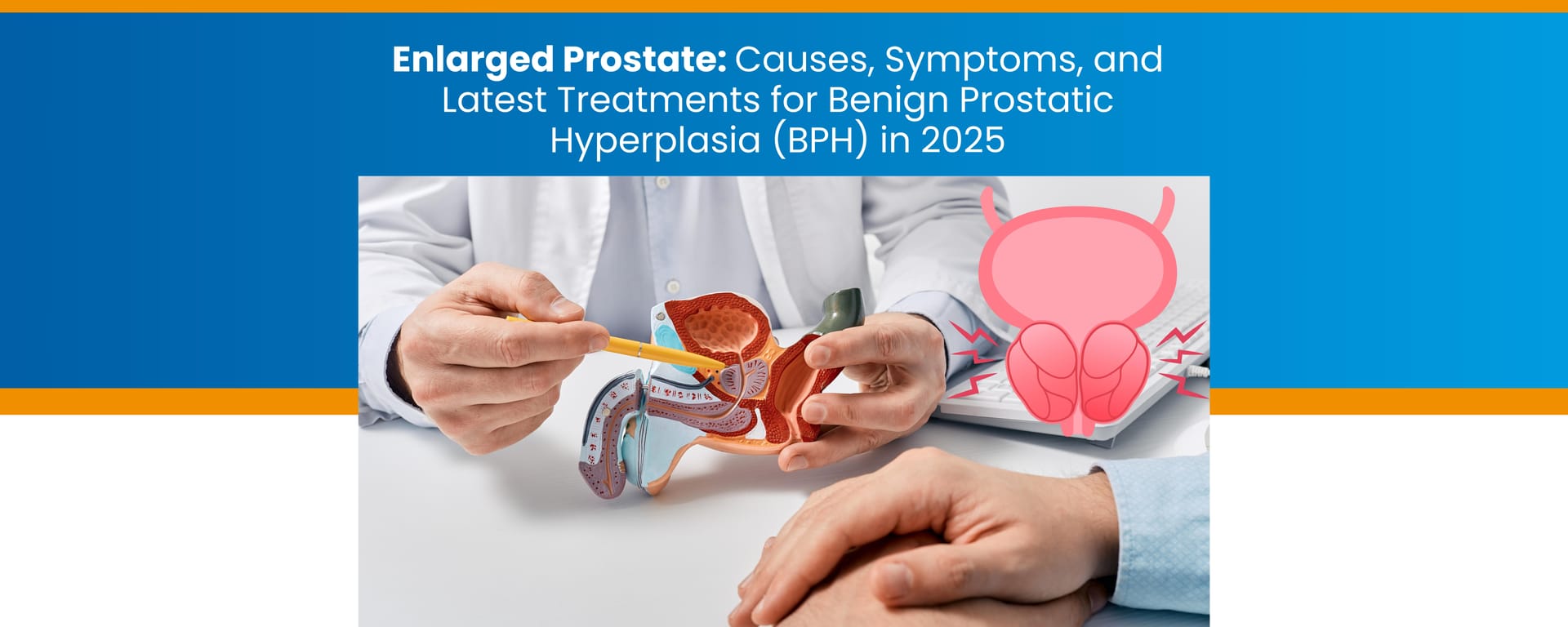
Your prostate is a small walnut-sized gland that is right below your bladder. It wraps around your urethra (tube that carries urine out of your body). The task of your prostate is to produce seminal fluid.
However, as you age and get closer to 50, most men experience Benign Prostate (BPH), also known as an enlarged prostate. However, this growth is not cancerous. It may only cause you urinary trouble.
Enlarged Prostate vs. Prostate Cancer
Feature |
Enlarged Prostate (BPH) |
Prostate Cancer |
Nature |
|
|
Speed of growth |
Slow and steady growth |
|
Symptoms |
|
May have no symptoms in the early stages |
Advanced Benign Prostatic Hyperplasia (Enlarged Prostate) Treatment at NU Hospitals, Bangalore
Living with an enlarged prostate can be quite uncomfortable. Therefore, you will want the best expertise when it comes to your treatment. At NU Hospitals, we offer you comprehensive and state-of-the-art treatments for BPH.
Our experts will make sure that your treatment is tailored to your condition. Our treatments include.
1. Medication
Medication is usually the first line of defense for mild to moderate symptoms. They can help to relax your bladder muscles or shrink your prostate.
2. Minimally Invasive Therapies:
UroLift System: It is a procedure that helps to lift and hold your enlarged prostate tissue away from your urethra. This relieves any kind of compression.
3. Advanced Surgical Options:
-
Transurethral Resection of the Prostate (TURP)
TURP is a classic surgical procedure. It is very effective for larger prostates.
-
Laser Prostatectomy (HoLEP - Holmium Laser Enucleation of the Prostate)
HoLEP is a highly effective procedure that uses a laser to remove your prostate tissue. This procedure makes sure there is less bleeding and faster recovery than traditional TURP. NU Hospitals is renowned for its expertise in laser treatments.
Why Consult our Expert Doctor for Enlarged Prostate Treatment
Choosing the correct place for your Enlarged Prostate treatment is key. Here is why NU Hospitals stand out, and you must choose.
-
No. 1 in Bangalore for Prostate Treatment
Our success rates, patient testimonials, and pioneering work in urology have established us as a top-tier facility for prostate health in India.
-
Cutting-Edge Technology
From advanced imaging, state-of-the-art laser systems, and minimally invasive tools that enhance precision, we have it all.
-
Experienced Specialists
Our team at NU Hospitals has highly skilled and experienced urologists who specialize in Advanced Benign Prostatic Hyperplasia and other prostate conditions.
-
Team Approach
Our urologists, nephrologists, radiologists, and other team members work closely to provide you with the best care.
-
Patient-Centric Care
We make sure you feel comfortable and safe at all times.
What are the Causes and Symptoms of an Enlarged Prostate
Causes of Enlarged Prostate
Aging is one of the major causes of an enlarged prostate. However, there are also other factors that contribute to the condition.
-
Aging
The primary factor that causes an enlarged prostate is aging. BPH rarely causes symptoms before age 40, but it becomes more common as you start to age.
-
Hormonal Changes
As you age, changes in hormone balance (testosterone and estrogen) play a role in your prostate growth.
-
Family History
Having a blood relative with BPH may increase your risk.
-
Medical Conditions
Conditions such as obesity, heart disease, and type 2 diabetes might be linked to a higher risk of BPH.
Symptoms of Enlarged Prostate:
The symptoms of an enlarged prostate are usually linked to urination habits. It ranges from mild to severe. They occur because the enlarged gland presses on your urethra, obstructing the urine flow.
1. Storage Symptoms (related to bladder storage function)
-
Frequent urination, especially at night
-
Suddenly, urgent need to urinate
-
Feeling of incomplete bladder emptying
-
Leakage after urination
2. Voiding Symptoms (related to urine flow)
-
Weak or slow urinary stream
-
Difficulty starting urination
-
Straining to urinate
3. Other Symptoms
-
Bladder pain is less common, but it may occur if your bladder is constantly full or irritated.
-
Blood in urine (hematuria) can indicate BPH or a more serious condition. This requires immediate medical evaluation
Diagnosis for Enlarged Prostate
If you have symptoms, a diagnosis of an enlarged prostate is important. Your doctors will recommend:
-
Digital rectal exam (DRE): To check the size of your prostate.
-
On occasions PSA blood test: To rule out cancer.
-
Ultrasound: For detailed imaging.
-
Uroflowmetry: To measure your urine flow strength.
Complications and Risks of Enlarged Prostate
If left untreated, enlarged prostate risks can become very serious for you. It can lead to:
-
Bladder stones
-
Recurrent urinary tract infections (UTIs)
-
Blood in urine
-
Kidney damage from long-term obstruction
-
Complete inability to urinate (urinary retention)
Consult with Our Expert Urologist
Are you struggling with an enlarged prostate? Don't let the pain and frequent urination get the best of your life. Early detection and treatment can prevent you from major complications.
We at NU Hospitals understand how difficult this might be. Consult with our expert urologist to know more about your condition. We make sure you get treatment that is dedicated to you.







