 Nephrology
 Urology
 Andrology
 Fertility (IVF)
 General Nephrology
 Paediatric Nephrology
 Dialysis
 Renal (Kidney) Biopsy
 CRRT
 Peritonial Dialysis
 Robotic Surgery
 Urinary Incontinence
 Uro-Oncology
 Laparoscopic Urology
 Reconstructive Urology
 Anaesthesiology
 Radiodiagnosis
 Nutrition and Dietetics
 Pediatric and Immunization
 Cardiology
 Intensive Care Unit




Do you feel the constant urge to urinate even if your bladder is not full? Do you feel constant pain in your bladder that ruins the day or does not let you sleep?
If yes, you’re not alone.
This condition can be quite frustrating, affecting your everyday lifestyle and confidence. Most people confuse it with a urinary infection that never goes away. However, you might be dealing with a condition known as interstitial cystitis (IC). IC is also known as Bladder Pain Syndrome (BPS).
This chronic condition affects millions of people worldwide, mostly women, but often goes undiagnosed.
Around 1.25 million people in India are living with interstitial cystitis. Every 1 in 20 women may experience IC-like symptoms at some point in their lives.
Women are more frequently affected by this condition. However, men can develop this condition too. However, the good news is that with the right diagnosis and treatment, you can get relief.
If you are struggling with such a condition and looking for expert help, our doctors at NU Hospitals are here to help you. We will offer you personalized treatment for interstitial cystitis.
What is Interstitial Cystitis? Understanding Chronic Bladder Pain Syndrome
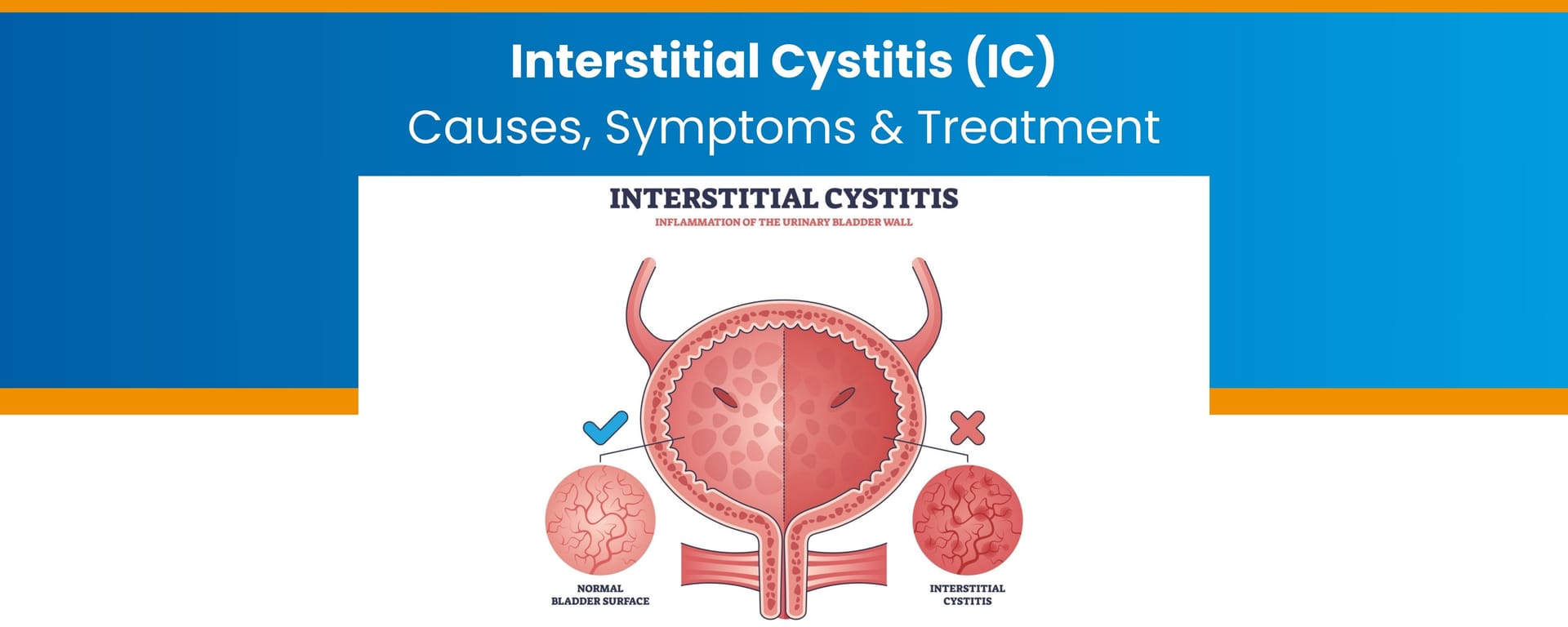
Interstitial cystitis (IC) is a chronic bladder condition. It can cause you constant pain, pressure, and discomfort in your bladder and pelvic region.
-
It is a non-infectious condition.
-
Your symptoms can mimic a serious bladder infection. However, no bacteria are present.
-
It is a long-term condition.
-
It can significantly impact your quality of life.
Hence, understanding this condition is the first step toward getting the right treatment for interstitial cystitis.
Common Causes and Risk Factors for Interstitial Cystitis
Interstitial Cystitis is a complex condition. There is no single cause for it. However, several factors can trigger this condition.
Autoimmune, vascular, or allergic triggers
-
Autoimmune Response
Your body may mistakenly attack your bladder wall. This can cause chronic inflammation.
-
Vascular Issues
Reduced blood flow to your bladder wall may lead to tissue damage.
-
Allergic Reactions
Allergic or inflammatory reactions can irritate your bladder wall.
Damage to bladder lining (GAG layer)
-
The Glycosaminoglycan (GAG) layer is your bladder's protective lining.
-
If this layer is leaky or damaged, toxic substances in your urine can irritate your bladder muscle. This constant irritation can lead to chronic pain and inflammation.
Possible genetic and stress-related factors
-
A family history of IC or autoimmune diseases may raise your risk.
-
Chronic stress, hormonal changes, and past pelvic infections can worsen your symptoms.
Recognizing Symptoms: When to Consult NU Hospitals Bangalore
Symptoms of interstitial cystitis can range from mild discomfort to severe pain. If you experience any of these symptoms, our doctors at NU Hospitals are here to help.
Pelvic, bladder, or lower abdominal pain
-
Chronic pelvic pain is the most common symptom. You may feel it in your bladder area.
-
Your pain may often intensify as your bladder fills. It may temporarily reduce after you urinate.
-
The pain can spread to the lower back or groin.
Frequent, urgent urination (day and night)
-
You may often feel the need to urinate several times a day. Sometimes up to 40-60 times.
-
You may have a sudden and compelling need to pass urine. This is very difficult to delay.
-
Waking up several times during the night to urinate. This can disrupt your sleep.
Painful intercourse
-
Experiencing pain during sexual intercourse. This is common, especially in women.
-
Your symptoms can worsen significantly after sexual activity.
Symptom flares with menstruation, stress, sitting, or exercise
-
Symptoms can often intensify before or during menstruation.
-
Prolonged sitting, high-impact exercise, or intense stress can trigger your flares.
Distinguishing IC from UTI or bladder infection
Feature |
Interstitial Cystitis (IC) |
Urinary Tract Infection (UTI) |
Cause |
Unknown; usually bladder lining damage/inflammation. |
Bacterial infection |
Urine Test |
No bacterial infection |
Presence of bacteria |
Main Symptom |
Chronic pain, pressure, and urgency. |
Burning during urination (dysuria), sharp pain. |
Antibiotics |
Do not resolve the symptoms |
Clears the infection |
Precise Diagnosis for Interstitial Cystitis at NU Hospitals
Getting a correct diagnosis for interstitial cystitis can be a turning point for you. Our experts at NU Hospitals use a systematic, multi-step approach to help you get your diagnosis.
The process includes:
-
Exclusion of infection and other causes: Urine cultures and scans will be done to rule out UTIs, kidney stones, or bladder cancer.
-
Pelvic exam and urine analysis: Pelvic exam and urine analysis help to detect tenderness and inflammation.
-
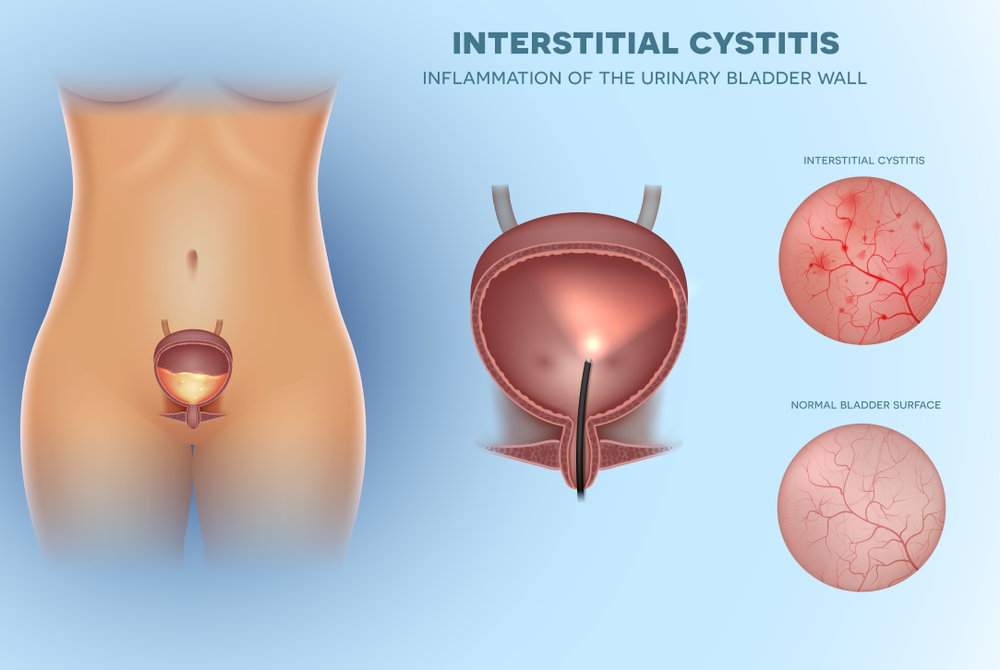
Cystoscopy: A tiny camera is used to check for ulcers or any bladder wall damage.
-
Bladder function tests (urodynamics): It measures your bladder capacity and function.
-
Symptom tracking & quality-of-life assessment: This helps to customize your treatment plan.
Advanced Treatment Options for Interstitial Cystitis
Managing interstitial cystitis will require a highly personalized plan. It will depend on your condition. Our multidisciplinary team at NU Hospitals will focus on a combination of therapies to improve your quality of life.
Lifestyle changes and dietary modifications
-
Limit spicy foods, citrus fruits, caffeine, alcohol, and artificial sweeteners.
-
Make a food diary to track your symptoms.
-
Stay hydrated, and avoid drinking too much water.
Physical therapy and stress management
-
Pelvic floor rehab can help to strengthen and relax your bladder muscles.
-
Practice mindfulness, yoga, and breathing exercises to ease your stress-related flare-ups.
Oral medications (NSAIDs, tricyclic antidepressants, antihistamines, pentosan polysulfate)
-
NSAIDs for quick pain relief.
-
Tricyclic antidepressants help to calm your bladder nerves.
-
Antihistamines are useful to control your allergic reactions.
-
Pentosan polysulfate (PPS) helps to repair your bladder lining.
Bladder instillations (DMSO, heparin cocktails)
Liquid medicine is directly placed in your bladder for relief
Minimally invasive procedures (hydrodistention, nerve stimulation, surgery in severe cases)
For severe Interstitial Cystitis, advanced interventions are needed:
-
Hydrodistention: It is a procedure performed during cystoscopy. Your bladder will be stretched with fluid. This can temporarily interrupt your pain signals and improve your bladder capacity.
-
Nerve Stimulation (Neuromodulation): A device is surgically implanted. It then delivers mild electrical impulses to the nerves that control your bladder. This can reduce your pain and urgency.
-
Surgery in Severe Cases: Procedures such as cystectomy (bladder removal) are the last choice. It is only considered when all the other options fail
Personalized bladder pain rehabilitation programs
At NU Hospitals, our doctors design individualized bladder rehabilitation programs. They combine physical therapy, counseling, and nutrition guidance for long-term comfort.
Living Well With Interstitial Cystitis: Diet, Hydration, and Self-Care
Living with chronic pain can be quite challenging. However, successful management is possible.
Foods, drinks, and habits to avoid
-
Avoid citrus, tomatoes, chocolate, coffee, alcohol, and artificial sweeteners
-
Avoid processed foods
Support group resources in Bangalore
- Connecting with others who understand your condition is very important. Join local IC patient groups in Bangalore. Sharing your experience can reduce your isolation.
Mind-body strategies and coping techniques
-
Take short walks and practice breathing exercises.
-
Distract yourself with hobbies, gentle exercise, and positive routines.








