 Nephrology
 Urology
 Andrology
 Fertility (IVF)
 General Nephrology
 Paediatric Nephrology
 Dialysis
 Renal (Kidney) Biopsy
 CRRT
 Peritonial Dialysis
 Robotic Surgery
 Urinary Incontinence
 Uro-Oncology
 Laparoscopic Urology
 Reconstructive Urology
 Anaesthesiology
 Radiodiagnosis
 Nutrition and Dietetics
 Pediatric and Immunization
 Cardiology
 Intensive Care Unit





It's overwhelming to be on dialysis, with life revolving around schedules, restrictions, and endless hospital visits. You can find hope for a new beginning with a “Kidney Transplant”.
A kidney transplant is not just any surgery; it is a life-changer. You get a second chance to live a free and healthy life away from constant visits to the hospital.
Patients in India seeking a kidney transplant should be aware of the success rates and safety measures taken for this surgery.
At NU Hospitals Bangalore, we believe in clear communication, top-notch treatment, and successful outcomes.
A quick takeaway from this blog:
-
Kidney transplant is the best long-term solution for CKD (chronic kidney disease) and ESRD (end-stage renal disease) patients.
-
NU Hospitals, Bangalore has one of the highest success rates in India for both living and deceased donor transplants.
-
Advanced technology, dedicated transplant units and experts ensure safer surgery and faster recovery.
-
Patients benefit from regular monitoring and live a full, healthy life.
-
NU Hospitals offer complete donor and recipient evaluation, legal guidance, and international patient support.
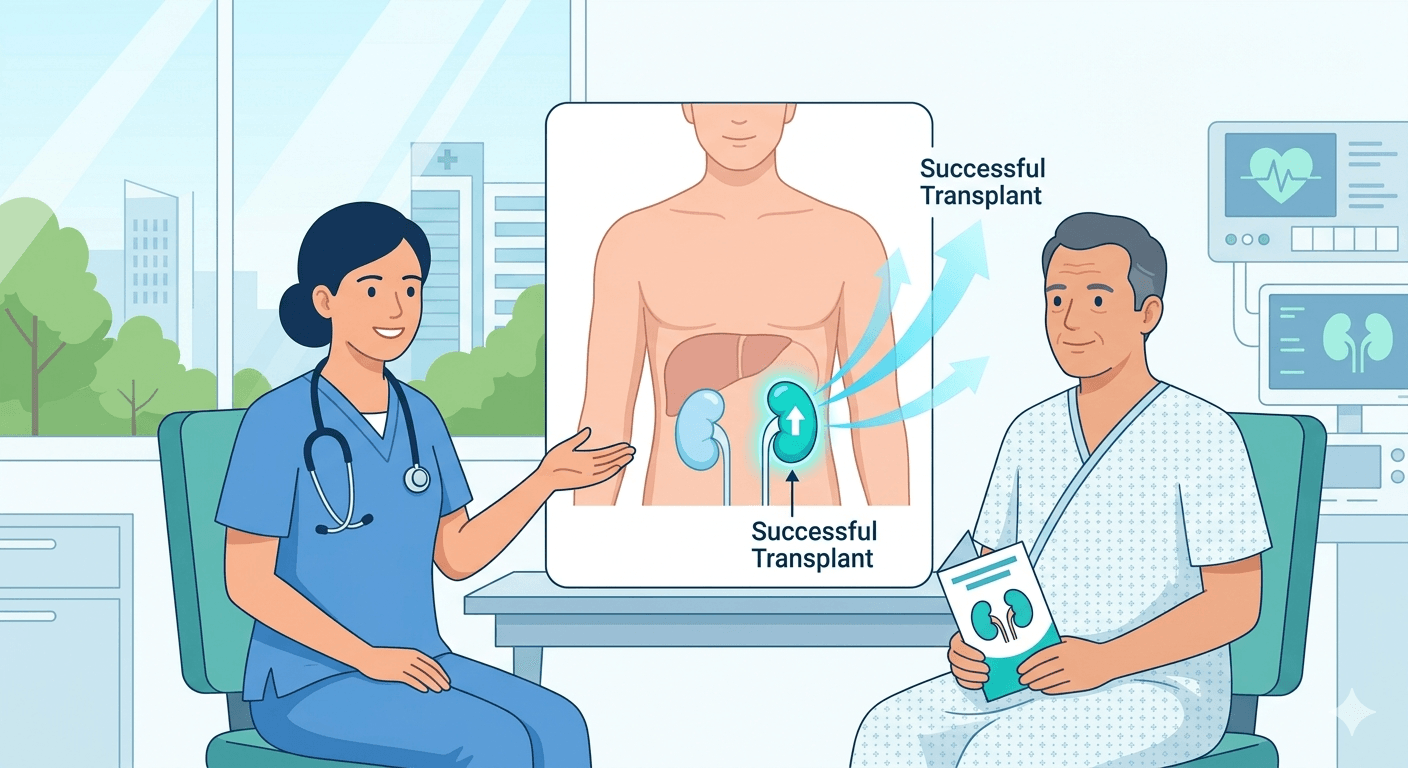
What Is a Kidney Transplant? Understanding the Surgical Solution for Kidney Failure
Transplant makes a difference in the lives of patients dealing with kidney failure. They provide a one-time solution rather than dialysis dependency.
A kidney transplant surgery is performed to replace the failed kidney with a healthy one from a donor. This restores kidney function and eliminates the dialysis requirement. Most patients see improved energy, appetite and quality of life.
Who needs a transplant?
Wondering if you or your loved one needs a kidney transplant? A transplant is recommended for patients with:
-
ESRD
End-stage renal disease occurs when the kidneys have completely failed and are no longer functioning.
-
CKD
Many kidney-related diseases, like glomerulonephritis, diabetic nephropathy, and polycystic kidney disease, can significantly impact the kidneys' function and when they reach end-stage renal disease.
-
Ineffective Dialysis
When patients do see improvement in quality of life with dialysis. Dialysis is a support system for all end-stage renal disease patients. Kidney transplant helps in keeping them off dialysis once the donor kidney functions well.
Types: Living donor vs. deceased donor kidney transplant
There are two types of donors involved in kidney transplants.
-
Living Donor (Same blood group, ABO incompatible, Swap or preemptive transplant)
-
Deceased Donor (Cadaver transplant)
Type of kidney transplant donor |
Description |
Advantages |
Living Donor |
A donor can be anyone from your immediate family (1st-degree relative).
|
|
Deceased Donor |
Kidneys are allocated through national/state organ donation regulators.They are collected from brain-dead people who have registered to donate their organs. |
Great opportunity for patients who do not have a compatible living donor |
Benefits compared to dialysis
Did you know that kidney transplants have a 1-year survival rate of 95% in India?
Transplants have more benefits when compared to dialysis, including:
-
Better recovery
-
Better kidney function
-
Independence from dialysis
-
Fewer restrictions
-
Higher energy levels
-
Better mobility
-
Work and travel freedom
-
Better quality of life
Why NU Hospitals Bangalore Is a Leader in Kidney Transplantation
Since its inception in 1999, NU Hospitals has been a pioneer in kidney transplants. Having performed over 750+ successful kidney transplants, we are the most trusted kidney care hospital in Bangalore, Karnataka, India, and even worldwide.
Board-certified nephrologists and transplant surgeons
-
Our transplant team includes the most renowned nephrologists, urologists and surgeons in the country.
-
All our experts are globally trained and have extensive experience in transplant surgery for decades.
-
Their expertise lies in simple living donor transplants to complex cases and high-risk surgeries.
Advanced surgical facilities and post-transplant care
We are equipped with:
-
State-of-the-art diagnostics
-
World-class ICUs
-
Advanced minimally invasive laparoscopic techniques
-
Sterile environments
-
Precise monitoring systems
We follow strict ethical and legal protocols in compliance with the Transplantation of Human Organs and Tissues Act (THOTA), India.
Robust donor matching and ethical practices
We offer:
-
HLA typing
-
Tissue Matching
-
Cross-matching and all other essential tests for a kidney transplant.
We are proud to be one of the best and most ethical treatment providers in India
National and international patient support
We facilitate our international patients with:
-
Free airport drop-off and pickup
-
Travel coordination
-
Translation service
-
Stay supported.
-
Postoperative care
-
Follow-up teleconsultations
We ensure you receive hassle-free care with a smooth journey of recovery.
Kidney Transplant Process at NU Hospitals
The long steps of the kidney transplant process can be overwhelming. We help you with every step and ensure a safe and successful transplant.
Here is a step-by-step guide:
Pre-transplant evaluation, eligibility and tests
We perform:
-
Detailed physical health check
-
Blood, urine and tissue matching tests
-
Psychological stability tests
-
Nutritional assessment
-
Legal and ethical clearance
Surgical procedure explained
-
The surgery lasts for 3-6 hours, depending on the complexity
-
The recipient and donor are under general anaesthesia
-
Surgeons are ready with both the donor and the recipient.
-
They attach a healthy donor kidney to the recipient, while leaving the original kidneys in place; in some rare cases, the enlarged or infected kidney is removed.
-
Both participants are kept under observation.
Recovery, long-term care, and follow-up plans
The donor is discharged in 3-4 days, while the recipient is discharged within 7-10 days. Transplant patients will be on immunosuppressant medicines to prevent graft rejection.
Our follow-up programme ensures:
-
Weekly or more frequent visits in the initial months
-
The frequency of visits reduces over 6-12 months
-
Routine checkups and consultation
Most patients resume normal life and work after a few months post-surgery.
Success Rates, Safety, and Patient Outcomes
Did you know that India performs over 13,500 kidney transplants every year? And Bangalore is one of the top-performing regions for renal transplants?
We stand at par with global success rates for kidney transplants.
Metric |
NU Hospitals’ Success |
1-year graft survival |
>95% |
Patient Survival |
>95% |
Living Donor Outcomes |
Excellent |
Our high success rates are backed by:
-
Rigorous infection control
-
Advanced medication management
-
Expert surgeons and nephrologists
-
Commitment to excellence and innovation
High success rates compared to national averages
We have higher success rates when compared to the national average of 90-95%
Comprehensive infection prevention and immune monitoring
-
Our team follows universal precautions always and aims to prevent infections
-
Our doctors are experts in immune system monitoring
Cost of Kidney Transplant in India: What to Expect
Cost is a big question for all our patients.
Note that costs vary based on:
-
Each patient
-
Overall health condition
-
Type of transplant
-
Type of donor
-
Diagnostic tests
-
Medication
-
Other underlying conditions, etc.
We ensure you receive a transparent quotation before the treatment.
Here is the basic cost package for a living donor transplant:
Category |
Estimated cost (INR) |
Pre-transplant evaluation and tests |
₹60,000 – ₹100,000 |
Surgery and hospital stay |
₹800,000 - ₹1,000,000 |
Post-transplant care |
₹100,000 - ₹150,000 |
Please note: The surgery cost may vary based on the type of ward selected, medications, and any additional procedures, etc
Package details, insurance options, and financial assistance
-
You can meet our finance team for specific package details
-
We accept insurance for all surgeries
-
Our team will help with claims and insurance assistance
-
If you have any financial constraints, meet our dedicated team for further financial assistance
Preparing for Kidney Transplant: Tips for Patients & Families
Kidney transplant is more than just a surgery; it's a journey of preparation, hope and healing
Lifestyle changes, emotional support, and caregiver involvement
-
Quit smoking
-
Quit drinking alcohol
-
Manage your other health conditions (Diabetes, hypertension)
-
Exercise gently
-
Attend counselling and support group sessions
-
Educate your family and friends about your condition
-
Seek help when needed
-
Avoid crowded places
Nutrition guidance and medication management
-
Eat a balanced and renal-friendly diet
-
Consume less salt and processed foods
-
Stop carbonated drinks
-
Have home-cooked fresh meals
How to find a suitable donor
We will assist you with
-
Donor matching (first-degree relatives who are willing to donate)
-
Legal verification
-
Enrolling on the NOTTO registry for deceased donor transplants
-
Counselling for both donor and recipient for consent








