 Nephrology
 Urology
 Andrology
 Fertility (IVF)
 General Nephrology
 Paediatric Nephrology
 Dialysis
 Renal (Kidney) Biopsy
 CRRT
 Peritonial Dialysis
 Robotic Surgery
 Urinary Incontinence
 Uro-Oncology
 Laparoscopic Urology
 Reconstructive Urology
 Anaesthesiology
 Radiodiagnosis
 Nutrition and Dietetics
 Pediatric and Immunization
 Cardiology
 Intensive Care Unit




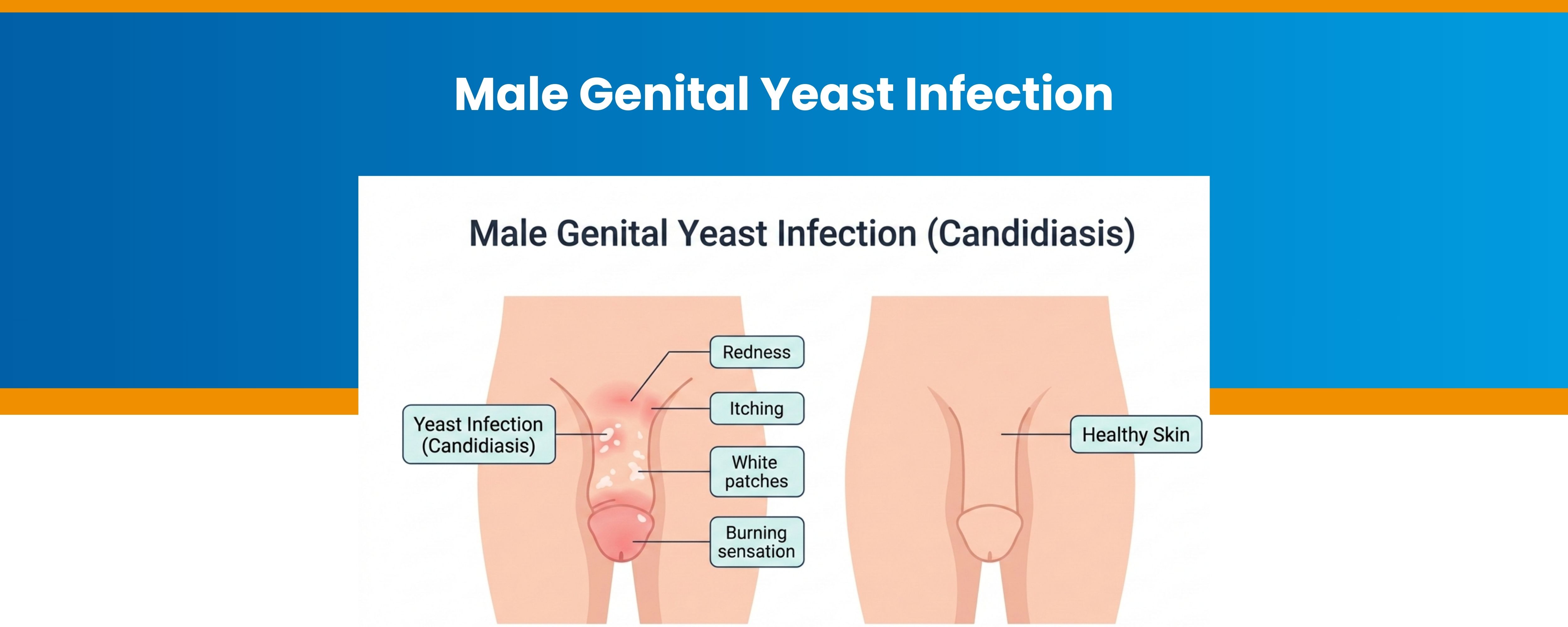
What is Male Genital Yeast Infection?
Male yeast infections (candidal balanitis) occur when Candida albicans grows uncontrollably. Usually, the immune system and "good" bacteria regulate this yeast. When balance fails, infection targets the penis head and foreskin. Though rarer than female infections, they cause significant pain if ignored. These are not always sexually transmitted, but partners can pass the fungus during activity. Treatment involves antifungal medication. Early action prevents complications.
Symptoms of Male Genital Yeast Infection
Watch for these specific signs to catch the infection early. Common symptoms include:
-
Redness and swelling on the head of the penis or the foreskin
-
Stinging, itching, or burning after sex or using the bathroom
-
Thick, white discharge under the foreskin
-
General pain during sex or urination
-
Noticeable swelling in the genital area
-
Visible cracks or dry patches on the skin
If you are uncircumcised, your symptoms will likely be worse. The foreskin traps moisture, creating a perfect breeding ground for yeast to multiply. When these infections keep coming back or won't clear up, you must see a doctor. This isn't just about the infection; frequent outbreaks are a red flag for underlying health problems like diabetes or a failing immune system. Get a professional diagnosis now.
Causes of Genital Yeast Infection in Males
You must understand the factors triggering your infection to prevent severe complications. Poor hygiene is a dangerous catalyst, especially if moisture and debris accumulate under the foreskin. Simultaneously, you must stop using harsh soaps that strip your skin's defences.
If you have undiagnosed or uncontrolled diabetes, you are at high risk; the sugar in your blood and urine is actively fueling the fungal growth. You must also be extremely cautious when using antibiotics, as these drugs wipe out the protective bacteria that keep yeast in check. Do not ignore these triggers. Address them immediately.
Other causes and risk factors include:
-
An immune system weakened by sickness, high stress, or steroid use
-
Excess weight, which creates skin folds where moisture gets trapped
-
Tight or synthetic clothing that doesn't let your skin breathe
-
Having sex with a partner who currently has a yeast infection
-
Hormonal changes that weaken your skin’s natural protective barrier
Knowing these risks is the only way to treat the current infection and prevent future ones.
Diagnosis, Treatment & Prevention of Male Genital Yeast Infection
Diagnosis
Diagnosis of a male yeast infection is usually straightforward. A healthcare provider will review symptoms and perform a physical examination of the affected area. In most cases, this is sufficient for diagnosis.
If symptoms are severe, recurrent, or unclear, additional tests may be recommended. These can include taking a swab or scraping from the affected skin to examine under a microscope or sending it for laboratory analysis. Blood or urine tests may also be advised if an underlying condition, such as diabetes, is suspected.
Treatment
Treating a male yeast infection is straightforward and reliable. The process focuses on clearing the fungal overgrowth, stopping symptoms, and preventing the infection from returning. You will likely feel better within a couple of days. However, you cannot stop the medication just because you feel okay. You must complete the full treatment course to ensure a total recovery and prevent a quick return of the infection.
Treatment Approach
You need antifungal medication to treat a yeast infection. The standard treatments are:
-
Antifungal creams or ointments are applied to the infection for one to two weeks
-
Oral tablets if the infection is severe or keeps coming back
-
Anti-inflammatory creams, if you have a lot of redness and swelling
Creams are usually enough for most guys, but if your case is stubborn, your doctor may advise you medication to treat it from the inside out. Don't skip the anti-inflammatory cream if you are in a lot of pain; it helps with the swelling and itching.
Aftercare and Precautions
You need to finish your entire treatment course even if you start feeling better after just a day or two. Stopping early is the main reason these infections come back, so stay consistent until the medication is gone. You also need to stop having sex until the area is completely healed to avoid making the irritation worse or passing the infection to your partner. If your partner is also experiencing symptoms, you both need to be treated simultaneously.
Prevention
-
Start by maintaining good genital hygiene every single day with lukewarm water and mild, unscented soap. You must avoid all harsh cleansers, antiseptics, and fragranced products, as these will destroy your skin's natural defences and lead to more infections.
-
You also really want to keep the area clean and dry whenever possible. Since yeast loves a moist environment, you should dry yourself off carefully after a shower, a swim, or a long workout, especially in any skin folds or under the foreskin.
-
Your choice of clothing also matters in preventing fungal outbreaks. Avoid tight underwear and pants that trap heat and moisture; instead, wear loose-fitting clothes made from breathable fabrics like cotton to keep the area cool.
-
Managing your blood sugar levels is a critical step for men who are living with diabetes. Keeping your glucose well-controlled is necessary because high sugar levels promote yeast growth and significantly increase the risk of the infection returning.
-
Be aware that antibiotics often cause yeast infections. They kill the "good" bacteria that keep yeast under control. Never take them without a doctor's prescription or for longer than necessary.
-
Practise safe sexual habits. Use protection during sexual activity if a partner has a known yeast infection to reduce the risk of transmission and reinfection.
-
Seek medical advice for recurrent infections. Frequent infections may signal an underlying health issue. Consulting a healthcare provider helps identify causes and establish a long-term prevention plan.
How does Male Yeast Infection impact your fertility & IVF?
A male yeast infection will not make you permanently sterile, but it causes temporary problems with your reproductive health if you ignore it. If infections keep coming back, they create issues that interfere with your ability to conceive naturally until the problem is solved.
-
The inflammation can impact your sperm quality and make ejaculation feel uncomfortable.
-
When you’re dealing with burning or swelling, the last thing you want is regular sex, which makes trying for a baby harder. That irritation can affect how your sperm move, but things usually go back to normal after treatment.
-
If you are getting a fertility checkup, an active infection messes up results because it makes giving a sample difficult. Contamination of the semen sample leads to inaccurate analysis, meaning you might have to repeat the test.
-
For IVF and assisted reproduction, you must treat any genital infection before you start. An untreated infection can be passed to your partner or cause problems during sperm processing. Specialists will tell you to wait until the infection is gone before moving forward.
The best part is that once you’ve taken care of it, there is rarely any long-term effect on your fertility. Just getting a quick diagnosis and sticking to your plan is all it takes to protect your health.
Conclusion
A male yeast infection is a common issue that is easy to treat if you catch it early. You need to understand the symptoms and causes so you can get care fast and stop it from coming back. These infections are uncomfortable and can temporarily affect your sex life, but they aren't dangerous if handled correctly. Visit the top doctors at NU Hospitals; Get treatment without any delay, and protect your fertility over the long term.








