 Nephrology
 Urology
 Andrology
 Fertility (IVF)
 General Nephrology
 Paediatric Nephrology
 Dialysis
 Renal (Kidney) Biopsy
 CRRT
 Peritonial Dialysis
 Robotic Surgery
 Urinary Incontinence
 Uro-Oncology
 Laparoscopic Urology
 Reconstructive Urology
 Anaesthesiology
 Radiodiagnosis
 Nutrition and Dietetics
 Pediatric and Immunization
 Cardiology
 Intensive Care Unit




Are you leaking urine every time you laugh or sneeze? Are you having bathroom accidents? You may ignore it, but it can be a serious condition.
For most men, this does not begin as a big problem. It starts with small leaks when you cough. Maybe when you lift something heavy. At first, it feels like a manageable condition; however, over time, it progresses.
But over time, things change.
Most men do not talk about such conditions. They think it is a normal part of aging. Or it is common after surgery. However, the truth is, it is not something you have to live with.
Urine leakage in men is more common than people think. In most cases, it can be treated effectively once the cause is identified. Therefore, the right care can make all the difference.
At NU Hospitals, our doctors understand that this is not just a medical condition; it affects your daily comfort and your quality of life. With advanced diagnostic tools and experienced urologists, our doctors focus on finding the root cause and giving you the right treatment.
Go through this blog to learn more about male stress urinary incontinence, urodynamic testing for men, and more.
What Is Male Stress Urinary Incontinence (SUI)?
Meaning and Causes of Urine Leakage in Men
Male stress urinary incontinence is urine leakage during physical activities that put pressure on the bladder. It happens during:
-
Coughing
-
Sneezing
-
Laughing
-
Lifting heavy objects
-
Standing up suddenly
It happens when the muscles that control your urine flow are weak or damaged.
Common Causes
The most common causes of urinary incontinence in men are:
-
Post-prostatectomy incontinence (after prostate surgery)
-
Damage to the urinary sphincter
-
Nerve injury during pelvic surgery
-
Age-related urinary sphincter muscle weakening
-
Radiation therapy for prostate cancer
Several men experience leakage after prostate surgery. However, it does not have to be permanent.
How Stress Urinary Incontinence Affects Daily Life
Living with urine leakage can quietly impact everything.
-
Avoiding social situations
-
Constant anxiety about accidents
-
Reduced confidence
-
Sleep disturbances
-
Limiting physical activity
It is not just a physical condition; it is an emotional condition too.
What Is a Urodynamic Evaluation?
Purpose of Urodynamic Testing
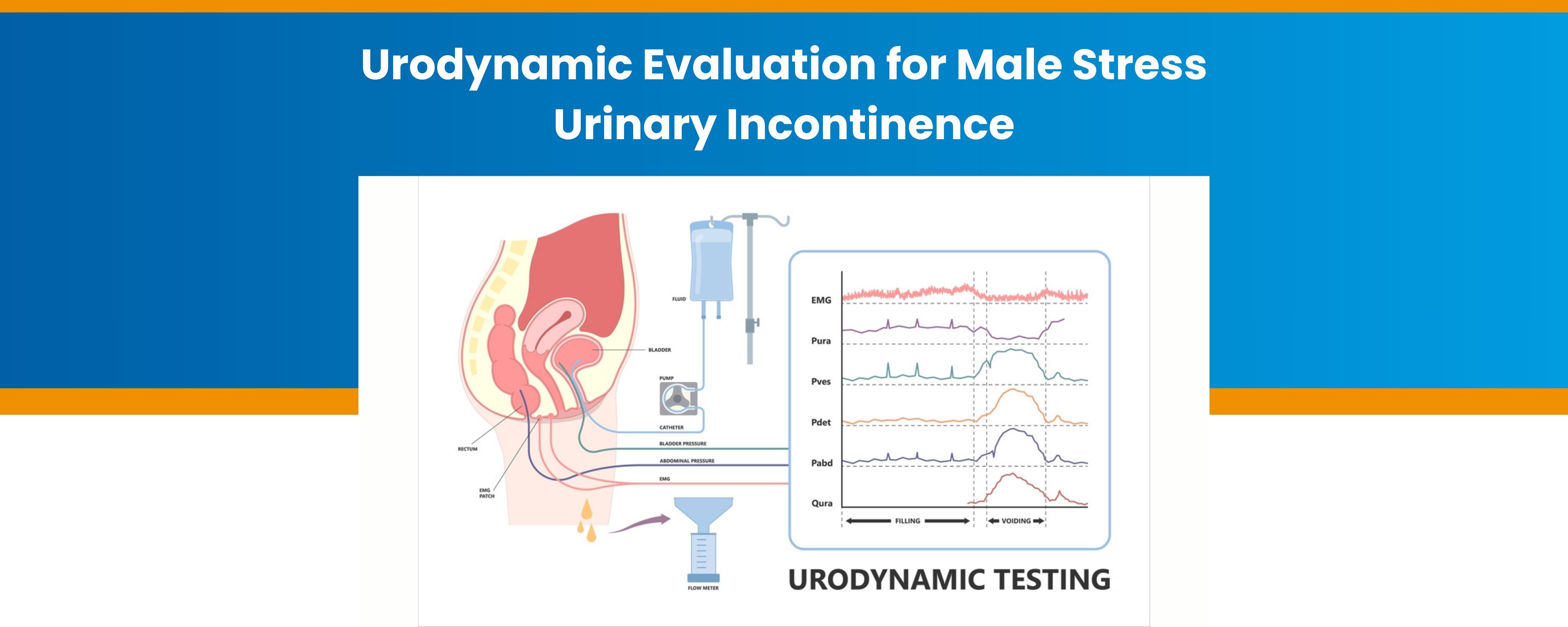
Urodynamic testing for men is a set of tests that check how well your bladder, sphincters, and urethra are storing and releasing urine.
It helps our doctors understand:
-
Bladder pressure
-
Urine flow
-
Muscle coordination
-
Sphincter strength
When Is This Test Recommended?
Our doctors at NU Hospitals may suggest urodynamic testing for men if you have:
-
Stress / continuous urine leakage
-
Difficulty emptying the bladder
-
Weak urine stream
-
Failed previous treatments
How It Helps Diagnose Stress Urinary Incontinence Accurately
Urodynamic evaluation helps our doctors:
-
Pinpoint the exact cause of male stress urinary incontinence
-
Differentiate between bladder and sphincter issues
-
Avoid unnecessary treatments
-
Plan targeted therapy
Types of Urodynamic Tests for Male Incontinence
The most common urodynamic tests for male incontinence are:
Uroflowmetry (Urine Flow Test)
-
It measures the speed and volume of your urine flow
-
It also identifies any blockages or weak urine flow
Cystometry (Bladder Pressure Test)
-
It measures your bladder pressure as it fills
-
It helps to detect an overactive bladder or poor compliance
Pressure Flow Study
-
It evaluates your bladder pressure during urination
-
Helps identify obstruction or a weak bladder
Electromyography (EMG)
-
It records your muscle activity
-
Assesses coordination between your bladder and sphincter
Post-Void Residual Measurement
-
It measures the amount of urine left after voiding
-
It helps to detect incomplete emptying
Step-by-Step Procedure of Urodynamic Testing
If you are going for urodynamic testing, follow the following steps:
Preparation Before the Test
-
You may be asked to come with a full bladder (for Uroflowmetry)
-
Inform your doctor about your medications
-
No major fasting required
What Happens During the Test
-
A thin catheter is inserted into your bladder
-
Your bladder is filled with sterile saline
-
Measurements are taken during filling and emptying
-
You may be asked to cough or strain. This is done to trigger male stress urinary incontinence in a controlled setting.
-
You will be asked to urinate while the sensors measure the pressure.
Duration, Comfort & Safety
-
The test takes around 30- 60 minutes
-
You may experience mild discomfort, but it is not painful
-
This procedure is safe and is routinely performed
-
There is minimal risk of infection
How to Prepare for a Urodynamic Test
Do You Need to Stop Medications?
Some medications for bladder control, such as Oxybutynin, might need to be stopped 48 hours before.
Check with your doctor at NU Hospitals first.
Bladder Preparation Instructions
-
Drink fluids as advised by your doctor
-
Avoid caffeine before the test
-
Arrive on time for your appointment
What to Wear and Bring
-
Wear loose-fitting, comfortable clothes.
-
Bring a list of your current medications and previous reports.
Understanding Urodynamic Test Results
Normal vs Abnormal Findings
A normal result shows that your bladder is relaxed while filling, and a sphincter that stays closed during a cough.
Abnormal results might show intrinsic sphincter deficiency, which shows your valve is too weak.
Identifying Sphincter Weakness or Bladder Issues
Urodynamic testing helps find the exact cause of leakage:
-
Sphincter weakness:
The muscle that holds urine is weak or damaged. This is common in post-prostatectomy incontinence. -
Pump problem due to bladder overactivity:
The bladder suddenly contracts and urine leaks out at the wrong time.
According to the cause of the leakage, our doctor will choose the best treatment for you.
How Results Guide Treatment Plans
After the test, your doctor gets a clear picture of what is causing the problem.
Based on your results, they can:
-
Choose the treatment that is best for you
-
Avoid guesswork or unnecessary steps
-
Recommend surgery only if it is needed
This helps you get faster relief and the right care from the start.
Treatment Options Based on Urodynamic Findings
Pelvic Floor Therapy
-
Strengthens bladder control muscles with Kegel exercises
Medications for Bladder Control
-
Help relax or stabilize your bladder
-
Useful in mixed symptoms
Surgical Options
For many men with severe male stress urinary incontinence, surgery is the best solution:
-
Male Sling Surgery
A synthetic mesh tape is placed under your urethra to support it. It acts like a hammock.
-
Artificial Urinary Sphincter (AUS)
This is the best treatment for severe leakage. It is an inflatable cuff that you control with a small pump hidden in the scrotum. It gives you full control back.
Urodynamic Testing at NU Hospitals, Bangalore
When it comes to urinary problems, choosing the right hospital matters.
At NU Hospitals, you get a combination of experienced doctors, advanced technology, and compassionate care. You will get to experience:
-
Advanced Urology Diagnostics Setup
-
Experienced Urologists & Specialized Care
-
Accurate Diagnosis for Personalized Treatment








