 Nephrology
 Urology
 Andrology
 Fertility (IVF)
 General Nephrology
 Paediatric Nephrology
 Dialysis
 Renal (Kidney) Biopsy
 CRRT
 Peritonial Dialysis
 Robotic Surgery
 Urinary Incontinence
 Uro-Oncology
 Laparoscopic Urology
 Reconstructive Urology
 Anaesthesiology
 Radiodiagnosis
 Nutrition and Dietetics
 Pediatric and Immunization
 Cardiology
 Intensive Care Unit




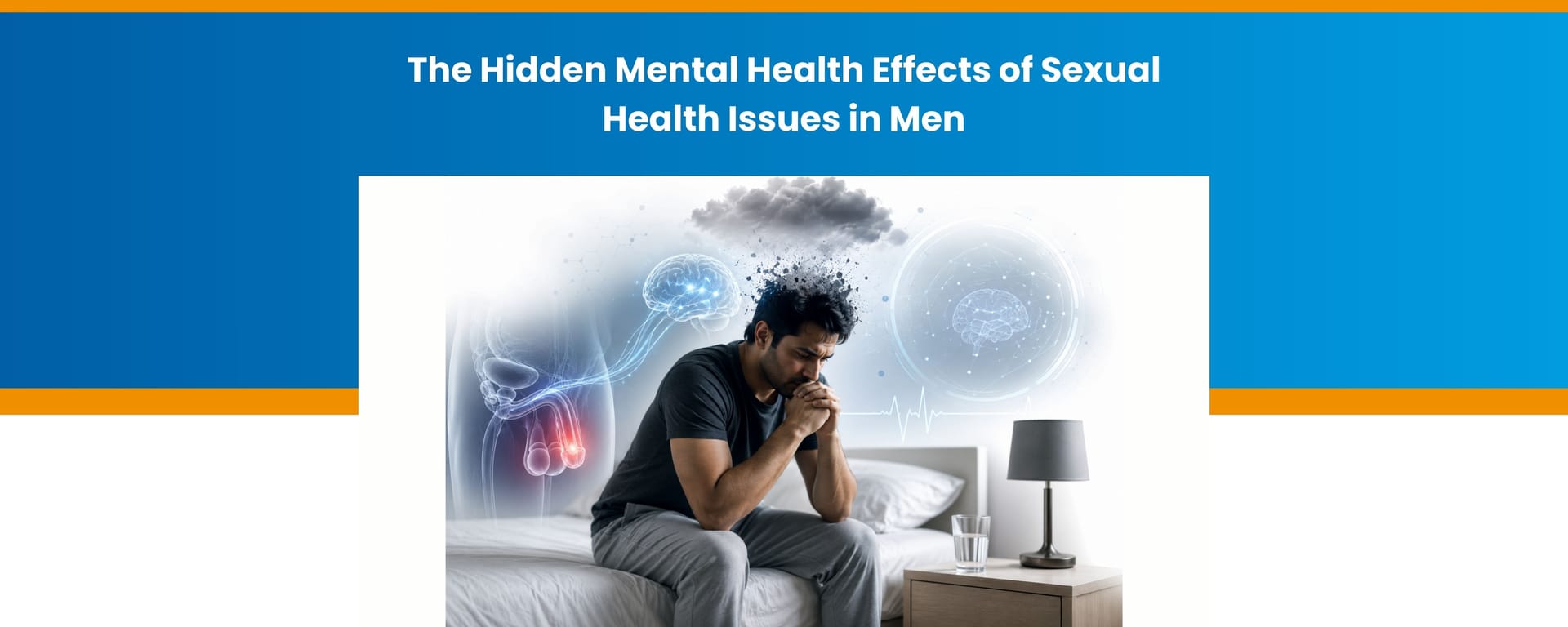
Sexual health and mental health affect each other more than most men realise. Chronic stress can increase cortisol levels, which may contribute to reduced testosterone levels and lower sexual desire. Anxiety can interfere with the brain's signals to the body, leading to erectile dysfunction, which then creates more anxiety. Depression reduces desire and physical response altogether. What makes this harder is that men rarely talk about it, because sexual performance is tied to self-worth. This information article covers how stress, anxiety, and depression affect sexual function, and what men can actually do about it.
Table of Contents
-
How are sex and stress related?
-
Are sex and anxiety related?
-
Self-care tips to deal with stress
-
How to deal with stress-related erectile dysfunction?
-
Can depression impact your sex life?
-
Conclusion
-
FAQs
How are sex and stress related?
When you feel pressured, your body responds. The stress you feel can even be tolerable and helpful. However, it becomes a problem when the stress you face is not in balance with your ability to cope with it.
When you are stressed, your body prepares to either confront the situation or run from it. The sympathetic nervous system prepares the body to respond to whatever is most appropriate. During this activation, the sympathetic nervous system also releases cortisol, a hormone produced by the adrenal glands, which shuts down non-essential functions such as the immune response and digestion to prioritise your survival. However, once that stress is gone, the parasympathetic nervous system restores the body to its normal state.
If you are in a situation where you are dealing with prolonged stress, like losing a job, the death of a loved one, or a major health concern, the sympathetic nervous system stays activated for longer than usual. This means that cortisol keeps releasing, which can impact testosterone production and, subsequently, your sex drive. If you have a pre-existing mental health condition like anxiety, cortisol can exacerbate it and affect your erectile performance.
Furthermore, when you are stressed, you feel anxious, irritable, sad, frightened, or grumpy. Feeling this is totally normal. However, these might impact your ability to feel desire, romance, and intimacy.
When stress accumulates, sexual health is one of the first things to suffer. Self-care is the practical response to this. It is not selfish, and it directly affects how present and available you are to a partner.
Are sex and anxiety related?
Yes. Stress and anxiety have an impact on your erection and ejaculation. Anxiety can manifest in the form of physiological symptoms like sweaty palms, increased heart rate, or gastrointestinal issues. In fact, anxious thoughts can interrupt the communication your brain has with your penis. This results in the loss of erection, which, in turn, creates more anxiety.
This is a cycle of erectile issues where some people withdraw from their partners, sexually as well as non-sexually. They fear that if they engage with their partners, it will lead to sexual activity, which may lead to erectile dysfunction, resulting in disappointment and rejection.
Self-Care Tips to Deal with Stress
1. Get moving
Movement is a great way for you to improve your physical and mental health. Exercise can reduce cortisol, the stress hormone, and increase endorphin production. This will help you feel relaxed and optimistic.
2. Have a date night
Even if you spend a lot of time at home with your partner, it doesn’t necessarily mean that it is quality time. You and your partner have to actively make an effort to do something together, like cooking a special meal, watching a movie, or going for a walk. There is no fixed definition of this, and you have to decide what quality time means for you.
3. Talk
On a particularly bad day, communicate how you are feeling. If you try to avoid your feelings, you might end up projecting them onto your partner and lashing out. Most of the issues in and out of the bedroom stem from a lack of communication. This can lead you or your partner to feel unwanted or rejected.
How to deal with stress-related erectile dysfunction?
1. Wax and wane
When it comes to sexual experience, relaxation is just as important as sensuality. The wax-and-wane method can help you remain calm. In this method, you masturbate, but instead of ejaculating, you allow yourself to become soft. Then, you get hard again and repeat this process. This way, if you do lose the erection with your partner, you will not panic, knowing that it will return.
2. Do more than just sex
Sex is more than just penetration. It is about performance and pleasure. A lot of men find sexual performance to be stressful. In fact, it has been a major preoccupation for many men. They might consider whether their partner is enjoying it. They might compare themselves and their penis to others. To avoid this, it is important to work with your partner in order to increase their sensual pleasure. This can include kissing, cuddling, massage, oral stimulation, emotional intimacy and more. If you focus more on connection and mutual satisfaction, it will reduce pressure and improve your confidence, and thus, your performance. Men who are looking for a permanent treatment option for erectile dysfunction can consider penile implants.
3. Don’t overthink it
Anxiety during sex is common. A few things that actually help:
-
Change something about the setting or try something new.
-
Sort out your headspace before you start, not during sex.
-
Focused breathing interrupts anxious thoughts more reliably than trying to think your way out of it.
-
Pay attention to physical sensation.
-
Distraction works better than suppression. Give your mind something to focus on rather than telling it to stop.
Can depression impact your sex life?
Yes, depression is known to impact the activities that used to be a source of pleasure, including sex. Since you would be feeling fatigue and mood changes, your body won’t be able to physically respond, leading to low libido, difficulties with arousal, ED, and delayed orgasm.
Furthermore, when you are dealing with depression, having issues with your sexual health on top of it can cause even more guilt, shame, and low self-esteem, worsening depression symptoms. You might end up stuck in the vicious cycle of sexual dysfunction and worsening depression.
If you are concerned that you might have depression or if you have signs of depression lasting for over two weeks, it is important that you talk to a doctor. A lot of people don’t want to take medications for depression, but the truth is that it can help you keep your head above water and actually benefit from psychological treatment.
Please note that antidepressants might add to your sexual dysfunction. If that is a problem, speak to your doctor as there are alternatives available. You should not stop your medicines without your doctor’s advice. Once you have managed your depression, then you can work on improving your sexual function.
Conclusion
Sexual health and mental health issues continue to remain stigmatised in society, especially for men. If you are dealing with this at the moment, be honest with yourself, your partner, and your doctor. Communicating your feelings can take the pressure off and enable you to take the right steps towards improvement.








