 Nephrology
 Urology
 Andrology
 Fertility (IVF)
 General Nephrology
 Paediatric Nephrology
 Dialysis
 Renal (Kidney) Biopsy
 CRRT
 Peritonial Dialysis
 Robotic Surgery
 Urinary Incontinence
 Uro-Oncology
 Laparoscopic Urology
 Reconstructive Urology
 Anaesthesiology
 Radiodiagnosis
 Nutrition and Dietetics
 Pediatric and Immunization
 Cardiology
 Intensive Care Unit




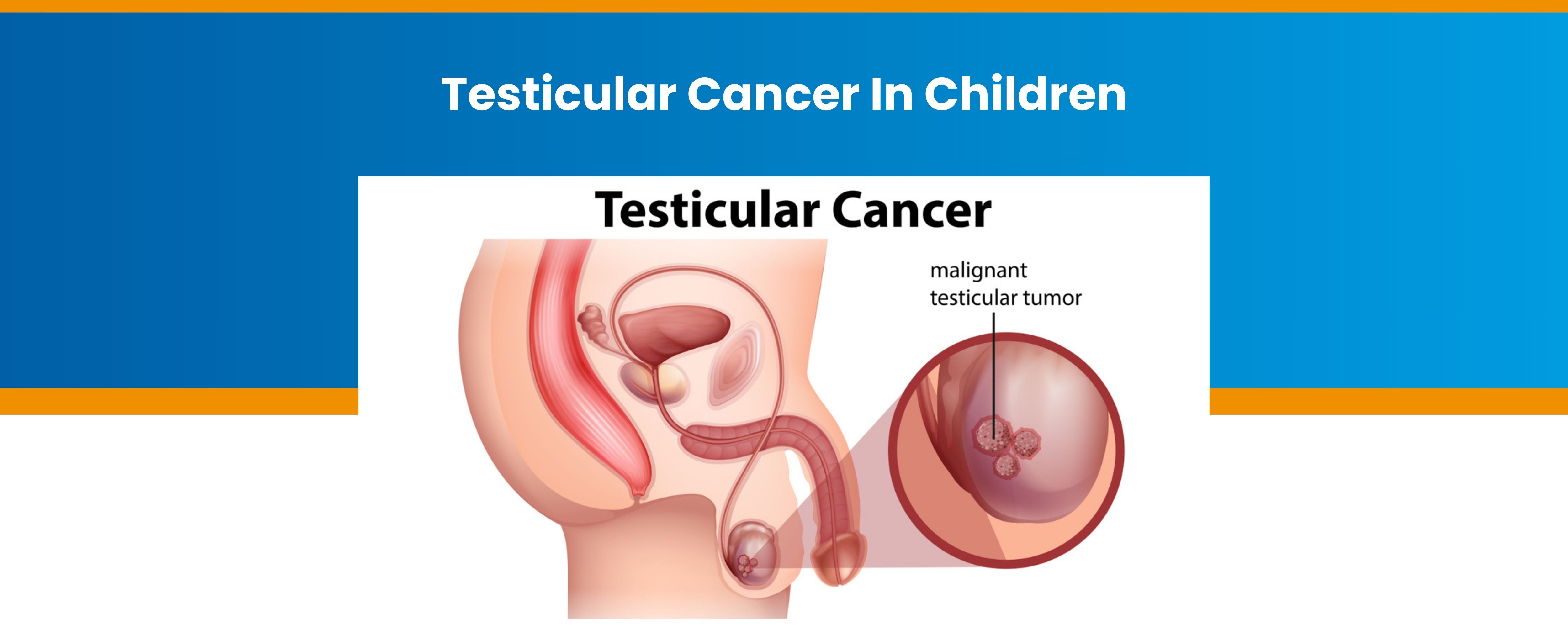
It is scary to hear cancer and children in the same sentence. Testicular cancer is not a common cancer found in children; the incidence is quite rare. This accounts for less than 2% of all childhood cancers.
It is overwhelming and frightening for parents and families who face the diagnosis of a testicular tumour in their child.
Do not be scared, there is good news: testicular cancer treatments have high success rates. With early detection, diagnosis and treatment, your child will lead a healthy life post-treatment.
At NU Hospitals, Bangalore, our expert pediatric urologists and uro-oncologists make sure your baby receives the best care and returns to their daily life as soon as possible.
Understanding the symptoms, diagnosis and treatment options of paediatric testicular cancer helps parents like you to make an informed decision about when to consult the specialists and what to look out for.
Dear parents, this blog is for you if you are looking for retorts about pediatric testicular cancer treatment in Bangalore (Bengaluru).
What are the Early Signs and Symptoms of Pediatric Testicular Cancer?
Parents are the first advocates for a child; you are the first ones to notice if there are any unusual signs in your child. Most testicular swellings in children are benign, meaning non-cancerous.
Recognise any warning signs and red flags of testicular cancer and seek immediate help.

A few common signs and symptoms of Pediatric Testicular Cancer include:
-
Swelling of the testicle
-
Painless lump in the testicle
-
One testicle is hard/firm
-
Continuous and rapid testicle enlargement
-
Pain/discomfort in the scrotum (it is a rare symptom)
-
Fluid accumulation in the scrotum
-
Precocious puberty (in some rare cases)
If you notice any hardness, swelling, or abnormal change in your child’s scrotum, consult with our pediatric urology specialist in Bangalore without further delay.
How is Testicular Cancer Diagnosed in Children?
Our experts suggest a few tests to confirm the presence of a tumour and its type. Testicular tumours are different from those in adults.
Here are a few important diagnostic tests:
-
Physical examination
Pediatric uro-oncologists conduct a thorough physical examination, checking for swelling, harness and asymmetry in the scrotum.
-
Ultrasound
This is a safe and painless test used to visualise the mass and check for tumours, cysts or fluid.
-
Blood Tests
Blood tests for Alpha-fetoprotein and Beta-hCG levels reveal the presence of cancer. If reports indicate elevated levels, it may indicate the presence of testicular cancer in some cases.
-
Imaging tests
A CT scan or an MRI is done to check the extent of cancer spread in the body.
-
Biopsy
In rare and highly suspected cases, a biopsy is done.
Treatment Options for Testicular Cancer in Children
Based on the tumour type, stage of cancer and the child’s overall health, uro-oncologists will suggest a suitable treatment option. Pediatric testicular cancers respond well to treatment.
Treatment options include:
1. Orchiectomy Surgery
-
The first-line treatment for testicular cancer is orchiectomy, a surgical procedure to remove the affected testicle.
-
An incision is made through the groin and not the scrotum (inguinal incision) to avoid cancer spread.
-
Most children with benign cases can be cured with orchiectomy alone.
2. Chemotherapy
-
It is used when the tumour has spread, or when cancer markers are high, even after surgery.
-
Children’s tolerance to chemotherapy is high, and they see long-term survival rates.
-
The common drugs include Bleomycin, Etoposide, and Cisplatin.
3. Radiation Therapy
- This may be used in very rare cases, as most testicular tumours are not radiation sensitive.
4. Surveillance
- A regular follow-up is required, including a check for tumour markers, with imaging and physical examinations. This helps in detecting recurrence in the early stages.
Success and Survival Rates of Testicular Cancer in Children
-
Localised testicular cancer in children has the highest survival rate of 95% (cancer has not spread beyond the testicle).
-
Metastatic cases have a high survival rate of 80-90% with modern chemotherapy (Cancer spread to lymph nodes or lungs).
-
Benign tumours can be cured through surgery.
The approximate survival rates of Pediatric Testicular Cancer are:
Cancer Stage |
Survival Rates |
Treatment Approach |
Localised Tumour |
>95% |
Orchidectomy |
Regional Spread |
80-90% |
Orchidectomy |
Distant spread |
70-80% |
Surgery, chemotherapy and follow-up |
Non-cancerous tumours |
100% |
Surgery |
Timely and prompt treatment at NU Hospitals paves the way to positive outcomes.
Why Is Early Diagnosis Important?
Early diagnosis can help in
-
Preventing Spread
With early detection, surgery alone can help treat the cancer, and it helps prevent the cancer from spreading.
-
Reduces treatment burden
Early detection and treatment can avoid intensive chemotherapy in later stages.
-
Better survival rates
Children who get early treatment have better outcomes and survival chances.
-
Minimised side effects
Treating the cancer in the early stages can help reduce long-term side effects like reduced fertility and hormonal imbalance.
Consult Leading Pediatric Uro-Oncologists at NU Hospitals, Bangalore
At NU Hospitals, our team of pediatric urology and uro-oncology experts work together to provide your child with world-class treatment. We offer:
-
Accurate and timely diagnosis
Our diagnostic labs are equipped with advanced imaging and modern tumour marker facilities, allowing faster reports with accurate diagnosis.
-
State-of-the-art surgical techniques
Our globally trained pediatric uro-oncology experts are well-versed in modern laparoscopic and robotic surgical techniques. Decades of experience in the field and advanced minimally invasive techniques make orchiectomy a precise and effective surgical treatment.
-
Personalised chemotherapy
Our pediatric uro-oncologists customise chemotherapy for every patient based on their condition and overall health.
-
Fertility preservation
Most families are concerned about the reproductive health of their kids; a detailed consultation and counselling shall be provided to parents. This allows parents to have a practical understanding of the condition and prognosis.








