 Nephrology
 Urology
 Andrology
 Fertility (IVF)
 General Nephrology
 Paediatric Nephrology
 Dialysis
 Renal (Kidney) Biopsy
 CRRT
 Peritonial Dialysis
 Robotic Surgery
 Urinary Incontinence
 Uro-Oncology
 Laparoscopic Urology
 Reconstructive Urology
 Anaesthesiology
 Radiodiagnosis
 Nutrition and Dietetics
 Pediatric and Immunization
 Cardiology
 Intensive Care Unit




Are you ignoring your kidney health? Have you heard about Polycystic Kidney Disease?
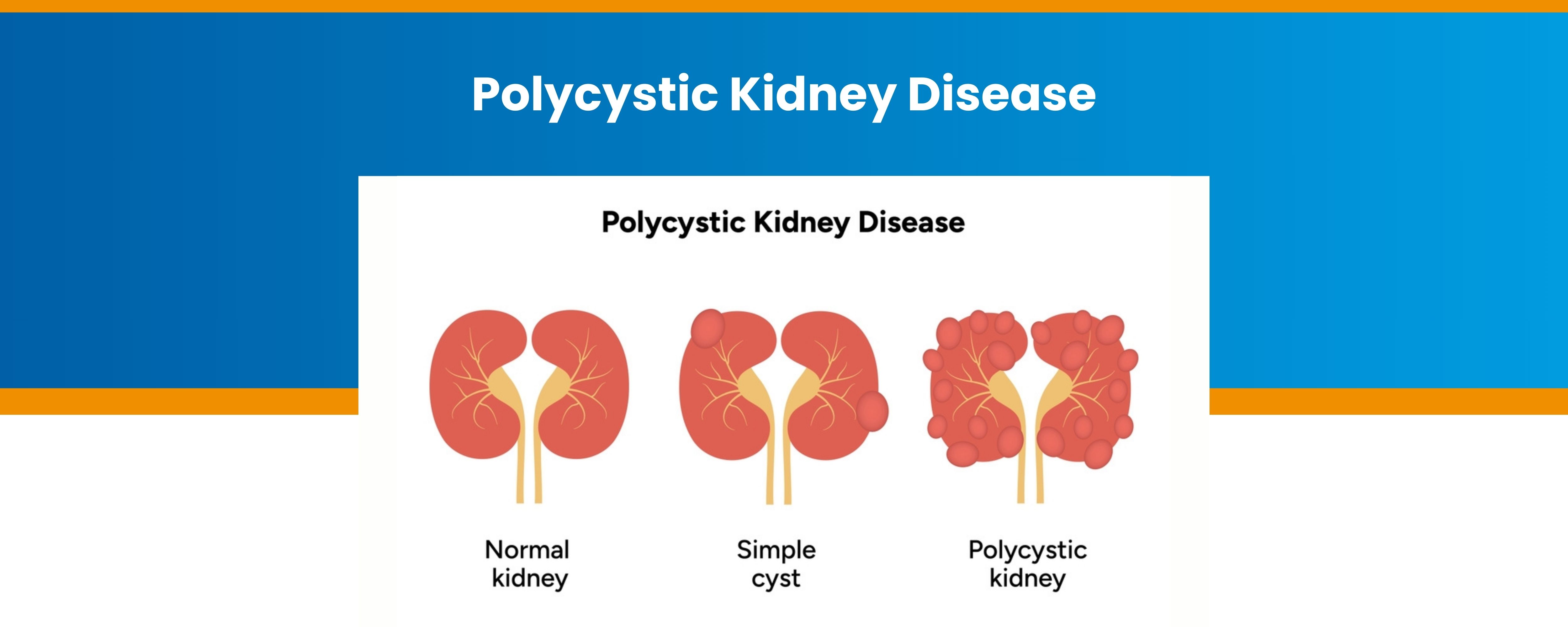
Polycystic Kidney Disease is a genetic condition where clusters of fluid-filled sacs, or cysts, take over your kidneys.
They are not normal blemishes. They can slowly crowd out healthy tissue, turning your kidneys into a giant cluster of grapes. This can lead to a gradual loss of the kidneys' incredible ability to filter waste.
This can eventually cause kidney failure.
But don't worry! PKD can be managed effectively. At NU Hospitals, Bangalore, a leading nephrology and urology hospital, we help you manage and fight such complex conditions.
Follow this guide to learn more about Polycystic Kidney Disease, PKD symptoms, types, and PKD treatment.
What is Polycystic Kidney Disease?
Polycystic Kidney Disease is the most common genetic kidney disorder. It’s caused by a faulty gene that can trigger the growth of multiple cysts.
When the cysts grow, your kidneys get much larger. Sometimes it can weigh several pounds each. This disease also causes your kidneys' function to decline.
What are the causes of Polycystic Kidney Disease?
PKD is usually inherited. It is your genetics, not your lifestyle choices.
-
Genetic Mutation: A mutation in specific genes is usually the cause.
-
Inheritance: The disease is passed down through families. Sometimes, it can be a new mutation, but it is rare.
Polycystic Kidney Disease Types
There are two major types of Polycystic Kidney Disease:
Autosomal Dominant Polycystic Kidney Disease (ADPKD):
-
Common: This is the most common form of PKD. It accounts for about 90% of all cases.
-
Onset: Symptoms appear in your adulthood between the ages of 30 and 40. However, cysts start developing much earlier.
-
Inheritance: Only one parent needs to carry the gene for the child to have a 50% chance of inheriting it. This type is also known as "Polycystic kidney, adult type".
Autosomal Recessive Polycystic Kidney Disease (ARPKD):
-
Rare: Less common and usually more severe.
-
Onset: Symptoms begin in the womb of the mother or during the first few months of life.
-
Inheritance: Both parents must carry the gene, but they may not have the disease themselves. The child must inherit two copies of the faulty gene to develop the condition.
Feature |
Autosomal Dominant PKD (ADPKD) |
Autosomal Recessive PKD (ARPKD) |
Prevalence |
Most common |
Rare |
Found in |
Adulthood (30s to 40s), |
Infancy or childhood, sometimes even before birth |
What to expect
|
|
|
Associated Organ Cysts |
Liver, pancreas, and brain aneurysms |
Liver scarring is common |
Key Treatment |
|
|
PKD Symptoms and How to Diagnose
In the early stages, ADPKD hides in plain sight, showing few or no symptoms. You can catch this disease early with the help of careful monitoring.
What are the early PKD symptoms?
-
High Blood Pressure (Hypertension)
High BP is usually the first sign. It appears even before your kidney function declines.
-
Pain
Chronic pain in your back, side, or abdomen. This is usually due to the enlarged cysts or kidney stones.
-
Headaches
You may experience frequent and severe headaches.
-
Blood in Urine (Hematuria)
Blood in urine can happen if your cyst ruptures.
How is PKD Diagnosed?
Diagnosis is simple and usually involves imaging.
Family History:
A family history of this condition is usually the first clue.
Imaging Tests:
-
Polycystic kidney disease ultrasound
This is the most common and first tool. It shows the number and size of the cysts in your kidneys.
-
CT or MRI Scans
Used for a detailed view of your kidney size and the full extent of cysts.
Blood Tests:
-
Kidney function test (KFTs):
KFT helps to check how well your kidneys are filtering waste. It also shows your creatinine levels.
PKD Treatment
There is no cure for Polycystic Kidney Disease yet. However, with proper treatment, you can slow the disease progression and improve the quality of your life.
1. Blood Pressure Control
Controlling your BP is the most important step. High BP can damage your kidneys faster.
2. Pain Management
Your doctors may prescribe medication, fluid drainage, or surgery in rare cases to deal with any cyst pain.
3. Treating Infections
UTIs are quite common. Early treatment can prevent kidney damage.
4. Tolvaptan
It is a medicine that helps to slow down your cyst growth in ADPKD. It requires close monitoring of serum electrolytes and liver function while on this medication.
5. Lifestyle Changes
-
Low-salt diet
-
Drink an adequate amount of water
-
Avoid smoking
-
Do moderate exercise
-
Healthy weight
6. Dialysis
If your kidneys fail, you might have to go through dialysis.
7. Kidney Transplant
A kidney transplant is the best option for long-term survival after kidney failure.
How PKD Can Affect Daily Life
Polycystic Kidney Disease is a life-changing condition.
-
Fatigue is quite common, especially as your kidney function test results get worse. Prioritise rest and gentle, regular exercise is everyday.
-
You may have severe restrictions in your diet. Monitoring your salt and fluid intake can become a part of your life.
-
Dealing with a chronic condition can be emotionally tiring.
-
You might have to go for frequent doctor visits due to your condition.
Managing life with PKD can be quite difficult. However, with proper care, lifestyle adjustments, and regular follow-up, many people live an active and fulfilling life.
Living Life with PKD
Life with Polycystic Kidney Disease is quite challenging. It will require continuous monitoring and care. If you or your loved one is dealing with PKD, you will need expert care.
At NU Hospitals, we understand the difficult journey you are on. From proper diagnosis to personalized medical treatment, we take care of all. We help you manage your condition effectively.








