 Nephrology
 Urology
 Andrology
 Fertility (IVF)
 General Nephrology
 Paediatric Nephrology
 Dialysis
 Renal (Kidney) Biopsy
 CRRT
 Peritonial Dialysis
 Robotic Surgery
 Urinary Incontinence
 Uro-Oncology
 Laparoscopic Urology
 Reconstructive Urology
 Anaesthesiology
 Radiodiagnosis
 Nutrition and Dietetics
 Pediatric and Immunization
 Cardiology
 Intensive Care Unit




Pregnancy is a special and magical journey for every woman. You are growing a tiny human.
However, with all these changes, your body is also working overtime. Every organ is pushed to its limit, especially your kidneys.
For most women, this is no problem. However, sometimes, this extra load can lead to pregnancy and kidney issues.
In India, up to 3.3% pregnancies are affected by kidney disease or kidney problems.
NU Hospitals, Bangalore, is one of the pioneering centers for urology and nephrology care. If you and your partner are expecting, we at NU Hospitals are here to make sure this is a smooth journey.
If you or your partner are expecting and wondering about kidney issues during pregnancy, follow through the blog to learn more.
How Pregnancy Affects Kidney Function
When you are pregnant, your kidneys face a massive change. The need to adapt quickly. This adaptation is a part of your pregnancy journey. Understanding these changes is key to monitoring your pregnancy and kidney health.
Physiological changes during pregnancy impacting kidney workload
-
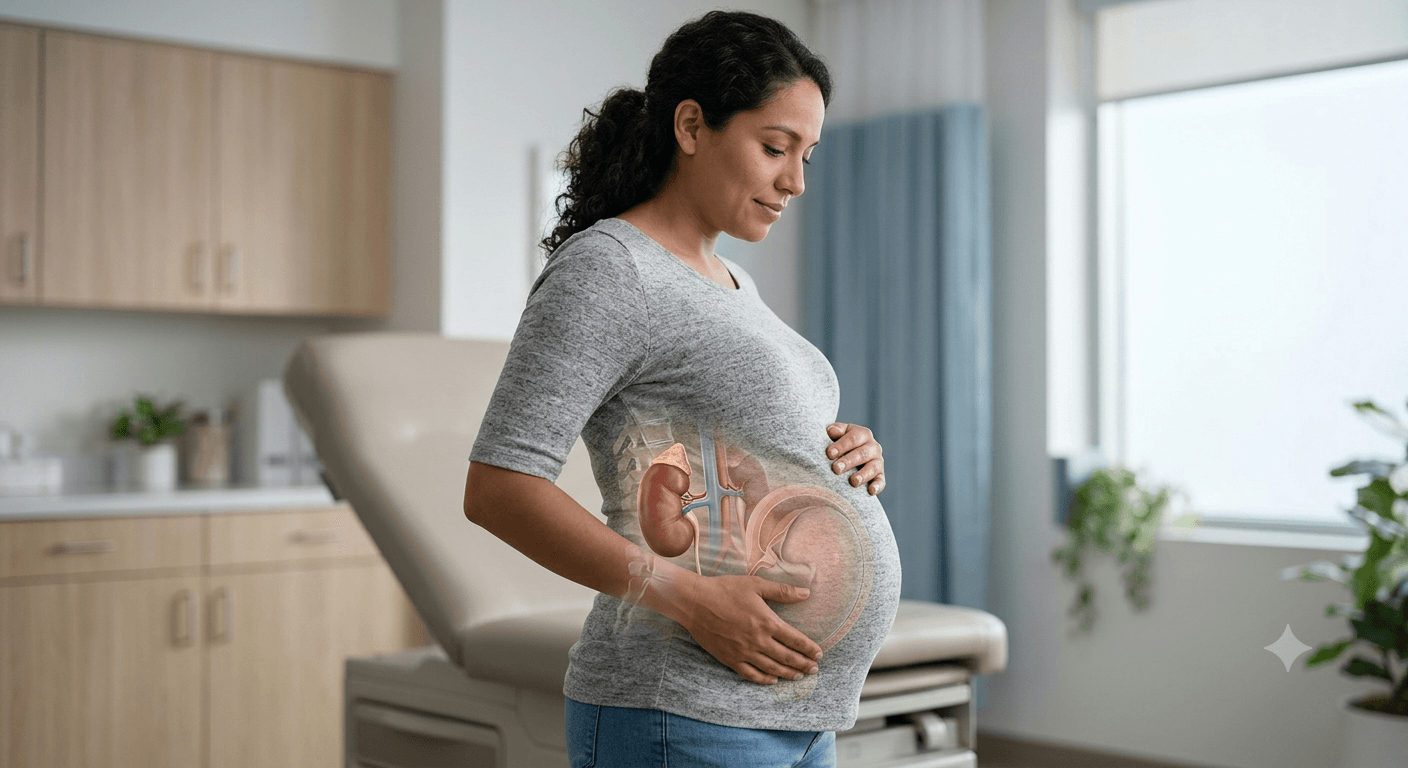
By the end of your pregnancy, your total blood volume increases by 40-50%. That is a lot more fluid your kidney has to filter.
-
The kidneys filter 40-50% more blood per minute during your pregnancy. This increases your waste removal while straining your organs
-
The growing uterus puts pressure on your ureters. These are the tubes that carry urine from the kidney to the bladder. This can cause the urine flow to slow down. It can sometimes increase the risk of infections.
Potential risks for women with pre-existing kidney conditions
If you already have kidney problems, the increased workload during pregnancy is a serious stress test. Pregnancy affects kidney function; it can.
-
Worsen kidney function.
-
Increase risk of high blood pressure.
-
Increases the chances of acute kidney injury (AKI) or other complications.
Common Kidney Issues During Pregnancy
While your body is adapting, several kidney issues during pregnancy can arise. They need quick attention. Recognizing them early makes a huge difference.
Gestational hypertension and preeclampsia
This is the most serious kidney-related complication.
-
Gestational Hypertension: High blood pressure after 20 weeks. This usually resolves after delivery.
-
Preeclampsia: It is high blood pressure and damage to another organ system, often your kidneys. Preeclampsia affects 3–5% of pregnancies.
It can be quite life-threatening for both mother and baby if not managed.
Acute kidney injury and urinary tract infections
-
AKI can occur due to dehydration, low blood flow, or infection.
-
UTIs are quite common in pregnancy. If left untreated, it can lead to a kidney infection.
Effects of chronic kidney disease on pregnancy outcomes
-
If you have CKD, you may have higher rates of miscarriage, preterm birth, or small-for-gestational-age babies.
-
There is also a chance of worsening kidney function during your pregnancy.
Symptoms and Warning Signs to Monitor During Pregnancy
Mothers, pay attention to your body. Report any unusual changes you notice to your care team immediately.
High blood pressure, swelling, and proteinuria
-
Blood pressure readings that are over your normal range.
-
Sudden swelling in your face and hands.
Changes in urine output and appearance
-
Dark or cloudy urine.
-
Foamy urine.
-
Reduced urine output.
-
Pain or burning sensation when urinating.
Fatigue, nausea, and other systemic signs
-
Constant and severe headaches.
-
Pain in your upper right abdomen.
-
Unusual fatigue or breathlessness.
Advanced Diagnostic and Monitoring Services at NU Hospitals, Bangalore
Early detection can save lives. At NU Hospitals, we care for you and your child. We use state-of-the-art diagnostic tools that are specifically tailored for pregnant patients.
Kidney Function Tests Tailored for Pregnancy
-
24-Hour Urine Collection: This measures your protein and creatinine. It helps to judge your kidney filtration capacity.
-
Maternal Blood Tests: We track your creatinine, BUN, and uric acid levels.
-
Non-Invasive Imaging: Ultrasound scans are used safely. This helps to check your kidney size and check for any blockages.
Collaborative Care Approach
-
Regular Fetal and Maternal Monitoring: Close monitoring of your baby. This includes regular ultrasound growth scans.
-
The Multidisciplinary Team: Our team works collaboratively to make sure you and your baby get the best care.
Treatment and Management Strategies for Pregnancy-Related Kidney Problems
Our goal is to make sure both you and your baby are safe.
Medication safety and blood pressure control
-
Antihypertensives
We give you blood pressure medications that are safe during your pregnancy. Certain common BP drugs, like ACE inhibitors, must be avoided during your pregnancy.
-
Strict BP Monitoring:
Monitoring blood pressure regularly is important. This helps prevent damage to your kidneys and other organs.
Managing infections and kidney complications
-
Antibiotic Choice
UTIs are treated with antibiotics that are safe for pregnancy.
-
Preeclampsia Management
The treatment will include medications to control your blood pressure and prevent seizures.
Dialysis and transplant care during pregnancy when necessary
Pregnancy on your dialysis, or post-transplant, is a risky situation.
-
Intensified Dialysis
Women on dialysis usually need frequent and gentler sessions. This will help to manage your fluid and waste levels.
-
Immunosuppressant Adjustment
If you are a transplant patient, we will carefully manage and monitor your anti-rejection medications. Your condition will require expertise and knowledge.
Lifestyle and Self-Care Tips for Healthy Pregnancy and Kidney Protection
Simple, daily habits matter most for pregnancy and kidney health.
Nutrition and hydration guidance
-
Eat balanced meals with protein (but not excessive).
-
Stay hydrated.
-
Avoid consuming too much salt.
Importance of prenatal care and stress management
-
Attend all your antenatal appointments.
-
Practice yoga, meditation, or gentle walking.
-
Sleep well, it is important for both your kidneys and your baby.
Avoiding nephrotoxic substances
-
Skip over-the-counter painkillers unless recommended by your doctor.
-
Avoid unnecessary supplements.
-
Talk to your doctor before taking any herbal or alternative medicine.








