 Nephrology
 Urology
 Andrology
 Fertility (IVF)
 General Nephrology
 Paediatric Nephrology
 Dialysis
 Renal (Kidney) Biopsy
 CRRT
 Peritonial Dialysis
 Robotic Surgery
 Urinary Incontinence
 Uro-Oncology
 Laparoscopic Urology
 Reconstructive Urology
 Anaesthesiology
 Radiodiagnosis
 Nutrition and Dietetics
 Pediatric and Immunization
 Cardiology
 Intensive Care Unit




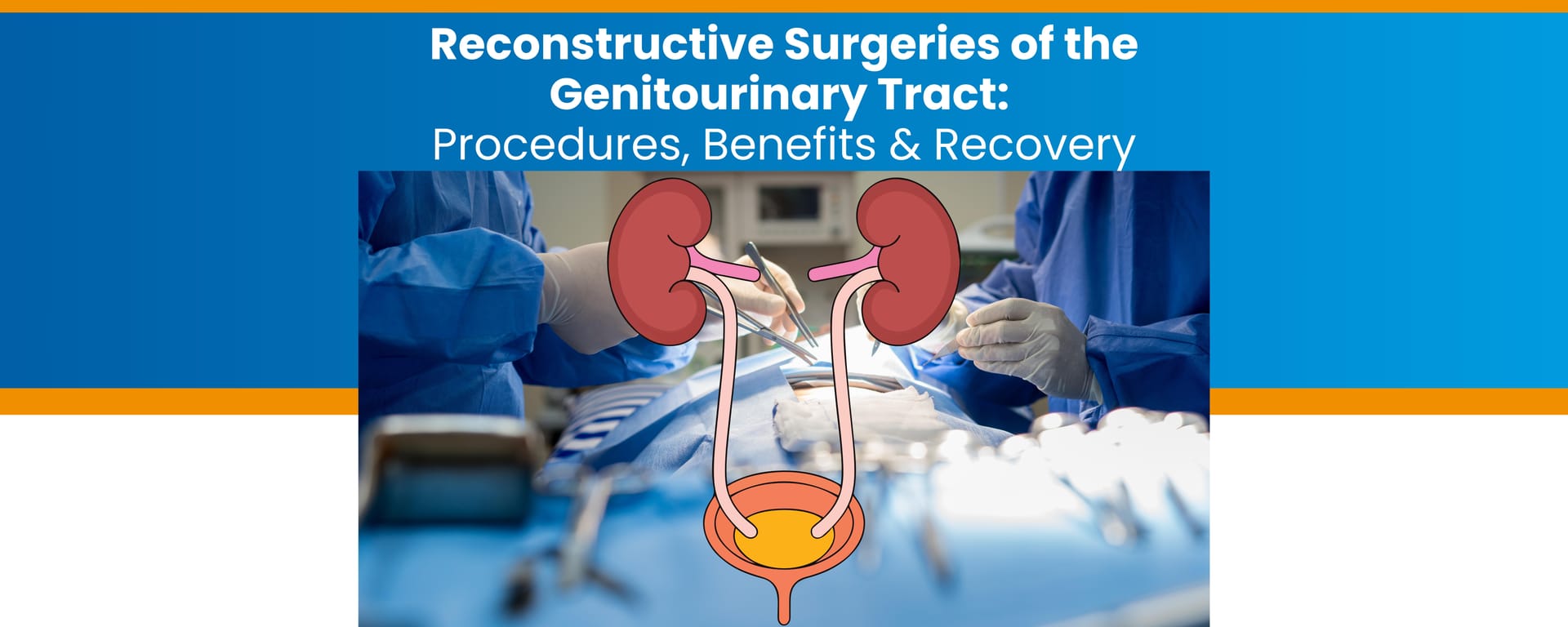
The genitourinary tract refers to the urinary system and genital organs. The urinary system includes your kidneys, ureters, bladder, and urethra.
Kidneys are vital organs responsible for overall health.
Due to certain causes like birth defects, trauma, previous surgery, infections, or cancer, the genitourinary tract may get affected.
When the functionality and structure of the genitourinary tract is altered, it can obstruct urine flow, cause problems with fertility, sexual functions and affect overall quality of life.
Did you know UTIs are the most common genitourinary conditions in the world? Around 400 million cases were reported annually as of 2019 (PMC)
Reconstructive surgery is a hope for patients dealing with structural and functional problems of the genitourinary tract. They help in restoring normal function and improving both physical and mental health.
Read on as we learn about all the types, benefits, and recovery from genitourinary tract reconstructive surgeries.
What are the Common Types of Genitourinary Reconstructive Surgeries?
Reconstructive urology surgeries have a wide spectrum of procedures. In each condition, the severity and the patient’s health are considered while choosing the type of surgery.
Here are the most common types of genitourinary reconstructive surgeries:
1. Urethroplasty
Reconstruction surgery of the urethra.
Performed for urethral stricture (when the urethra narrows down due to scar tissue from infection, trauma, or surgery)
2. Bladder Reconstruction
Performed for a diseased bladder caused by cancer, trauma, or congenital anomalies. Bladder reconstruction might include:
-
Augmentation cystoplasty
-
Neobladder reconstruction
3. Ureteral Reconstruction
To repair or replace diseased ureters (ureters are tubes connecting the kidneys to the bladder). Used to treat ureteral stricture, injuries and blockages in the ureter.
4. Genital Reconstruction
For babies with congenital anomalies like hypospadias, epispadias and patients with trauma or post-cancer surgery, genital reconstruction is required. Genital reconstruction includes repair of the penis, scrotum or female genital tract.
5. Pelvic Organ Prolapse Repair
Women may develop pelvic organ prolapse, meaning the bladder, uterus, or vagina or rectum descends from its normal position due to lack of proper support to these organs. This is restored to its original position post-surgery.
6. Post-cancer Reconstruction
After prostate, bladder, kidney, testicle, or penile cancer surgeries, reconstructive surgeries help in restoring urinary and sexual function.
7. Trauma-related Reconstruction
An accident to the pelvic floor, urinary system, or genitals can damage the organs. Reconstructive urology surgeries help in repairing and restoring structural and functional damage.
What are the Long-Term Benefits of Genitourinary Reconstructive Surgery?
Reconstructive surgeries fix more than just structural problems; they offer long-term benefits, including:
-
Improved urination
Post-surgery patients would have better and improved urinary function, with good and painless flow and better bladder control.
-
Sexual function restoration
In most cases, patients can restore or improve fertility and sexual abilities.
-
Better quality of life
You can return to your normal work and social life after surgery.
-
Reduced risk of infections
With blockage and stricture correction, the risk of infections is lower.
-
Psychological well-being
Genital reconstructive surgery will help you with confidence, body image, and a better emotional state.
Recovery After Reconstructive Surgery of the Genitourinary Tract
Recovery from reconstructive surgeries depends on the type of surgery, the conditions, the severity, and the other medical conditions of the patient.
Most patients achieve significant improvement in a few weeks, although full recovery and healing may take a few months.
Post Surgery Care and Hospital Stay
-
2-7 days of hospital stay based on the type of surgery performed
-
Temporary catheter placement to facilitate urination and healing
-
Mild pain, swelling, or discomfort are common in the first week and are managed through medications
-
Antibiotics are prescribed to prevent infection
-
Follow up with the doctors regularly
Long-term Recovery and Lifestyle Adjustments
-
Most patients return to normal activities within 4-6 weeks
-
Avoid heavy exercises and strenuous activities until fully recovered
-
Practice mild activities like regular walking
-
Hydrate adequately
-
Follow a healthy diet
-
Avoid smoking/drinking
-
Return to sexual activity usually 8-12 weeks or until cleared by your doctor.
-
Long-term monitoring with prescribed tests and follow-up consultations.
Consult the Best Genitourinary Tract Surgeons in Bangalore at NU Hospitals
NU Hospitals is the only dedicated centre for urology and nephrology in Bangalore. As a standalone centre, we offer versatile treatment options for all genitourinary tract problems.
Our team of expert specialists are globally trained, with decades of experience, and they bring world-class care and compassion to people of Bangalore.
Why Choose NU Hospitals for Genitourinary Reconstruction Surgery?
-
No. 1 Hospital for Urology Care In India and Bangalore
-
Pioneers in Reconstrictive Urology Surgery
-
Legacy of Innovation and Trusted by Millions
-
Protocolized Evidence-based Care
-
Renowned Team of Experts with a Multi-Disciplinary Approach
-
Exceptional Care and World-class Technology (access to laparoscopic, Robotic and minimally invasive procedures)
-
High success rates in reconstructive surgeries
-
Tailored plans focusing on each patient








