 Nephrology
 Urology
 Andrology
 Fertility (IVF)
 General Nephrology
 Paediatric Nephrology
 Dialysis
 Renal (Kidney) Biopsy
 CRRT
 Peritonial Dialysis
 Robotic Surgery
 Urinary Incontinence
 Uro-Oncology
 Laparoscopic Urology
 Reconstructive Urology
 Anaesthesiology
 Radiodiagnosis
 Nutrition and Dietetics
 Pediatric and Immunization
 Cardiology
 Intensive Care Unit




A kidney transplant can bring major relief for people living with kidney failure. Many patients feel stronger, regain independence, and return to work or family life. Even so, a transplant does not mean the end of medical care. Long-term follow-up remains important, especially because rejection can still occur.
Rejection does not always begin suddenly. In many cases, the changes are slow and easy to overlook. Knowing the signs of kidney transplant rejection helps patients seek care early and reduces the risk of permanent damage to the transplanted kidney.
What Kidney Transplant Rejection Means
Kidney transplant rejection happens when the immune system reacts against the transplanted kidney. This response can occur even when medicines are taken regularly. Immunosuppressive treatment lowers immune activity, but it does not remove it completely.
Rejection can happen at different stages after transplant. Some episodes occur early, while others develop months or years later. Because of this, transplant care continues for life, not just in the first few months after surgery.
Acute and Chronic Rejection
Doctors usually describe rejection as acute or chronic. Both forms matter, but they behave differently.
-
Acute rejection often develops within the first year but can occur later. It may be triggered by changes in medication levels, missed doses, or infections that disturb immune balance. Acute rejection may cause symptoms, but it is sometimes detected only on routine blood tests. When detected early, treatment is often effective.
-
Chronic rejection develops slowly over time. It causes a gradual loss of kidney function and may not produce clear symptoms in the early stages. Chronic rejection is harder to reverse, which is why regular monitoring is so important.
Early Symptoms of Transplant Rejection
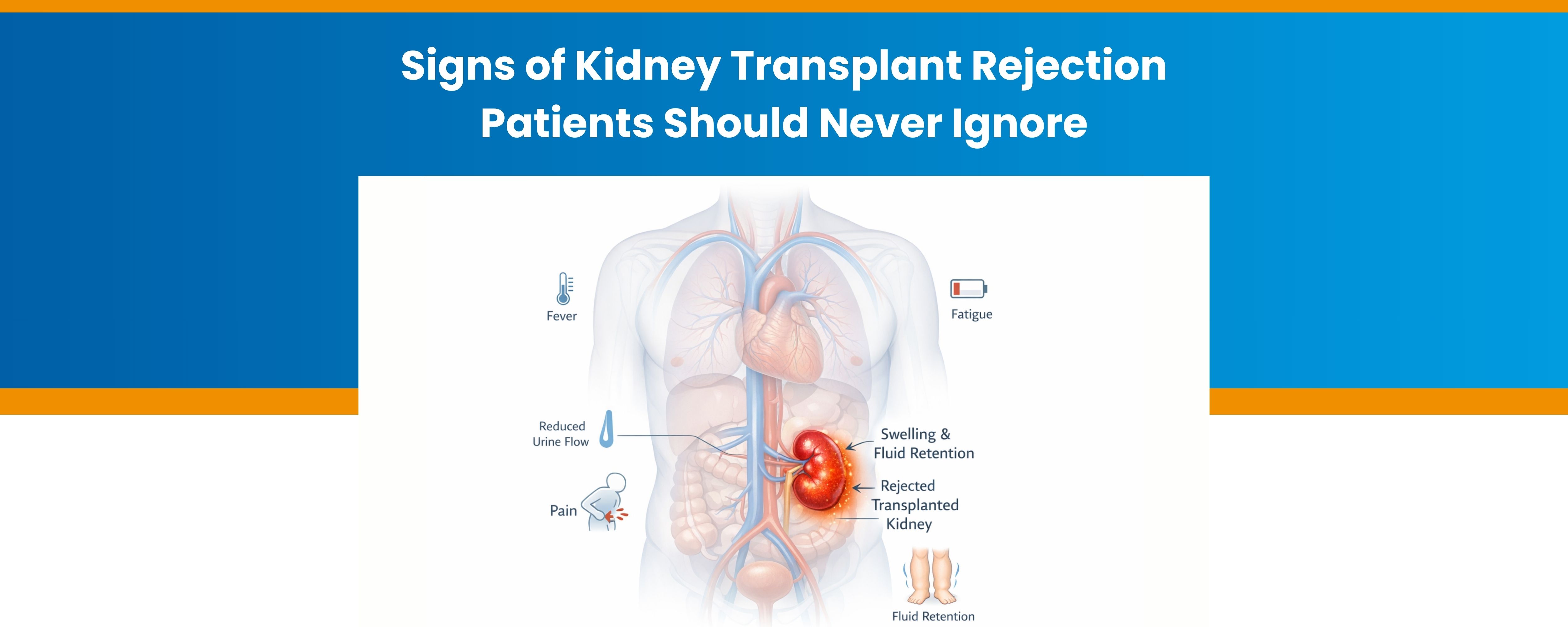
The early symptoms of transplant rejection are often mild. Some patients feel “not quite right,” but are unable to explain why. These early changes should not be ignored
-
Ongoing tiredness or low energy
-
Mild swelling of the legs, ankles, or face
-
Changes in urine amount or frequency
-
Unexplained weight gain due to fluid buildup
-
Low-grade fever
-
Feeling generally unwell without a clear cause
-
A general feeling of “something isn’t right.”
These early signs are easy to overlook or blame on stress or fatigue, but in transplant patients, even small changes should be checked.
Changes Related to Kidney Function
Some of the most important signs of kidney transplant rejection are linked to kidney function itself. These changes are often detected through tests rather than symptoms.
Blood tests may show rising creatinine levels. Urine tests may show protein or reduced output. Blood pressure may become harder to control. These findings may appear before pain or discomfort develops.
This is why routine testing is a core part of transplant care, even when patients feel well.
Pain or Discomfort Near the Transplant Area
The transplanted kidney is placed in the patient's lower abdomen. Some patients notice tenderness, pressure, or discomfort in this area during rejection. The pain is usually mild. Severe pain is uncommon.
Pain on its own does not confirm rejection. Ongoing pain should be reported, especially if fever, swelling, or reduced urine output is also present.
Fever and General Illness
Some patients develop a fever during rejection; others may not. Immunosuppressive medicines can reduce the body’s usual inflammatory response. Some patients experience chills, body aches, or flu-like symptoms instead.
Because fever may be mild or absent, feeling generally unwell for several days should be discussed with the transplant team.
Blood Pressure Changes
High blood pressure can worsen during rejection. Patients who previously had stable readings may notice rising numbers or reduced response to medicines. These changes may reflect stress on the transplanted kidney. Blood pressure readings that remain higher than usual should be mentioned during follow-up.
Why Symptoms Are Often Missed
Rejection is sometimes missed because symptoms develop slowly and are not dramatic. Immunosuppressive medicines can mask inflammation, and patients may attribute symptoms to everyday fatigue or work stress.
This is why doctors stress awareness of the early symptoms of transplant rejection, even when they seem minor.
How Rejection Is Diagnosed
Kidney transplant rejection is identified through a structured medical evaluation. The assessment usually begins with a clinical review of symptoms and recent health changes
-
Blood tests are performed to measure creatinine and assess kidney function. Creatinine levels may slowly rise when the transplanted kidney is under strain
-
Urine tests can show protein or blood that is not normally present
-
Ultrasound scans are done to look at the transplanted kidney. These scans check kidney shape and blood supply
-
A biopsy is considered when test results remain unclear. A small piece of kidney tissue is taken during the procedure. The tissue is examined under a microscope
The tests from these assessments will allow the doctors to confirm whether rejection is present. The pattern seen will also help identify the type of rejection. Treatment choices will then depend on these findings.
Treatment of Acute and Chronic Rejection
Treatment is planned based on the type of rejection, its severity, and the timing of detection.
Management of Acute Rejection
-
Care usually begins with a review of current anti-rejection medicines
-
Drug doses may be increased for a short period
-
Steroids are commonly used when immune activity is high
-
Additional medicines may be introduced if the response is slow
-
Blood tests are checked frequently to monitor kidney function
-
Many patients improve when treatment starts early
Management of Chronic Rejection
-
Chronic rejection develops gradually and is managed over time
-
The main goal is to limit further damage to the transplanted kidney
-
Medicines are adjusted step by step based on test results
-
Blood pressure is monitored closely
-
Blood sugar and cholesterol levels are also managed
-
Regular follow-up visits help track long-term stability
Early identification and consistent care are important for protecting transplanted kidneys. At NU Hospitals, structured follow-up and specialist-led monitoring help ensure timely treatment and long-term transplant health.
When to Contact the Transplant Team
Patients should seek medical advice if they notice reduced urine output, swelling, ongoing tiredness, fever, pain near the transplant area, or rising blood pressure. Waiting for symptoms to resolve on their own can delay treatment.
Living Well After Transplant
Most patients who attend regular follow-up visits and take medicines as advised live active lives after transplant. Awareness of the signs of kidney transplant rejection allows patients to take part in their own care.
Rejection does not mean transplant failure. Many episodes are treatable, especially when identified early.
Kidney Transplant Care at NU Hospitals
At NU Hospitals, transplant care continues long after surgery. Patients attend clinic visits at scheduled intervals. Blood and urine tests are done during these visits. Imaging is ordered only when needed. Results are reviewed over time, since changes often occur gradually rather than in a single report.
Care involves more than one specialist. Transplant surgeons, kidney doctors, and clinical support staff work together. This shared approach helps detect early changes and manage rejection while considering the patient’s overall health after transplant.








