 Nephrology
 Urology
 Andrology
 Fertility (IVF)
 General Nephrology
 Paediatric Nephrology
 Dialysis
 Renal (Kidney) Biopsy
 CRRT
 Peritonial Dialysis
 Robotic Surgery
 Urinary Incontinence
 Uro-Oncology
 Laparoscopic Urology
 Reconstructive Urology
 Anaesthesiology
 Radiodiagnosis
 Nutrition and Dietetics
 Pediatric and Immunization
 Cardiology
 Intensive Care Unit




Introduction
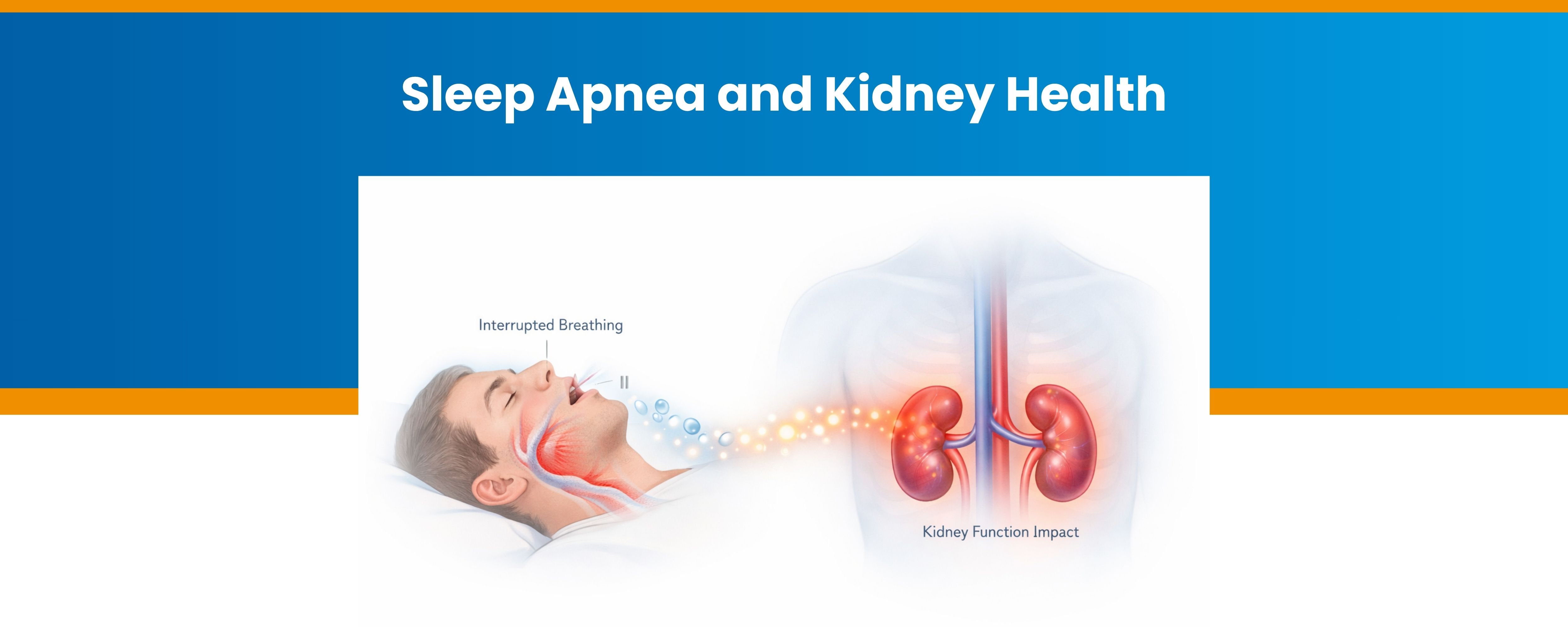
Sleep apnea is more than just a nighttime breathing disorder. It can also affect the kidneys. There is a connection between sleep apnea and kidney function, especially in individuals with chronic kidney disease (CKD). Snoring or repeated breathless episodes during sleep can decrease the body's oxygen supply, disrupt the blood pressure, cause inflammation and contribute to kidney damage if they persist for an extended time period. This article will discuss the correlation between obstructive sleep apnea (OSA) and CKD, including information on symptoms such as nocturia and other symptoms of sleep apnea, and whether or how lack of sleep can result in kidney disease. It will also provide a brief description of integrated care models like NU Hospitals’ CardioRenalMetabolic (CRM) Clinic, an integrated approach to providing comprehensive treatment for patients with heart, kidney, or metabolic disease, which combines the specialties of nephrology, cardiology, and sleep medicine.
What is Sleep Apnea?
Sleep apnea is defined as a sleep disorder that occurs when your breathing is interrupted frequently during sleep. The most common kind of sleep apnea is known as obstructive sleep apnea (OSA). In OSA, the throat muscles relax while sleeping and block a person's airway.
The primary symptoms of sleep apnea are loud snoring, choking or gasping for air while sleeping, drowsiness during the day, and headaches when a person wakes up in the morning. A lot of people with sleep apnea don’t know that they have it, which places them at increased risk of developing chronic health issues related to the heart, metabolism, and kidneys over time.
The Function Of The Kidneys & The Importance Of Sleep
Kidney function includes filtering waste products, regulating fluids, and controlling blood pressure. During periods of rest, the body performs certain restorative functions that positively influence the regulation of hormone levels, lower inflammation levels, and help keep the kidneys working optimally. Poor or interrupted sleep may interfere with these processes. In addition, creating hormonal imbalance, increased stimulation of the sympathetic nervous system, and increased levels of stress hormones place undue stress on the cardiovascular system and create an environment in which hypertension and metabolic disease may develop. Both of these conditions are significant contributing factors to the development of chronic kidney disease.
Is There A Relationship Between Sleep Apnea And Kidney Function?
The relationship between sleep apnea and kidney disease has to do with oxygen deprivation caused by the cessation of breathing and an increase in blood pressure due to continued cessation of breathing during periods of rest. This may create a physiological response from the body, which causes the blood vessels to constrict and results in an increase in the inflammatory response. Over time, the physiologic changes associated with continued cessation of breathing during sleep create damage to the delicate filtering system of the kidneys. Patients with untreated obstructive sleep apnea may demonstrate increased protein levels in their urine (proteinuria), develop diminishing kidney function, and experience an increased rate of progression of their kidney disease.
What Is The Link Between OSA And CKD?
The link between obstructive sleep apnea (OSA) and chronic kidney disease (CKD) is two-way. OSA has been shown to increase the progression of CKD, and the progression of CKD increases risk factors for OSA.
Table 1 below shows OSA symptoms and mechanisms affecting the kidneys in a way that creates a vicious cycle:
OSA Symptom |
Impact on the Kidneys |
Increased blood pressure |
Compromised blood vessels in the kidney |
Increased sympathetic nervous system activation |
More inflammation & increased stress hormones |
Intermittent oxygen deprivation |
Decreased oxygenation of kidney tissue |
Disturbed sleep cycles |
Hormonal imbalances that can lead to decreased regulation of the kidney |
Protein in urine |
Kidney function may progressively decrease over time |
What Happens During Sleep Apnea?
Multiple physiological changes occur during an episode of apnea:
-
During apnea episodes, oxygen levels decrease, which can lead to oxidative stress.
-
Both heart rate and blood pressure fluctuate to extreme levels.
-
Fluid and electrolyte hormonal systems are disrupted.
-
Inflammatory pathways are activated.
These changes impact not only the cardiovascular system, but may also decrease the kidney's ability to filter, and increase one's susceptibility to developing chronic kidney disease.
Who Is At Risk For Kidney Complications Related To Sleep Disorders?
Certain groups are more prone to experience kidney complications associated with sleep apnea:
-
Those who suffer from hypertension (high blood pressure) or diabetes.
-
Those who are overweight or obese.
-
Those who have chronic kidney disease (CKD).
-
Older adults.
Common "Red Flags" associated with sleep apnea
Symptom |
Possible Health-Related Concern |
Snoring loudly |
Airway blockage & Low oxygen |
Fatigued during the daytime |
Chronic loss of sleep |
Nocturia |
Hormonal changes & stress on the kidneys. |
Morning headaches |
Lack of oxygen through the night. |
Poor concentration |
Sleep fragmentation & Chronic fatigue. |
Identifying "red flags" associated with sleep apnea can help to detect those who are at risk of developing complications from this disease, and can allow earlier screening and treatment.
How Is Sleep Apnea Diagnosed In People Who Have Kidney Disease?
Typically, sleep studies are done in the home or by sleep labs. Physicians may assess how well the kidneys are working by checking with blood tests, urine tests, and imaging studies. It is becoming more common to perform a routine screening for sleep disorders with chronic kidney disease, especially in patients who are tired, not sleeping well, needing to urinate more at night, and have uncontrolled high blood pressure.
Integrated Approaches To Treatment for CKD Patients With Apnea
An integrated approach is essential for helping patients with apnea and kidney function, because of the complex relationship between kidney function and sleep apnea. At NU Hospital’s cardiorenalmetabolic (CRM) clinic, all providers work together to provide coordinated care with nephrology, cardiology, and sleep specialists. The integrated care model includes:
-
Routine screening for sleep disorders in CKD patients
-
Collaborative treatment planning across specialties
-
Continuous blood pressure and kidney function monitoring
-
Lifestyle counseling and metabolic risk management by addressing cardiovascular, renal, and sleep factors at the same time
-
Integrated clinics can help to slow the progression of disease and improve patient outcomes.








