 Nephrology
 Urology
 Andrology
 Fertility (IVF)
 General Nephrology
 Paediatric Nephrology
 Dialysis
 Renal (Kidney) Biopsy
 CRRT
 Peritonial Dialysis
 Robotic Surgery
 Urinary Incontinence
 Uro-Oncology
 Laparoscopic Urology
 Reconstructive Urology
 Anaesthesiology
 Radiodiagnosis
 Nutrition and Dietetics
 Pediatric and Immunization
 Cardiology
 Intensive Care Unit





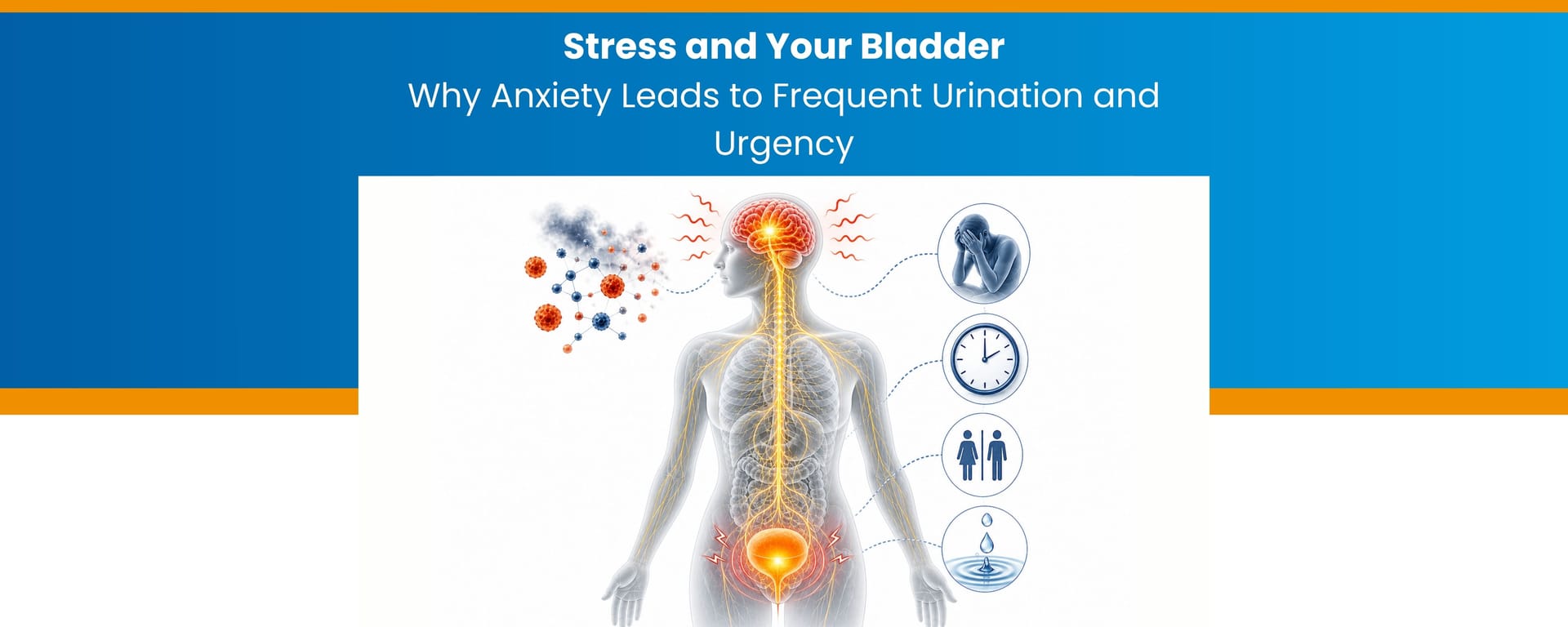
Many individuals feel an urgent and frequent need to urinate just before high-pressure events, such as meetings and social engagements. While this is often dismissed as an involuntary response, the correlation between acute stress and urinary urgency is well-documented as a physiological phenomenon.
Quick Overview
There is a direct neural pathway that connects your brain to your bladder. This makes your urinary tract highly sensitive to emotional shifts. When the fight-or-flight response kicks in, it triggers tightening of the pelvic floor muscles, leading to heightened bladder sensitivity. This reaction causes stress and frequent urination, creating an intense need to empty your bladder, even if it is not full yet.
It is important to understand that this can be stress-driven rather than infectious, so a person may be able to take the right steps toward effective relief.
How Stress and Anxiety Cause Bladder Problems
The bladder is controlled by a complex collaboration between your brain and the autonomic nervous system. Psychological urinary frequency takes place when stress, anxiety, or other mental tensions trigger an urgent, frequent need to urinate despite individuals having a physically healthy bladder. When a person is relaxed, the bladder wall remains calm, and the sphincter muscles stay contracted. Stress can disrupt this very harmony between the two through several means, such as:
· The Fight-or-Flight Response: When the brain perceives something to be a threat, it releases an increased amount of cortisol and adrenaline, triggering the body’s fight-or-flight response, making your nervous system more sensitive and overstimulating your bladder, especially if you have an overactive bladder (OAB).
· Pelvic Floor Tension: Chronic pelvic floor tension can put direct pressure on a person’s bladder, mimicking the sensation of fullness even when the bladder is empty.
· Pelvic Organ Hypersensitivity: While normally your brain may not worry about low-level signals from the bladder, stress can cause it to become hyper-aware of the organ, interpreting a small volume of urine as an emergency. This happens due to somatisation, the expression of mental or emotional distress through somatic symptoms.
Can Stress Cause UTI Symptoms?
While not directly, stress and anxiety can cause pseudo-UTI symptoms, including burning sensation, urgency, and pressure. There is no clear evidence that stress is directly linked to UTIs, but it may affect your immune system, making you more prone to infections.
Most of the time, UTIs are caused by E. coli and other microbes, such as Staphylococcus saprophyticus and Proteus mirabilis. So, can stress cause UTI symptoms? No, but it can lower the effectiveness of your body’s natural resistance to infections and other illnesses.
Differentiate between anxiety-driven bladder symptoms and UTIs:
Symptom/Indicator |
Anxiety-Driven |
UTI |
Pain/burning |
Usually absent, people may feel “pressure” instead |
Sharp, stinging, or burning sensation while urinating |
Fever/chills |
No |
Common in kidney infections |
Urine Clarity |
Typically, clear |
Could be cloudy, bloody, or foul-smelling |
Triggers |
Occurs during or just before stressful situations |
Persistent |
Urinalysis Results |
Negative for bacteria/leukocytes |
Positive for bacteria, nitrites, or WBCs |
Nervous Bladder Relief
To manage a nervous bladder, individuals may need to take a dual approach: calming their nervous system and retraining their bladder with care. Some relaxation techniques include:
Technique |
Method |
Benefit |
Deep Breathing |
Slow and full contraction of the diaphragm with the expansion of the belly, followed by slow and full contraction of the abdominal muscles with the reduction of the belly.Inhale for 4 seconds, exhale for 6. |
Lowers cortisol and limits the fight-or-flight response. |
Pelvic Drops |
The opposite of a Kegel. Visualise the pelvic floor muscles dropping and lengthening. |
Releases chronic tension that may mimic bladder fullness. |
Vagal Stimulation |
Therapeutic techniques like meditation, splashing cold water on your face, or humming loudly. |
Helps reduce stress and anxiety and improves sleep. |
Timed Urination |
Go to the bathroom on a schedule unless absolutely necessary. |
Allows the brain to learn how to ignore false signals. |
How NU Hospitals Can Help
At NU Hospitals, we pride ourselves on following a holistic approach to urology. Our specialists recognise that anxiety bladder symptoms may often stem from a hyper-aroused nervous system rather than an infection. That’s why our doctors evaluate both psychological triggers and physical bladder function before coming to a conclusion.
We then focused on finding the best personalised care for the patient to deliver integrated care for anxiety-related urinary symptoms. NU Hospitals has experienced urologists and mental health experts with decades of experience. Our team also supports patients with stress-related urinary symptoms.
We have state-of-the-art diagnostic tools that help us provide every single one of our patients with the personalized care they need. Our supportive, multidisciplinary approach is tailored to each individual patient.







