 Nephrology
 Urology
 Andrology
 Fertility (IVF)
 General Nephrology
 Paediatric Nephrology
 Dialysis
 Renal (Kidney) Biopsy
 CRRT
 Peritonial Dialysis
 Robotic Surgery
 Urinary Incontinence
 Uro-Oncology
 Laparoscopic Urology
 Reconstructive Urology
 Anaesthesiology
 Radiodiagnosis
 Nutrition and Dietetics
 Pediatric and Immunization
 Cardiology
 Intensive Care Unit




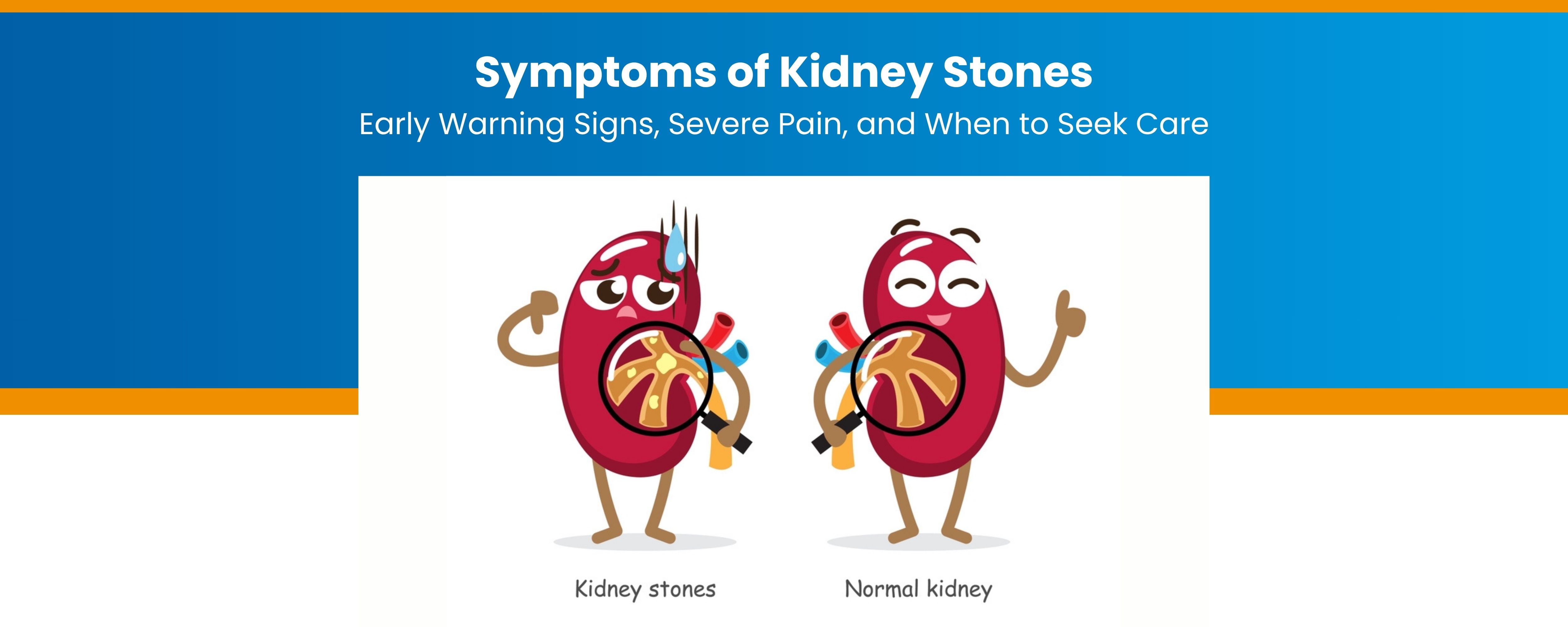
Kidney stone pain usually comes suddenly. It often starts in the side or lower back, making it difficult to sit still. Kidney stones (nephrolithiasis) are small, hard deposits that form inside the kidneys. When a stone slips into the ureter (the tube that carries urine from the kidney to the bladder), it can trigger severe cramping pain known as renal colic.
Not every stone causes symptoms right away. Some remain silent until they begin to move or cause blockage.
Overview
Kidney stone symptoms often start with mild flank discomfort and when a stone blocks the ureter, it can cause severe flank pain (renal colic) that radiates to the groin and is often accompanied by nausea or vomiting or blood in urine. Fever, chills, persistent vomiting, reduced urine output, or severe pain that does not settle are warning signs that require urgent medical evaluation. When the stone reaches lower ureter burning urination, urinary urgency may be there.
What Are the Symptoms of Kidney Stones?
The symptoms of kidney stones depend on:
-
The size of the stone
-
Where it is located
-
Whether it is causing a blockage or not
-
Presence or absence of infection
A stone sitting quietly in the kidney may cause no symptoms at all. But once it begins to travel, symptoms can become intense very quickly.
Early Warning Signs of Kidney Stones
-
Mild ache in the flank or lower back, usually on one side
-
Burning sensation while passing urine
-
Frequent urination or repeated urge with small urine output
-
Cloudy urine or an unusually strong smell
-
Blood in urine (may look pink/red/brown, or may only show on urine testing)
Severe Kidney Stone Symptoms (Renal Colic)
When a stone blocks the ureter, the kidney tries to move the stone out. This causes ureteral spasm and increased pressure within the kidney, leading to renal colic.
1. Sudden, severe flank pain
This is the hallmark symptom of kidney stones.
The pain is often:
-
Sharp and continuous
-
Extremely intense
-
Felt on one side
People often cannot find a comfortable position and keep moving due to pain severity.
2. Pain that radiates to the groin
Kidney stone pain often travels as the stone moves.
Typical pain path:
-
Side/back (flank)
-
Lower abdomen
-
Groin region
-
Inner thigh
-
Testicle pain in men
-
Pelvic discomfort in women
This radiating pain is a key clue that the stone is moving through the ureter.
3. Nausea and vomiting
Nausea and vomiting are very common during renal colic.
This happens because the kidneys and intestines share nerve pathways. Severe ureter pain can trigger the body’s vomiting reflex.
4. Difficulty passing urine
A stone can cause:
-
Low urine output
-
Burning while urinating
-
Weak or interrupted urine stream
If urine stops completely, get checked urgently.
5. Fever and chills (Warning sign)
Fever is not expected with an uncomplicated stone.
Stone pain with fever or chills suggests infection with blockage. This needs emergency care.
Common Kidney Stone Symptoms at a Glance
Symptom Type |
Early Warning Signs |
Severe / Emergency Signs |
Pain |
Mild flank ache |
Severe flank pain (renal colic), radiating to the groin |
Urine Changes |
Cloudy urine, mild burning |
Blood in urine, reduced urine output |
Urinary Symptoms |
Frequent urination |
Severe burning, inability to pass urine |
Stomach Symptoms |
Mild nausea |
Vomiting, severe abdominal discomfort |
Infection Signs |
Usually absent |
Fever, chills, weakness (urgent) |
Kidney Stone vs UTI Symptoms
Many people confuse kidney stones with a urinary infection. Both can cause burning and frequent urination, but there are key differences.
Feature |
Kidney Stone |
UTI |
Pain type |
Severe, colicky, radiating |
Burning discomfort, pelvic pain |
Pain location |
Flank → groin |
Lower abdomen/bladder area |
Fever |
Usually absent |
Common in infection |
Blood in urine |
Common |
Can occur |
Urgency |
Can occur |
Very common |
Vomiting |
Common in renal colic |
Less common |
If you are unsure, it’s always safer to get evaluated, especially if the pain is severe.
Can Kidney Stones Occur Without Pain?
Yes. Some stones remain inside the kidney and do not block urine flow. These stones may be found incidentally during:
-
Ultrasound
-
CT scan
-
Routine urine test showing blood or pus cells
However, once the stone moves into the ureter, symptoms usually begin.
A stone that blocks urine flow can cause swelling of the kidney (hydronephrosis). If obstruction is prolonged or recurrent, it may reduce kidney function, especially in people with diabetes, hypertension, or pre-existing kidney disease.
Silent stones should not be ignored because they can still cause:
-
recurrent infection
-
kidney swelling (hydronephrosis)
-
long-term kidney damage if obstruction develops
Where Is Kidney Stone Pain Usually Felt?
Pain location depends on the stone's position.
Common pain areas include:
-
Side of the back below the ribs (flank)
-
Lower abdomen
-
Groin area
-
Testicle pain in men
-
Pelvic area in women
A key symptom of renal colic is pain that shifts location over time as the stone moves down.
Kidney Stone Symptoms in Men vs Women
Most kidney stone symptoms are similar in both men and women, but the pain location can be different.
In men:
-
Pain may radiate into the groin, scrotum, or testicle
-
Severe colicky pain may mimic testicular torsion or hernia pain
-
Many patients feel restless and find it difficult to stay still during an episode of renal colic.
In women:
-
Pain may feel more like pelvic pain or lower abdominal cramps
-
It can sometimes be mistaken for gynaecological pain
-
Urinary urgency and burning may feel similar to a bladder infection
Regardless of gender, severe flank pain with nausea or blood in the urine should raise a strong suspicion of a kidney stone.
Why Do Kidney Stones Cause Nausea?
This is a very common question.
Kidney stone pain activates nerves that are closely connected to the digestive system. When the ureter goes into spasm, and pain becomes severe, the body responds with:
-
Nausea
-
Vomiting
-
Sweating
-
Dizziness
This is why some patients come to the emergency room mainly due to vomiting and severe pain.
When Should You Seek Immediate Medical Care?
Quick Guide: When to Manage at Home vs When to Seek Help
You can monitor at home (with medical advice) if:
-
Pain is mild and controlled with prescribed medication
-
You have no fever
-
You can drink normal quantity of fluids
-
Urine output is normal
Book an urgent doctor visit (same day) if:
-
Pain is not getting relieved
-
You notice visible blood in urine
-
Burning urination persists
-
You have a history of recurrent stones
Go to the emergency room immediately if:
-
Fever or chills are present
-
Vomiting is persistent, or you cannot keep fluids down
-
Pain is severe and not controlled
-
Your urine output becomes very low, or you are unable to pass urine
-
You feel drowsy, weak, dizzy, or confused
-
You notice blood in urine along with weakness or dizziness
-
You have known kidney disease or a single functioning kidney
-
You are pregnant
Why this matters:
A stone blocking urine flow, combined with infection, can quickly lead to sepsis, which is life-threatening.
How Doctors Confirm Kidney Stones
If kidney stone symptoms are suspected, doctors may recommend:
-
urine routine and microscopy (blood, crystals, infection markers)
-
urine culture (if infection is suspected)
-
blood tests, including Serum creatinine, Serum electrolytes, total counts
-
ultrasound KUB (kidney, ureter, bladder)
-
non-contrast CT KUB (most accurate imaging for stone detection and size assessment)
They also check for renal angle tenderness (pain at the costovertebral angle), which is commonly present in stone-related pain.
Kidney Stone Warning Signs and Expert Care at NU Hospitals
Kidney stone pain usually starts suddenly in the side of the back (flank). It may radiate toward the lower abdomen or groin. Many patients also develop nausea or vomiting. Sometimes the first signs are urinary urgency, burning on urination, or blood in the urine.
A small stone can pass on its own, but fever, repeated vomiting, severe pain, or low urine output should not be ignored.
At NU Hospitals, our urology and nephrology teams evaluate for blockage, infection, and kidney swelling, and decide on treatment based on stone size, location, and kidney function.








