 Nephrology
 Urology
 Andrology
 Fertility (IVF)
 General Nephrology
 Paediatric Nephrology
 Dialysis
 Renal (Kidney) Biopsy
 CRRT
 Peritonial Dialysis
 Robotic Surgery
 Urinary Incontinence
 Uro-Oncology
 Laparoscopic Urology
 Reconstructive Urology
 Anaesthesiology
 Radiodiagnosis
 Nutrition and Dietetics
 Pediatric and Immunization
 Cardiology
 Intensive Care Unit




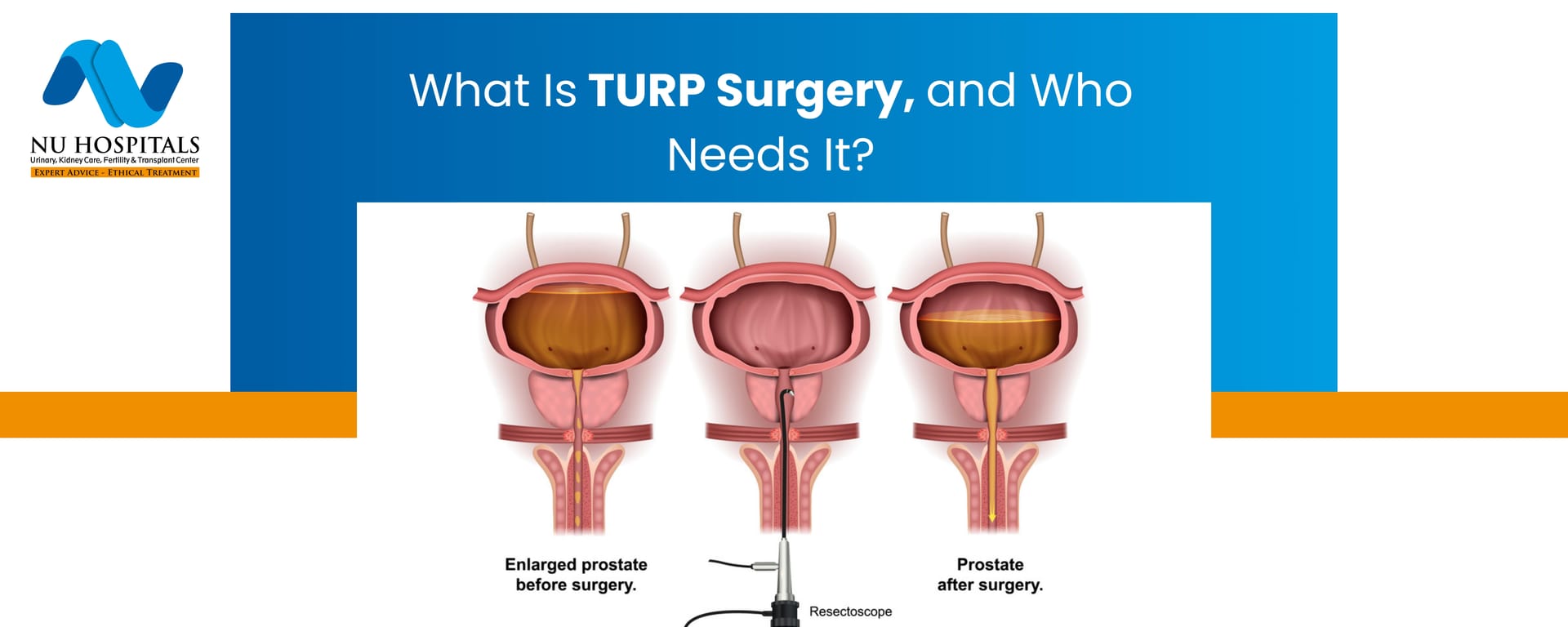
Some men older than 50 might deal with frustrating urine symptoms, needing to urinate too often, a weak stream, interrupted sleep, and a sense of incomplete emptying. Often, these signs are an indication of Benign Prostatic Hyperplasia (BPH). This condition involves the prostate becoming enlarged, which then puts pressure on the urinary tract.
If not treated, it could impact the quality of life and possibly even lead to complications. TURP is considered one of the best treatment options for people dealing with noticeable to severe signs of an enlarged prostate.
Curious how it works and who actually needs it? Let us explore what TURP is, how it works, and why it is commonly chosen for men who are dealing with chronic urinary issues.
What is TURP Surgery?
Transurethral Resection of the Prostate (TURP) is a frequently used procedure aimed at easing urinary problems caused by prostate enlargement. This technique involves guiding a device known as a resectoscope through the tip of the penis and along the urethra. This allows the surgeon to visualize and remove excess prostate tissue that is obstructing the flow of urine.
TURP is typically recommended for men experiencing moderate to serious issues that haven’t improved with prescribed drugs. Although it is rated as very effective, it is now available in newer, less invasive methods that provide comparable results with fewer complications and quicker recovery. TURP is a reliable prostate surgery option for long-term relief from prostate-induced urinary issues.
Why is TURP Surgery Done?
TURP is typically advised to treat the problems brought about by BPH, a non-cancerous condition in which the prostate enlarges with age. When the enlarged gland presses on the urethra, it becomes hard to urinate normally and can lead to other problems. TURP acts by eliminating excess prostate tissue, opening up the flow of urine, and relieving symptoms.
Common indications of TURP are,
-
Sudden and intense urges to urinate that can’t be put off.
-
Need to go to the bathroom frequently, as often as every hour or two.
-
Having trouble completely emptying the bladder.
-
Weak or slow urine flow or irregular stream.
-
Waking up multiple times at night to urinate (Nocturia)
-
Potential for kidney damage in late stages.
-
Trouble starting to urinate or sensation of obstruction.
When changes in lifestyle and medications are not providing sufficient relief, TURP may offer long-term relief in urinary health and comfort.
How is TURP Surgery performed?
TURP is a widely used enlarged prostate treatment carried out with a tool called a resectoscope, a slender metal instrument that includes a camera, light, and a wire loop. The tool is inserted through the urinary passage, eliminating the need for external cuts. When inside the prostate, a small wire loop is gently heated with an electrical current. This allows it to carefully remove excess prostate tissue that may be causing urinary difficulties, helping to relieve symptoms and improve comfort.
Once the extra tissue is taken out, a tube is guided through the urethra into the bladder to help pass urine. This assists in clearing any fragments of tissue and ensuring urine passage is not impaired during healing. The whole process is performed under general or spinal anesthesia, so the patient feels no pain during the surgery.
What Happens After a TURP Surgery?
Most people spend a day or two in the hospital recovering after having TURP surgery. The urinary catheter is maintained for 24 to 48 hours to prevent swelling and allow proper flow of urine. Noticing urine that appears slightly bloody and experiencing mild pain during urination can be expected initially.
After the procedure, these are some typical outcomes:
-
Temporary appearance of blood or minor clots in the urine stream.
-
Burning or frequent urge to urinate.
-
Discomfort during urination, which might persist for several weeks before improving.
-
Mild activity restrictions for 4 to 6 weeks.
-
No driving, heavy lifting, or sexual activity during recovery.
-
Eat fiber-rich food and drink plenty of water to ease bowel movements.
Follow post-TURP care, which includes taking prescribed medications, attending follow-up appointments, and monitoring for signs of infection or unusual symptoms.
Alternatives for TURP Surgery
TURP is a surgical procedure used to correct an enlarged prostate, but it is not the only surgical procedure that can be done. A number of other choices can be considered depending on the size of the prostate, health, and personal requirements.
-
Open Enucleative Prostatectomy
This is usually done for men with a significantly enlarged prostate, causing urinary flow issues. It involves cutting the abdomen to take out excess prostate tissue. It is an invasive procedure, typically requiring a 7 to 10-day hospital stay.
-
Laser TURP
This technique uses the light to vaporize prostate tissue. Prostate laser surgery, also known as Laser TURP, minimizes bleeding, and therefore, it is safer for men who take blood-thinning drugs to treat cardiovascular disease or circulatory diseases. It is less invasive and has quicker recovery in most situations.
-
Transurethral Incision of the Prostate (TUIP)
It is similar to TURP, but in this case, one to three small incisions are made in the prostate at the bladder neck. This relieves pressure and expands the urethral channel. TUIP is chosen when the prostate enlargement is less prominent.
-
UroLift
It is a minimally invasive procedure for men who have failed other medications, but the prostate enlargement is not severe. Tiny implants are placed inside the urethra to push the prostate lobes apart, improving urinary passage. It has fewer side effects and preserves sexual and erectile function.
Comparing Laser Prostatectomy and TURP
Aspect |
TURP (Transurethral Resection of the Prostate) |
Laser Prostatectomy |
Procedure |
A resectoscope equipped with an electrified loop is used to remove parts of the prostate by cutting away the tissue. Flushed into the bladder and removed |
Laser fiber excises tissue. The morcellator removes fragments. |
Bleeding |
Moderate to heavy bleeding is common. |
Minimal bleeding, safer for patients on blood thinners. |
Hospital Stay |
Typically longer, it may require several days. |
Usually overnight. |
Recovery |
2 to 4 weeks. Higher chances of discomfort and bleeding. |
Faster recovery, generally less discomfort. |
Risks |
Higher risk of infection, incontinence, and urethral stricture |
Lower complication rate. However, the risk of retreatment or UTI exists. |
Sexual Function |
May affect erectile or ejaculatory function |
Lower risk of sexual side effects. |
In a Nutshell
TURP surgery is an effective and proven procedure for men suffering from chronic urinary issues due to an enlarged prostate gland. It improves the flow of urine, reduces discomfort, and improves quality of life when medications fail. Even though new technologies such as Laser TURP and UroLift provide a faster recovery with fewer adverse effects, TURP is still a preferred procedure for moderate to severe BPH medication.
Each treatment has its advantages and disadvantages, so the optimal strategy will rely on the size of the prostate, the patient’s overall health, and symptoms. Meeting with a urologist will assist in determining the most appropriate strategy to gain long-term relief and urinary health without sacrificing safety or long-term health results.








