 Nephrology
 Urology
 Andrology
 Fertility (IVF)
 General Nephrology
 Paediatric Nephrology
 Dialysis
 Renal (Kidney) Biopsy
 CRRT
 Peritonial Dialysis
 Robotic Surgery
 Urinary Incontinence
 Uro-Oncology
 Laparoscopic Urology
 Reconstructive Urology
 Anaesthesiology
 Radiodiagnosis
 Nutrition and Dietetics
 Pediatric and Immunization
 Cardiology
 Intensive Care Unit




Introduction
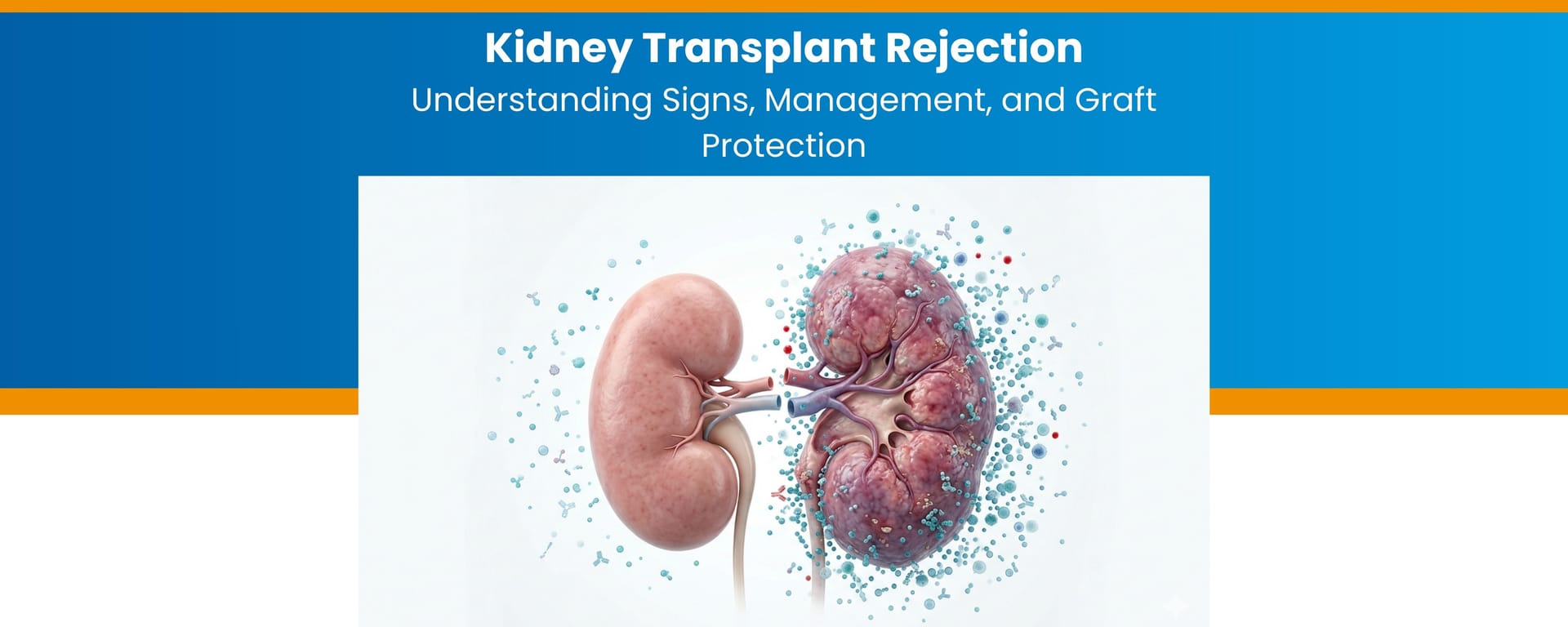
The decision to undergo kidney transplant surgery can have a significant impact on the patient's life, both in terms of their freedom from dialysis as well as the quality of their daily living. However, following surgery, the most significant concern that needs to be addressed is the possibility of rejection of the transplanted kidney, which occurs due to the recipient's body identifying the donor organ as foreign and attacking it. Rejection is not an uncommon complication of transplantation, and does not necessarily signify transplant failure. Because of the advancements in immunosuppression therapy for acute kidney transplant recipients, approximately 90% of acute episodes of rejection can be reversed when appropriate interventions are performed promptly.
Therefore, individuals must be able to identify potential signs of rejection, understand the differences between acute and chronic rejection, and take proactive measures to reduce the likelihood of needing treatment for rejection. This article describes the scientific mechanisms underlying kidney transplant rejection, the warning signs of potential rejection of a transplanted kidney, and the most advanced methods available for detecting kidney transplant rejection before irreversible damage to the graft or loss of graft function.
What is Kidney Transplant Rejection?
Kidney transplant rejection is an immune system response. When there is a mismatch between the human leukocyte antigen (HLA) of the donor and recipient, the transplanted kidney is recognised by the immune system as a 'foreign' object. Despite proper matching between donors and recipients of kidney transplants, rejection can occur in several ways. It may be classified as follows:
-
Hyperacute rejection
-
Acute rejection
-
Chronic rejection
Different Types of Kidney Transplant Rejection: Explained
Hyperacute rejection is rare because of better cross-matching, but hyperacute rejections happen shortly after transplantation, typically in minutes to hours, due to preformed antibodies targeting the transplanted kidney. The transplanted kidney must be removed right away.
Acute rejection typically occurs within 3 to 6 months of transplantation, but may also occur anytime. There are two types of acute rejection:
T-cell-mediated rejection (TCMR): This occurs when T lymphocytes directly attack renal tissue.
Antibody-mediated rejection (AMR): In AMR, the recipient forms donor-specific antibodies (DSA) that attach to the blood vessels of the transplanted kidney, causing inflammation.
The two types of acute rejection can occur simultaneously.
Chronic rejection occurs over an extended period of time and is characterised by scarring, narrowing of blood vessels, and gradual loss of kidney function. Chronic rejection is usually referred to as chronic allograft nephropathy.
Rejection Timeline- Hyperacute vs Acute vs Chronic
Type |
Timing |
Mechanism |
Reversibility |
Hyperacute |
Minutes to hours |
Preformed antibodies |
Irreversible |
Acute |
Weeks to months (sometimes years) |
T-cell or antibody-mediated |
Usually reversible |
Chronic |
Months to years |
Immune injury or scarring |
Often irreversible |
Kidney Transplant Rejection Symptoms
One of the key things to know is that many of the early episodes of rejection are clinically silent. Some lab tests indicate that you may be experiencing early (silent) rejection. Some of those tests may include:
-
Increased serum creatinine level
-
Increasing levels of donor-specific antibodies (DSA)
-
Protein in the urine
-
Histological changes detected on graft biopsy
Later on, you may have physical symptoms such as decreased urine output, swelling, fever, tenderness of the graft, and elevated blood pressure.
What are the causes of Kidney Transplant Rejection?
Transplant kidney rejection is a process in which the recipient's immune system recognises the transplanted kidney (graft) as foreign and mounts an attack on it. Rejection may also occur despite the recipient having been matched with a donor kidney using advanced scientific matching methods and receiving immunosuppressant medications following the transplant, due to immune system, genetic, medication, and patient behaviour-related factors (lifestyle habits). To help minimise the effects of kidney transplant rejection on the long-term success of the graft, it is important for patients and their healthcare providers to understand the causes of kidney transplant rejection.
Immune system activation: The immune system's natural response to invading foreign cells/tissues.
HLA mismatch: The higher the HLA mismatch, the higher the chance of rejection.
Non-Adherence to anti-rejection medications: Not taking the anti-rejection medications as prescribed is a major cause of rejection.
Insufficient immune suppression: Being underdosed with or having medication interactions with immunosuppressants would lead to rejection.
Infection: Certain specific infections trigger the immune system to become activated.
Autoimmune disease & immune activation: Patients with autoimmune disorders may experience immune system activation, leading to kidney transplant rejection.
Pre-formed antibodies: Patients may have "pre-formed antibodies" to their transplant (called sensitisation) before the actual transplant occurs.
Ischaemia-reperfusion injury: When a transplanted kidney becomes temporarily ischaemic and lacks blood supply due to surgery, this creates a strong pro-inflammatory stimulus when blood flow is restored.
Chronic immune injury: Chronic rejection can result from sustained, low-level immune activity over time. Certain genetic & immunological characteristics of the patient would contribute to their susceptibility to kidney transplant rejection.
Tips for Preventing Kidney Transplant Rejection
To prevent kidney transplant rejection, a patient has to make a lifelong commitment. Rejection is an immune-mediated response, but when prevention strategies are followed consistently, modern transplant medicine treats rejection very successfully.
Adhere to immunosuppressive medications without exception: The foundation of preventing rejection is lifelong immunosuppression. Do not miss doses of your medications. Missing even one to two days of medication can activate immune memory and cause acute rejection.
Therapeutic drug level monitoring: Drugs used for immunosuppression have a narrow therapeutic window. Drug levels that are too low can lead to rejection, and too high can lead to infection or toxicity. Routine serum tests are performed to monitor immunosuppressive agent levels and ensure they remain within a safe and therapeutic range.
Monitoring for donor-specific antibodies (DSA): The most effective tool in preventing rejection is through the early identification of donor-specific antibodies (DSA).
Protocol biopsy for silent rejection: Many rejection episodes occur without clinically visible signs. A protocol biopsy can reveal subclinical inflammation, early T-cell infiltration, and microvascular injury.
Preventing immune activation, triggering infections: Immune pathways will activate when the body is infected, potentially increasing the risk of rejection. Find a balance between preventing infections and receiving immunosuppressant medications.
Avoid toxic substances and medication interactions: Some medications interact with immunosuppressants. Do not start over-the-counter or herbal medications without approval from the transplant team.
Early warning signs: Although most episodes of rejection are asymptomatic, it is important to recognise them. Reporting suspicion to your transplant team will help expedite diagnosis and treatment.
Preventing chronic alograft nephropathy rejection: Chronic alograft nephropathy rejection develops gradually due to repeated episodes of immune injury to the donor graft. Preventing chronic alograft nephropathy rejection requires avoiding repeated episodes of acute rejection, maintaining optimal drug levels, controlling blood pressure, early diagnosis, and treatment of any increase in DSA.
Lifestyle factors: Factors that promote the health of the graft include a balanced diet (low salt, controlled protein intake), regular exercise, maintaining a healthy body weight, and avoiding tobacco products and recreational drugs. A healthy lifestyle will promote vascular health and help prevent chronic injury to the donor graft.
NU Hospitals’ Transplant Surveillance Program
At NU Hospitals, graft preservation extends beyond routine creatinine testing. The transplant surveillance program seeks to identify graft rejection at the molecular level prior to the onset of clinical symptoms. Components include:
-
Advanced DSA Monitoring: Routine monitoring of donor-specific antibody levels for early detection of potential AMR.
-
Regular Biopsies: Routine biopsies are done regardless of the level of creatinine in the blood to identify any subclinical rejection of the transplanted organ.
-
Collaborative Multidisciplinary Care: Real-time collaboration of nephrologist, kidney transplant surgeon, immunologist and pathologist to facilitate clinical decision-making.
This proactive care model promotes improved long-term graft survival and reduced risk of chronic rejection.