 Nephrology
 Urology
 Andrology
 Fertility (IVF)
 General Nephrology
 Paediatric Nephrology
 Dialysis
 Renal (Kidney) Biopsy
 CRRT
 Peritonial Dialysis
 Robotic Surgery
 Urinary Incontinence
 Uro-Oncology
 Laparoscopic Urology
 Reconstructive Urology
 Anaesthesiology
 Radiodiagnosis
 Nutrition and Dietetics
 Pediatric and Immunization
 Cardiology
 Intensive Care Unit




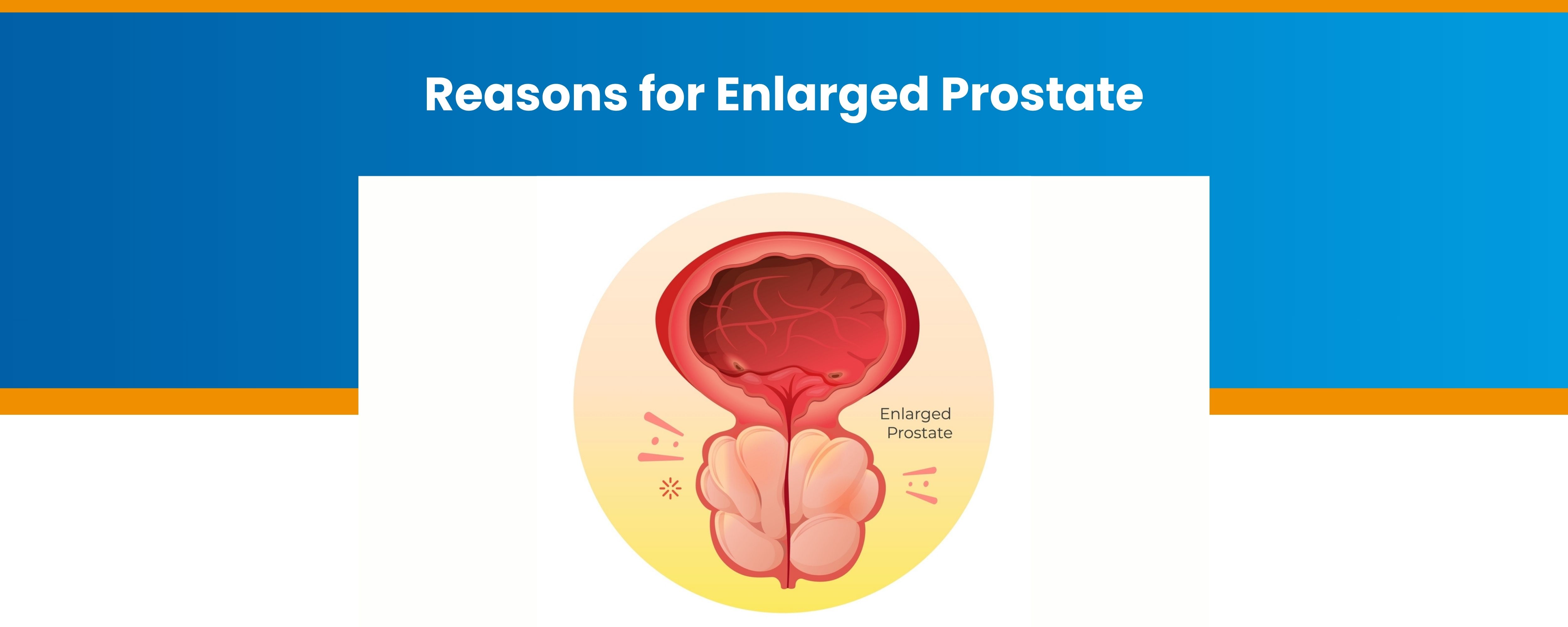
Benign prostatic hyperplasia (BPH) is a non-malignant, age-dependent expansion of the prostate gland. It often restricts urinary flow. The reasons for enlarged prostate involve an interplay of hormonal activity, inflammation, and genetic factors.
This article identifies the primary causes of expansion and explains the biological triggers involved. By distinguishing BPH from other urological disorders, this guide provides a clear, essential overview for those seeking to understand why the prostate enlarges and how it affects long-term male health.
The Ageing Prostate: Why Growth Becomes Common After 50
The prostate sits just below the bladder and surrounds the urethra, the tube responsible for carrying urine out of the body. Because of this anatomical position, even a modest increase in prostate size can narrow the urethral passage and interfere with normal urine flow. This explains why men with enlargement often notice urinary symptoms after the age of 50 years.
Age constitutes the main risk for prostate enlargement. As men grow older, prostate tissue becomes increasingly sensitive to hormonal stimulation, particularly from DHT (Dihydrotestosterone). Enlargement most commonly occurs in the transition zone, the area directly encircling the urethra, a process referred to as Transition zone hyperplasia. Since this region lies at the centre of the urinary channel, growth here can cause a poor stream, hesitancy, incomplete emptying, urgency, and nocturia.
Ageing does not fully account for this growth. To objectively assess why prostate enlarges, consider hormonal changes, cellular proliferation, and metabolic factors.
Hormonal Causes of BPH
Endocrine changes are the principal causes of benign prostatic hyperplasia (BPH). As men age, the shifting balance of internal regulators creates an environment that supports the gradual, non-cancerous growth of the prostate gland, often leading to restricted urinary flow.
Dihydrotestosterone (DHT): The Primary Growth Stimulator
The most influential factor is DHT, produced from testosterone within the prostate. Even as ageing reduces overall testosterone levels, DHT remains active in the gland, binding to receptors and stimulating cell growth. This makes DHT the principal driver of tissue expansion and the primary target for many modern medical treatments aimed at reducing prostate volume.
Estrogen–androgen imbalance
In addition, an estrogen–androgen imbalance occurs as testosterone levels drop faster than oestrogen. This shift makes the prostate more sensitive to DHT, increasing growth signals. These hormonal causes of BPH explain why enlargement is so common in later life, providing a clear and objective rationale for the biological processes that define this common age-related condition.
Cellular Changes Within the Prostate
Hormonal stimulation initiates the process of enlargement, but the actual growth of the prostate is a structural and cellular event. The interaction between these hormones and the tissue determines the severity of the gland's expansion.
Proliferation of Stromal and Epithelial Cells
BPH is defined by an increase in glandular epithelial cells and the surrounding stromal tissue. The proliferation of stromal cells is a major concern, as these cells form the structural skeleton of the prostate. Persistent hormonal influence, specifically from DHT, causes these cells to multiply and form nodules. As these nodules grow, they compress the urethra, hindering urine flow and causing symptoms like hesitancy and a weak stream.
Transition Zone Hyperplasia
Growth primarily affects the transition zone, the part of the prostate encircling the urethra. This pattern, called transition zone hyperplasia, distinguishes BPH from prostate cancer, which is more common in the peripheral zone. These structural changes clarify how even a slight increase in volume can cause significant urinary obstruction, as the growth is positioned to directly compress the urethra.
Metabolic Influences: The Role of Modern Lifestyle
Emerging research highlights metabolic health as a significant contributor to enlarged prostate causes. Beyond hormonal shifts alone, systemic metabolic disturbances can create conditions that favour the growth and structural changes in prostate tissue over time.
Metabolic Syndrome
Metabolic syndrome includes central obesity, high blood pressure, abnormal cholesterol levels, and impaired glucose regulation. Men affected by this cluster of conditions often experience chronic low-grade inflammation and disruptions in endocrine balance. These changes can alter androgen metabolism and increase circulating growth factors, both of which may accelerate prostate enlargement. In addition, excess adipose tissue influences oestrogen production, further contributing to the hormonal imbalance that supports tissue proliferation.
Insulin Resistance and Prostate Enlargement
Insulin resistance and prostate enlargement are closely linked through shared biological pathways. Persistently elevated insulin levels can stimulate insulin-like growth factor signalling, which promotes prostate cell replication. Insulin also affects androgen signalling within the prostate, indirectly encouraging tissue expansion and stromal growth.
Together, these findings demonstrate that systemic metabolic health plays a crucial role in prostate biology, and improving metabolic parameters may help reduce the progression of enlargement.
Inflammation
A common question is: Can inflammation cause BPH?
Modern urological health research identifies chronic inflammation as a reinforcing factor in prostate enlargement. Persistent inflammation triggers the body's repair systems, which can inadvertently lead to excessive cell multiplication. Inflammatory cells produce cytokines that encourage structural changes within the prostate, contributing to BPH over time.
Inflammation often results from metabolic health issues, oxidative stress, or chronic infections. While it is unlikely to be the primary cause of BPH, inflammation acts as a co-factor that amplifies hormonal stimulation, particularly growth driven by DHT. It is best understood as an amplifier of existing biological influences. This guide provides a modern overview of how inflammation supports prostate growth and clarifies its role as a reinforcing agent. By staying informed about these inflammatory drivers, men can better manage their urological health and understand the various factors that contribute to the development of an enlarged prostate as they age.
Genetic Risk Factors
Family history increases the risk of early BPH. Genetic risk factors for enlarged prostate include variations affecting androgen receptor sensitivity and DHT activity, which accelerate tissue growth.
However, why do some men not develop an enlarged prostate? Many ageing men remain asymptomatic. Low DHT sensitivity, balanced hormones, and metabolic health without insulin resistance protect the prostate. Additionally, minimal chronic inflammation and specific protective genetic traits may help prevent the excessive proliferation of prostatic cells.
This highlights that BPH is multifactorial, influenced by hormonal, metabolic, inflammatory, and genetic factors. Ageing is not the sole cause.
Individual variation depends on how these biological drivers interact. By focusing on these core factors, we can better understand why some men experience enlargement while others do not. This objective overview explains the complexity of benign prostatic hyperplasia development in the ageing male population.
Cause–Effect Matrix Explaining Drivers of Enlargement
Driver |
Factor |
Mechanism |
Result |
Hormonal |
DHT |
Receptor binding |
Growth |
Hormonal |
Imbalance |
Sensitisation |
Enlargement |
Metabolic |
Syndrome |
Systemic shifts |
Acceleration |
Metabolic |
Insulin |
Signal pathways |
Volume |
Cellular |
Stromal cells |
Matrix expansion |
Nodules |
Inflammatory |
Cytokines |
Tissue remodelling |
Overgrowth |
Genetic |
Variants |
Stronger response |
Early BPH |
Differentiating BPH from Other Prostate Conditions
Understanding the reasons for an enlarged prostate also requires distinguishing BPH from other disorders.
Feature |
BPH |
Prostate Cancer |
Prostatitis |
Nature |
Benign enlargement |
Malignant tumour |
Inflammatory/infective |
Growth Pattern |
Transition zone hyperplasia |
Peripheral zone growth |
Diffuse swelling |
Pain Levels |
Usually painless |
Often painless early |
Frequently painful |
Urinary Impact |
Weak flow, urgency, nocturia |
Obstructive symptoms (late) |
Painful urination |
Systemic Symptoms |
Rare |
Possible in advanced stages |
Fever in acute cases |
BPH does not directly cause cancer, although both conditions become more common with age.
Precision Diagnostics
Precision Urology Diagnostics at NU Hospitals focuses on identifying the specific biological mechanism that triggers prostate enlargement. Rather than assuming a single cause, clinicians evaluate:
-
Uroflowmetry to assess urinary flow obstruction
-
Ultrasound prostate sizing to measure gland volume and identify transition zone hyperplasia
-
Blood hormone profiling to evaluate testosterone, DHT, and oestrogen balance
This informative assessment determines whether hormonal imbalance, metabolic syndrome, inflammation, or genetic predisposition is the dominant contributor, allowing targeted management.