 Nephrology
 Urology
 Andrology
 Fertility (IVF)
 General Nephrology
 Paediatric Nephrology
 Dialysis
 Renal (Kidney) Biopsy
 CRRT
 Peritonial Dialysis
 Robotic Surgery
 Urinary Incontinence
 Uro-Oncology
 Laparoscopic Urology
 Reconstructive Urology
 Anaesthesiology
 Radiodiagnosis
 Nutrition and Dietetics
 Pediatric and Immunization
 Cardiology
 Intensive Care Unit




Introduction
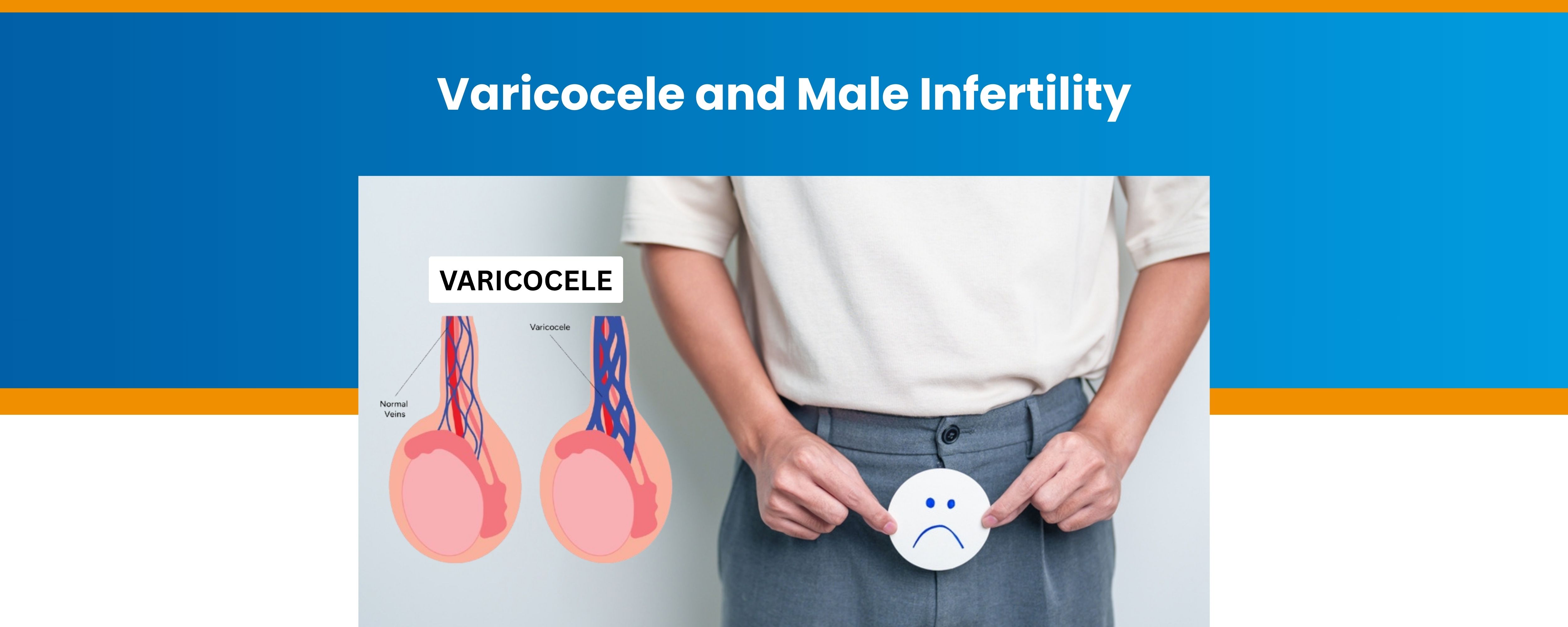
Varicocele and male infertility are two conditions that are closely linked and very common in reproductive andrology. A varicocele is typically described as an abnormal dilatation of veins within the pampiniform plexus of the scrotum, which is a network of veins that helps regulate testicular temperature. Studies show that approximately 40% of men suffer from primary infertility, and as many as 80% of men suffer from secondary infertility. Varicocele is one of the most common, but reversible, causes of male infertility.
Though it takes a long time before the effects of varicocele can be felt, the effects on sperm health appear to be quite significant. Knowing the causes, classification, and treatment of varicocele can be helpful for men with fertility problems.
What Is a Varicocele?
Varicocele occurs due to any problem with the venous valves that allow retrograde blood flow. This leads to venous stasis because of blood pooling. This pooling interferes with the normal countercurrent heat exchange within the pampiniform plexus of the scrotum. Varicocele is also responsible for causing hyperthermia.
Anatomically, varicoceles are more commonly observed on the left side. This is because of the venous drainage patterns, which are structured in a way that conditions like varicoceles occur more on one side. Increased temperature and venous congestion may adversely affect testicular function if not addressed promptly.
Common Varicocele Symptoms
Some of the commonly observed varicocele symptoms in men include the following:
-
Dull or aching pain in the scrotum
-
Heaviness or discomfort while standing.
-
“Bag of worms” appearance, or visible dilated veins in the scrotum
-
Unexpected reduction in the testicular size
-
Difficulty in achieving pregnancy
How Varicocele Affects Male Fertility
Several mechanisms in the human body contribute to the effect of varicoceles on fertility. Some of them include:
1. Increased Scrotal Temperature
Scrotal Hyperthermia, or a minor increase in testicular temperature, impairs spermatogenesis, thereby affecting sperm count and motility.
2. Oxidative Stress
The presence of venous stasis leads to the production of reactive oxygen species, which in turn causes lipid peroxidation in sperm membranes.
3. DNA Fragmentation
Increased rates of sperm DNA fragmentation lower the rates of fertilisation and increase the risk of miscarriage during early pregnancy.
4. Hormonal Effects
There is evidence that varicoceles can affect Leydig cells, potentially reducing testosterone production in males.
Grading of Varicocele
Clinical grading is essential for determining management strategy. The table given below clearly explains the grading of varicocele:
Grade |
Clinical Findings |
Typical Symptoms |
Grade 1 |
Palpable only during the Valsalva manoeuvre |
Usually asymptomatic |
Grade 2 |
Palpable without Valsalva |
Mild discomfort, infertility |
Grade 3 |
Visible on inspection |
Pain, testicular atrophy |
Higher grades correlate strongly with abnormal semen parameters and increased infertility risk.
Diagnosis and Semen Evaluation
The assessments for varicocele diagnosis and semen evaluation generally involve the following tests and examinations:
-
Detailed physical examination for initial evaluation
-
Semen Analysis for evaluating the count, motility, and morphology
-
Doppler ultrasound for disease confirmation
-
Sperm DNA fragmentation test in some selected cases
Not all diagnosed varicoceles can be treated. The choices and treatment decisions are based on the preferred fertility desires, symptoms of the patient, and semen abnormalities that have been diagnosed.
Treatment Options
The first step in treating a varicocele is to assess the patient’s condition. It is generally suitable for asymptomatic men with normal semen parameters. Procedures such as microsurgical varicocelectomy are recommended in some cases. Whereas processes like microsurgical subinguinal varicocelectomy are considered in advanced cases. This is because of the advanced outcomes it offers, including:
-
High magnification technique for accurate vein ligation.
-
Preservation of the testicular artery and lymphatics.
-
Lowest recurrence and complication rates of the procedure.
Surgery vs Observation
Now, we will take a look at the table below to understand the various surgeries and their outcomes, as well as observations, to gain a deeper understanding of the varicocele treatment procedure and its nuances.
Outcome |
Surgery |
Observation |
Sperm Count |
Significant improvement/ same |
May worsen/ stable |
Motility |
Improved/Same |
May worsen/ stable |
Morphology |
Improved/ same |
May worsen/ stable |
Pregnancy Rate |
Higher |
Lower |
Recovery and Fertility Outcomes
Sixty per cent of patients undergoing varicocele treatment tend to recover smoothly. Most patients can get back to their daily activities in 2-3 days. On the other hand, strenuous exercise, such as heavy lifting or working out at the gym, is usually avoided for 2 weeks, depending on the type of surgery done. Some patients tend to experience a few days of discomfort at the surgical site, which usually resolves with the use of the prescribed drugs.
From the point of view of fertility, changes cannot be immediate, as it takes approximately 72 to 90 days in the body’s biological cycle before sperm can be produced. Improvement in parameters, including sperm counts, motility, and morphology, can thus be expected in 3 to 6 months post-treatment. Improvement can be progressive over 1 year.
NU Hospitals’ Andrology Excellence (EEAT)
NU Hospitals is renowned for its specialised andrology care, thanks to its state-of-the-art surgical facilities. The hospital provides microsurgical varicocelectomy treatments that use high-magnification microscopes. These microscopes facilitate the easy identification of key structures, such as testicular arteries/lymphatics, during microsurgical varicocelectomy, thereby enabling the ligation of dilated veins. This helps prevent complications or recurrences, leading to successful outcomes.