 Nephrology
 Urology
 Andrology
 Fertility (IVF)
 General Nephrology
 Paediatric Nephrology
 Dialysis
 Renal (Kidney) Biopsy
 CRRT
 Peritonial Dialysis
 Robotic Surgery
 Urinary Incontinence
 Uro-Oncology
 Laparoscopic Urology
 Reconstructive Urology
 Anaesthesiology
 Radiodiagnosis
 Nutrition and Dietetics
 Pediatric and Immunization
 Cardiology
 Intensive Care Unit




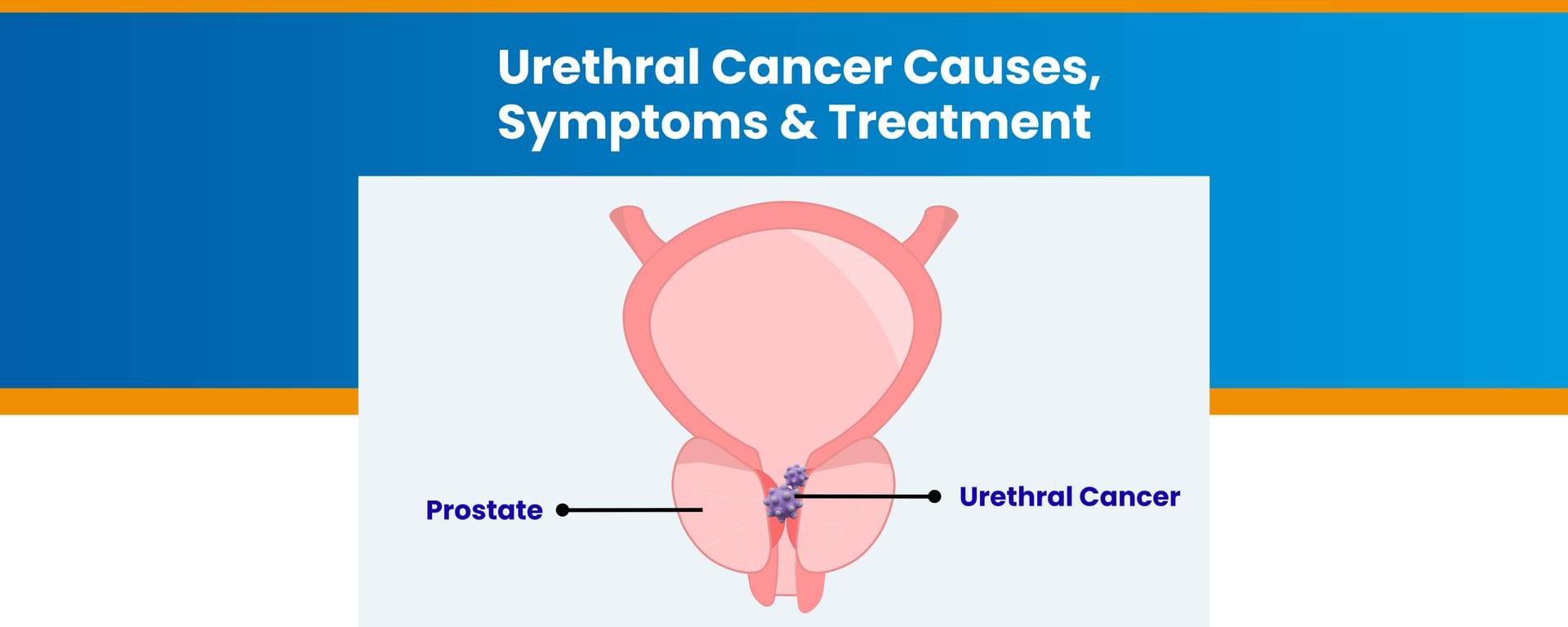
Have you or your loved one recently been diagnosed with urethral cancer? Or have you started noticing unusual urinary symptoms?
Urethral cancer is an extremely rare type of cancer. It accounts for less than 1% of all urological cancers. If left untreated, urethral cancer can get very serious. However, the good news is that with early detection and the right treatment, outcomes can be great.
If you are in Bangalore and you or your loved one is struggling with cancer, don't worry. NU Hospitals, Bangalore, is one of the leading urology centers. We provide comprehensive treatment for all kinds of urological cancer.
What is Urethral Cancer?
Urethral cancer is a type of cancer that begins in your urethra. The urethra is the small tube that carries your urine from your bladder out of your body. In men, it carries semen also.
In most cases, it occurs in adults over 60, and generally, more often in men than women. This cancer forms when cells in your urethra grow out of control.
What are the Stages of Urethral Cancer
Like other cancers, urethral cancer is divided into stages. The stage tells the extent of cancer spread and also helps your doctors to choose the appropriate urethral cancer treatment for you.
Stage |
Spread |
Description |
Urethral cancer symptoms |
Stage 0 |
Local |
Cancer cells in the innermost lining (carcinoma in situ) |
Often none or very mild |
Stage I |
Local |
Grown into tissue below the lining |
|
Stage II |
Local/Regional |
Spread into deeper muscle layersMay involve nearby structures |
|
Stage III |
Regional |
Spread to nearby lymph nodes or local organs |
|
Stage IV |
Distant |
Metastasized to distant organs (liver, lungs, etc.) |
|
What Causes Urethral Cancer, and What are its Symptoms
The exact causes of urethral cancer are not always clear, but several factors can increase your risk. Recognizing these symptoms early is key.
Urethral Cancer Risk Factors:
-
Age
Older adults are more likely to experience it.
-
Gender
Men typically get more aggressive forms.
-
Bladder cancer history
Individuals with a history of bladder cancer are at an increased risk.
-
Sexually transmitted infections (STIs)
STIs or recurrent UTIs are two conditions that may contribute to chronic irritation or inflammation.
-
HPV infection
Certain cases are associated with the Human Papillomavirus (HPV).
Urethral Cancer Symptoms:
The symptoms can vary depending on the cancer's location and stage. Some common urethral cancer symptoms include:
-
Hematuria, or blood in the urine, is usually the first and most obvious symptom.
-
Dysuria, or pain or burning when urinating, a symptom similar to a UTI.
-
A weak stream or a sense of incomplete emptying, or signs of difficulty urinating.
-
Urinating more frequently than usual.
-
A lump in the penis or perineum.
-
Unusual fluid exiting the urethra is known as urethral discharge.
-
Groin swelling as a result of enlarged lymph nodes.
If you experience any of these urethral cancer symptoms, don't hesitate to see a doctor. Early diagnosis can make a huge difference.
How is Urethral Cancer Diagnosed
Diagnosing urethral cancer for each patient can involve several steps. Your doctor will begin with a medical history and a thorough physical examination.
-
Physical examination: Your physician will check for any unusual growths, edema, or lumps.
-
Cystoscopy: This procedure uses a camera scope to look at your urethra and bladder.
-
Biopsy: An examination of a small sample of tissue will be conducted.
-
Imaging scans: Certain imaging scans, like CT, MRI, and ultrasound, help in identifying the cancer spread.
All these tests will help our doctor confirm the stage of your urethral cancer. It will also guide your doctor towards the best urethral cancer treatment for you.
What are the Treatment Options for Urethral Cancer
Urethral cancer treatment options will vary based on several factors.
1. Surgery
- A partial urethrectomy is a surgical procedure used to remove a part of the urethra.
- A complete urethrectomy is a process in which the entire urethra is removed
- In certain very severe cases, your reproductive organs or bladder may also be operated on.
2. Radiation Therapy
- X-rays with high energy are used to destroy cancer cells.
- It is used to reduce recurrence after surgery or to shrink tumors prior to surgery.
3. Chemotherapy
- In chemotherapy, a medicine is given that kills your cancer cells.
- It will be given to you orally or with the help of IV.
- It is frequently given to all cancer patients along with radiation or surgery.
4. Immunotherapy
- Immunotherapy will help boost your body's anti-cancer defense system.
- It is mostly used in complex cancer cases.
Best Hospital in Bangalore for Urethral Cancer Treatment
Choosing the best hospital and medical team is important for your urethral cancer treatment. NU Hospitals, Bangalore, stands out as a pioneering institution for urological care. We are renowned for:
-
Specialized Expertise
We at NU hospitals have a dedicated group of skilled radiologists, oncologists, and urologists.
-
Advanced Technology
At NU Hospitals, we have state-of-the-art diagnostic and other modern treatment facilities.
-
Holistic Approach
At NU Hospitals, we focus on comprehensive and compassionate care, so you recover not just physically but also regain confidence.
-
Patient-Centric Care
We at NU Hospitals focus on your well-being, believe in open communication, and customize treatment plans.
Urethral cancer can be rare, but it is still life-threatening. If you are experiencing any of the symptoms mentioned above, please visit the Uro-oncologist specialist. Addressing your symptoms early will make sure you get the best outcome.
If you are looking for the best hospital for your urethral cancer treatment, NU Hospitals, Bengaluru, is your answer. Book an appointment with our world-class team to know more about urethral cancer.








