 Nephrology
 Urology
 Andrology
 Fertility (IVF)
 General Nephrology
 Paediatric Nephrology
 Dialysis
 Renal (Kidney) Biopsy
 CRRT
 Peritonial Dialysis
 Robotic Surgery
 Urinary Incontinence
 Uro-Oncology
 Laparoscopic Urology
 Reconstructive Urology
 Anaesthesiology
 Radiodiagnosis
 Nutrition and Dietetics
 Pediatric and Immunization
 Cardiology
 Intensive Care Unit




Introduction
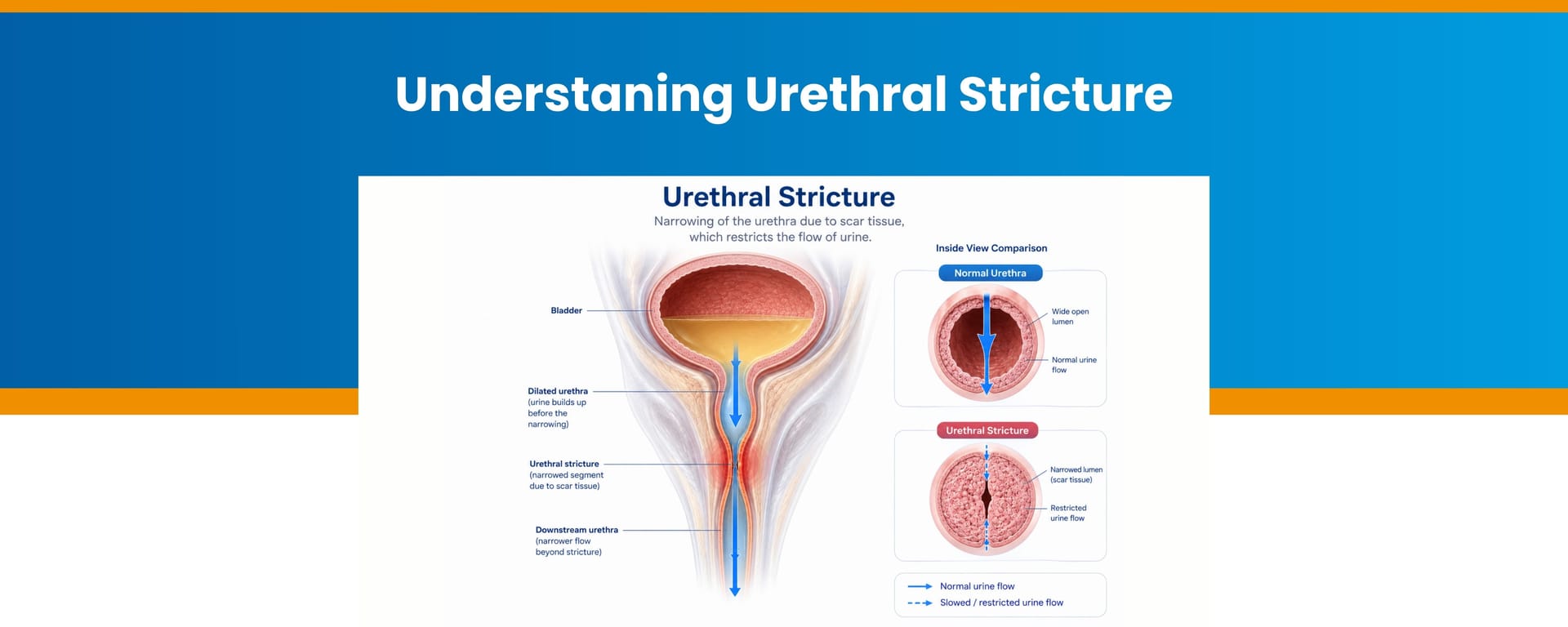
A urethral stricture arises from urethral scarring, known as spongiofibrosis, which decreases urine flow and blocks its exit from the body. It can cause serious problems and can affect the kidneys after continual blockage and recurrent urinary tract infections unless appropriately managed. Some treatments include urethral dilation and laser treatment to cut through the blocking tissue. Moreover, a permanent solution to urethral blockages may be achieved by reconstructing the urethra (via urethroplasty). Patients may visit specialty centres such as NU Hospitals to receive surgical interventions that offer greater innovation in their treatment and are tailored to the complexity of urethral stricture, thereby enabling them to achieve successful long-term outcomes.
The article outlines the causes of urethral scarring and the symptoms that correspond with urethral strictures, to assist in the diagnosis and treatment of urethral strictures for both patients and their health care providers.
Understanding Urethral Stricture
A narrowed urethra that blocks urine flow is caused by scar tissue, known as a urethral stricture. Bladder and kidney pressure will increase over time, resulting in what is known as obstructive uropathy. The pathophysiology of the condition stems from an inflammatory or traumatic injury, leading to fibrotic changes known as spongiofibrosis. As scar tissue forms, it will contract over time, and the urethral lumen will continue to tighten, making urination difficult. Tightening or complete blockage from a urethral stricture is more common in males due to the longer length of their urethra; however, it may occur in females and children as well. The severity of urethral stricture ranges from mild to complete and will require prompt medical attention when total blockage occurs.
What are the Causes of Urethral Scarring?
It is essential to understand how urethral scarring forms to create an effective treatment plan and prevent future issues. Several factors can injure the urethral epithelium, leading to the formation of fibrous tissue. These causes include:
-
Traumatic injuries such as ruptured pelvic bones, straddle-type injury through the perineum, and blunt trauma to the area are some of the most common causes of urethral damage. When urethral tissue is injured, fibrous tissue forms as part of the healing process. This happens as the body attempts to heal itself through scarring.
-
Irritation caused by catheterising or endoscopic procedures through the urethra can sometimes produce a long-term injury with repeated scarring, which is often untreated until it causes significant damage.
-
If a patient becomes infected with an STI (sexually transmitted infection) and does not receive adequate treatment, they can develop urethritis, which can lead to the formation of scar tissue and a narrowing of the urethra.
-
Any surgical procedure on the prostate gland or urinary treatment has the potential to develop scar tissue due to unintended injury to the urethra or the surrounding tissues.
-
Autoimmune disorders or dermatological conditions (such as lichen planus) can contribute to the development of urethral scar tissue and chronic inflammation.
The earlier risk factors are identified, the greater the opportunity for the physician to monitor for new symptoms and provide effective interventions before complications arise.
Symptoms of Urethral Stricture
Symptoms generally develop incrementally and can become severe over time. Identifying these symptoms early could help avoid serious complications from this condition. A urethral stricture most commonly has the following symptoms:
-
Weak or slow stream
-
Difficulty starting urination
-
Incomplete emptying
-
Frequent or urgent need to go
-
Pain and burning with urination
-
Urinary tract infection
-
Splitting of the stream
-
Blood in the urine (hematuria)
Advanced stages of this condition may result in complete urinary retention requiring immediate medical intervention. Many male patients have indicated they have experienced some level of decreased flow or difficulty with urination; female patients tend to have more instances of urinary tract infections or problems urinating, with no apparent reason.
How is Urethral Stricture Diagnosed?
Understanding the diagnosis helps to determine the location, length, and severity of the stricture. A urologist will typically rely on various diagnostic techniques to determine the patient's urinary tract condition. Among these are:
Uroflowmetry - This is a non-invasive way to measure the flow rate of urine through the urethra; if the flow is unusually low or the flow curve is abnormally shaped, this indicates that something is blocking the urethra.
Cystoscopy - By passing a camera through the urethra, the doctor can see directly whether the urethra is narrowing.
Retrograde Urethrogram (RGU) - In this procedure, contrast dye is injected into the urethra, and the radiographic images will allow the urologist to determine if there is a narrowing of the urethra that may need to be addressed in choosing a treatment plan.
Ultrasound or MRI - Advanced imaging techniques can be used to assess the surrounding tissues and the extent of fibrosis in the urethra in more complicated cases.
A timely diagnosis can help avoid complications resulting from a damaged bladder or from kidney disease.
Diagnostic Markers- Uroflowmetry Patterns
Qmax (ml/sec) |
Flow curve pattern |
Stricture severity |
Clinical interpretation |
>15 |
Normal bell-shaped |
Mild or none |
Normal or minimal obstruction |
10-15 |
Slightly flattened |
Mild-moderate |
Possible early stricture |
5-10 |
Plateau pattern |
Moderate |
Significant narrowing |
<5 |
Very low or intermittent |
Severe |
High-grade obstruction |
Treatment Options
Table 1: Treatment comparison
Treatment options |
Durability |
Recurrence risk |
Recovery time |
Important considerations |
Urethral dilation |
Short term |
High |
Quick recovery |
Often requires repeated procedures |
Laser Urethrotomy |
Moderate |
Moderate-high |
Short recovery |
Suited for short strictures |
Urethroplasty Surgery |
Long term |
Low |
Longer recovery |
Considered permanent treatment |
Complications of Untreated Strictures
Many health issues might develop from untreated narrowing of the urethra, including:
-
Recurrent urinary tract infections
-
Inability to empty bladder (urinary retention)
-
The bladder becomes either enlarged or weakened
-
Hydronephrosis (swollen kidneys)
-
Kidney stones
-
Damage to the kidneys
Long-term obstruction can increase pressure on the urinary system and cause irreversible damage to the kidneys.
NU Hospitals Reconstructive Surgery
NU Hospitals' urethral reconstructive surgical centres create individualised treatment plans for each patient. Urethral surgical reconstruction with buccal mucosa has been shown to provide excellent long-term results, especially in patients with complex or recurrent strictures. Reconstructive surgery programs offer care for:
-
Complex, long, and narrow strictures
-
Preventing the recurrence of strictures
-
Maintaining urinary and sexual function.
-
Collaborative support following surgery
Patients undergoing urethral reconstruction will benefit from thorough assessments, state-of-the-art surgical technology, and outstanding clinical success rates achieved through the expertise of reconstructive surgical teams.
Life with Urethral Stricture
Timely diagnosis and early treatment result in better outcomes. Patients should contact their medical provider if they experience ongoing changes in their urine stream. Lifestyle choices can promote good urinary health and include:
-
Drinking enough fluids
-
Practising appropriate sexual safety
-
Treating infections promptly
-
Carefully following instructions after surgery
By gaining a clearer understanding of what to look for, patients can identify their signs earlier and potentially avoid long-term complications.








