 Nephrology
 Urology
 Andrology
 Fertility (IVF)
 General Nephrology
 Paediatric Nephrology
 Dialysis
 Renal (Kidney) Biopsy
 CRRT
 Peritonial Dialysis
 Robotic Surgery
 Urinary Incontinence
 Uro-Oncology
 Laparoscopic Urology
 Reconstructive Urology
 Anaesthesiology
 Radiodiagnosis
 Nutrition and Dietetics
 Pediatric and Immunization
 Cardiology
 Intensive Care Unit




Are you constantly running to the washroom? Does your bladder always feel full? Do you sometimes have leakage accidents when you drink too much water? You are not alone!
Several people have bladder troubles. It quietly creeps into your daily life. It begins small. These symptoms are quite easy to ignore at first, but over time, they begin to affect your routine.
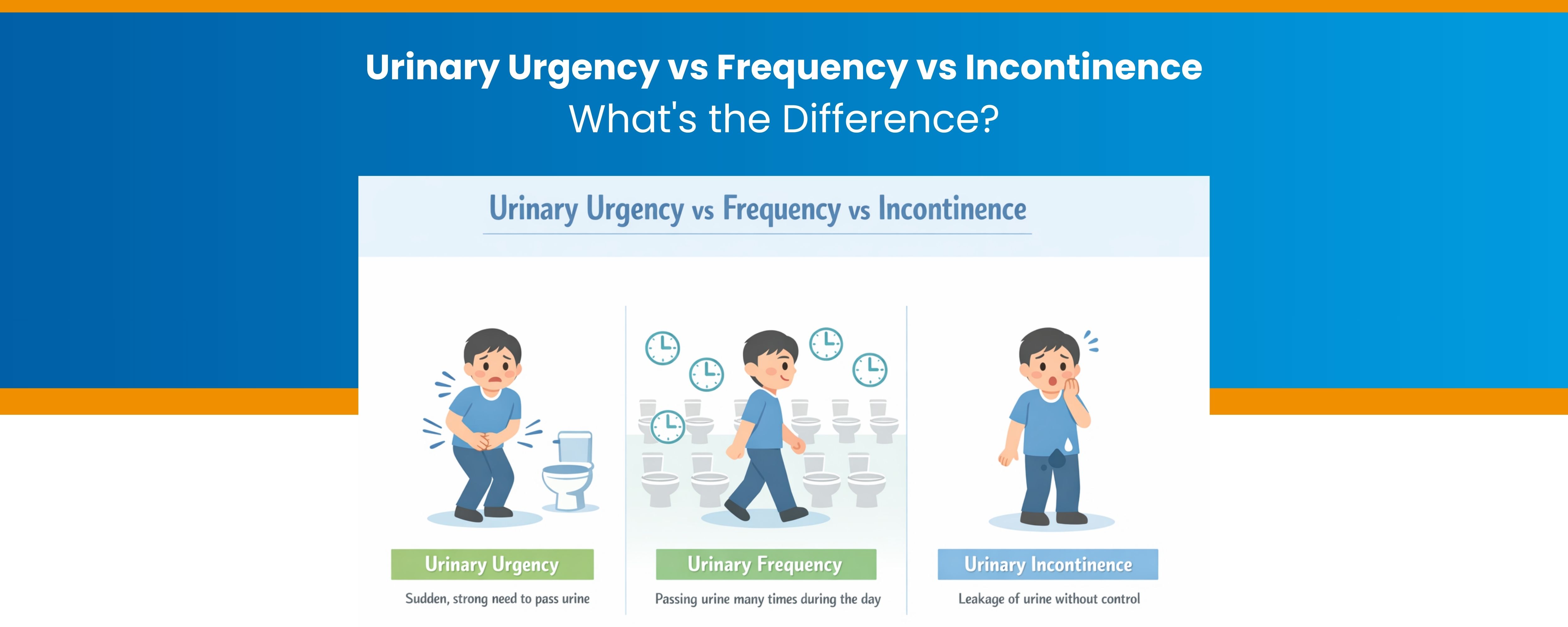
Urinary urgency, urinary frequency, and urinary incontinence may sound the same, but they are different conditions. Each one needs a different approach. Confusing them can delay your treatment and also lead to unnecessary lifestyle changes.
Bladder conditions are common and treatable.
At NU Hospitals, Bengaluru, bladder conditions are managed with care and clarity. With advanced diagnostics, experienced urologists, and personalized treatment plans, you get your answers.
Read this blog to understand what your bladder is trying to tell you.
Understanding the Three Core Urinary Symptoms
Each of your bladder symptoms will tell a different story.
Urinary Urgency: The Sudden, Intense Need to Go
-
It is a sudden and compelling feeling to urinate that is difficult to delay.
-
It feels like you might leak if you don't reach the toilet immediately.
-
This condition is usually linked to overactive bladder (OAB)
Urinary Frequency: Needing to Go Too Often
-
It is normal to urinate up to 8 times a day. However, if your frequency is 8+ times per day or every 1–2 hours, it is known as urinary frequency.
-
You will usually pass a small amount of urine, even if it feels like your bladder is bursting.
-
This can happen with or without an "emergency" feeling.
Urinary Incontinence: Actual Leakage of Urine
-
This is the involuntary loss of urine. It is a hygiene and social challenge.
-
Urinary incontinence can range from a few drops when you sneeze to a complete loss of bladder control.
-
The types can include stress, urge, and Overflow.
Key Differences: A Simple Comparison
It is quite easy to confuse between the 3 bladder conditions as the symptoms can often overlap.
Symptom |
Timing and Triggers |
Volume of Urine Passed |
Urinary Urgency |
Sudden desire to pass urine, especially while reaching the gate of your house or bathroom door |
A large amount |
Urinary Frequency |
Frequent desire to empty the bladder while at home |
Usually, a small amount each time. |
Urinary Incontinence |
|
Usually a few drops of urine leak and rarely the entire bladder emptying. |
Common Causes of Each Symptom
Understanding the cause of these urinary symptoms can help you treat your condition better.
Causes of Urinary Urgency
-
Overactive Bladder (OAB)
Your bladder muscles may squeeze before they should.
-
UTI
Infections irritate your bladder lining (trigone) causing frequent desire to void.
-
Dietary Irritants
Too much caffeine, spicy food, or alcohol can trigger your urinary urgency.
-
Neurological Issues
Conditions such as stroke, Multiple Sclerosis, or Parkinson’s can disrupt the signals between your brain and bladder.
Causes of Urinary Frequency
-
Diabetes
High urine sugar will draw water along with it and lead to increased urine output and thereby frequency.
-
Pregnancy
A growing fetus can compress the mother's bladder and can lead to frequent urination.
-
Fluid Intake
Drinking large amounts of water or diuretics (such as tea).
-
Interstitial Cystitis
A chronic pain condition that makes the bladder feel full when it is not.
Causes of Urinary Incontinence
-
Stress
Weak pelvic floor muscles (usually due to childbirth or menopause) can lead to urinary incontinence.
-
Urge
Your bladder contracts so strongly that you are not able to reach the bathroom on time.
-
Overflow
The bladder never fully empties (due to an enlarged prostate or prolapse), which eventually leads to "overflow."
-
Functional
Mobility conditions, such as arthritis, prevent you from reaching the bathroom in time.
Symptom Combinations: What They Mean
Bladder symptoms usually overlap.
Urgency + Frequency (Classic OAB)
-
Overactive bladder syndrome
-
Frequent bathroom trips
-
Sudden urges day and night
Urgency + Incontinence (Urge Incontinence)
-
Strong urge to urinate
-
Large volume of leakage
-
Cannot reach the toilet in time
Frequency + Incontinence (Overflow)
-
Constant dribbling of urine
-
Frequent small voids throughout the day.
-
Chronic urinary retention
All Three Symptoms Together
-
Mixed incontinence
-
There are multiple causes
-
This condition needs detailed evaluation
Diagnosis at NU Hospitals, Bangalore
Our specialists at NU Hospitals give you a proper diagnosis with the help of:
Bladder Diary (3-Days)
Our doctor will ask you to keep a 3-day log of what you drink and when you urinate. It will track timing, volume, triggers, and leakage episodes.
Uroflowmetry & Post-Void Residual
You will be asked to urinate into a special machine that measures the speed and volume of your urine.
Pelvic Floor Assessment
Our experts will check the strength and coordination of your pelvic muscles.
Urodynamics
To check the bladder pressures by inserting small catheters in the bladder and the rectum, and placing sensors over the perineum, this will record the responses during filling and voiding phases.
Treatment Options by Symptom Type
There are many treatment options for these conditions. The treatment plan will depend on your condition and symptoms.
Treating Urinary Urgency
-
Bladder Training
Teaching your bladder to wait by slowly increasing the time between bathroom visits.
-
Pelvic Floor Exercises
Strengthening your bladder muscles helps you hold urine.
-
Medications
Doctors usually prescribe anticholinergics or beta-3 agonists to calm the bladder muscle.
-
Advanced Care
For extreme cases, we offer Botox injections into your bladder or sacral nerve stimulation.
Managing Urinary Frequency
-
Fluid Management
Stop drinking a lot of water before bedtime! Limit caffeine and alcohol in the evenings.
-
Timed Voiding
Going on a schedule rather than waiting for an urge.
-
Underlying Conditions
Managing your diabetes or clearing up a UTI usually solves the condition.
Incontinence Treatment Options
-
For Stress Leakage
Specialized pelvic floor therapy or minimally invasive surgeries.
-
For Urge Leakage
A mix of medication and lifestyle changes.
-
For Overflow Leakage
Addressing the physical blockage, such as surgery for an enlarged prostate (BPH).
When Symptoms Need Urgent Evaluation
Most bladder conditions are not life-threatening. However, some signs mean you should ask for help immediately:
-
Sudden onset or worsening
-
Accompanied by blood in urine, fever, and weight loss
-
Pain, neurological symptoms, or bowel changes
-
Interference with daily activities or sleep








