 Nephrology
 Urology
 Andrology
 Fertility (IVF)
 General Nephrology
 Paediatric Nephrology
 Dialysis
 Renal (Kidney) Biopsy
 CRRT
 Peritonial Dialysis
 Robotic Surgery
 Urinary Incontinence
 Uro-Oncology
 Laparoscopic Urology
 Reconstructive Urology
 Anaesthesiology
 Radiodiagnosis
 Nutrition and Dietetics
 Pediatric and Immunization
 Cardiology
 Intensive Care Unit





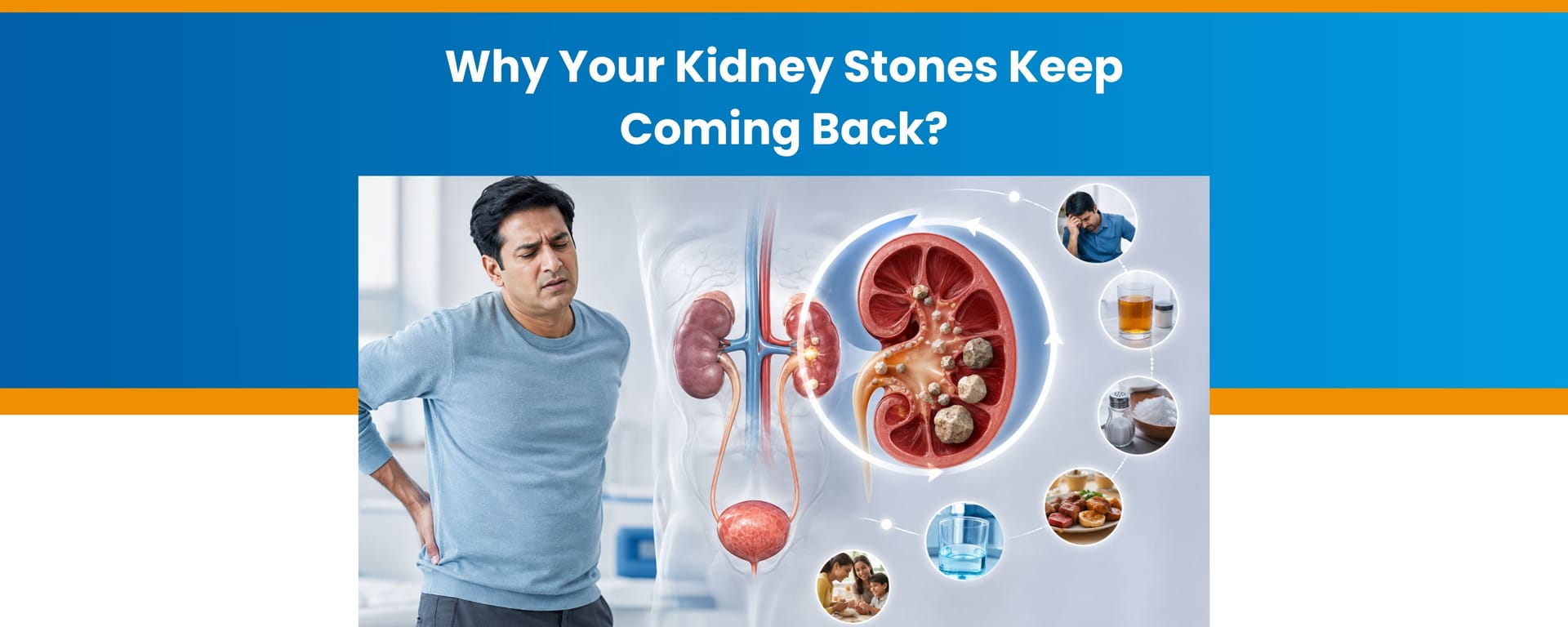
Kidney stones can be painful. But the worst part about them is that even after treatment, they can return. For so many people, it becomes a recurring problem. In most cases, lifestyle choices you make, like not drinking enough water or eating a lot of junk or processed foods are blamed, and rightly so. But the truth is that the underlying metabolic imbalances are also linked to this issue of recurrent kidney stones.
If you don’t understand why your kidney stones keep returning, you won’t be able to prevent them. The first step towards identifying the underlying causes of kidney stones is to seek help from an advanced centre such as NU Hospital. It will take a lot of diagnostic tests and personalised treatment, but with the right approach, you will have an effective prevention plan. Read on to learn more:
Understanding Kidney Stone Recurrence
Structurally, kidney stones are crystallised minerals and salts present in your kidneys. If you only had a kidney stone once, it most likely was triggered by factors like dehydration. However, if you are dealing with recurrent kidney stones, it might be a signal that there is an internal imbalance.
You might think that if you drink enough water, you won’t have this problem again. And while staying hydrated is important, it is not enough to prevent recurrent stones. It might be time to look at how your body processes calcium, uric acid, oxalate, and other substances.
The Hidden Causes of Recurrent Kidney Stones
1. Metabolic Imbalances
Metabolic imbalances are one of the reasons why you might be having recurrent kidney stones. If you have a condition with excess calcium in the urine (hypercalciuria), high oxalate levels (hyperoxaluria), and low citrate levels, it can cause recurrent stones.
If you have a kidney stone recurrence, you need a metabolic stone evaluation. This may include urine analysis, blood tests, and, in selected cases, genetic screening. Without information from these tests, treatment will focus only on symptoms, not on the cause.
2. Dietary Factors Beyond the Obvious
When you focus on a diet to prevent kidney stones, you have to avoid certain foods. However, the reality is more nuanced than that. A well-structured diet will focus on balance instead of restriction. Eliminating entire food groups can cause more harm than good. There are certain things you can keep in mind while following a diet plan:
- Eating too much meat increases uric acid levels
- Low calcium intake increases the absorption of oxalate
- Excess sodium raises the calcium levels in urine
3. Genetic Predisposition
If kidney stones run in your family, you might have a genetic predisposition to them. There are conditions like familial hypercalciuria or cystinuria which can lead to repeated episodes of kidney stones, regardless of how many lifestyle changes you make.
4. Inadequate Fluid Intake Patterns
It is not just about how much water you drink, but when you drink it. Many patients consume fluids during the day but remain dehydrated overnight, leading to concentrated urine—a key factor in stone formation.
5. Chronic Medical Conditions
Certain health conditions, like obesity, gout, diabetes, and inflammatory bowel diseases, can change your body’s chemistry, making it more likely for stones to form.
6. Improper or Incomplete Treatment
If not all the stones are removed, the residual fragments can lay the foundation for new stones.
Kidney Stone Types and Causes Comparison
Kidney Stone Type |
Main Composition |
Common Causes |
Risk Factors |
Calcium Oxalate Stones |
Calcium + Oxalate |
High oxalate levels, low calcium intake |
Dehydration, high-sodium diet |
Uric Acid Stones |
Uric Acid |
Acidic urine, high protein intake |
Gout, obesity |
Struvite Stones |
Magnesium Ammonium |
Urinary tract infections |
Recurrent infections |
Cystine Stones |
Cystine (amino acid) |
Genetic disorder (cystinuria) |
Family history |
Among these, calcium oxalate stones are the most common and often linked to dietary and metabolic factors.
Why Identifying the Root Cause Matters
If you don’t understand the origin of your kidney stones, you can’t get rid of them. You will have to undergo multiple procedures and continue to suffer until you do so.
But getting a detailed metabolic stone evaluation can help. Here is what it does:
-
Identify biochemical abnormalities
-
Reduce recurrence rate
-
Customize dietary plan
Advanced Treatment and Prevention Approaches
Today, we have evolved beyond traditional surgery. Institutions like NU Hospitals are using advanced tools and procedures for kidney stone treatment, like flexible ureteroscopy and holmium laser lithotripsy. Here is what it offers:
-
Minimally invasive treatment
-
Precise stone fragmentation
-
Lower chances of residual fragments
-
Faster recovery.
However, treatment is only a part of the solution. For long-term prevention, you have to focus on regular monitoring, medications, and a personalized diet plan.
The Role of Diet in Preventing Recurrence
Proper kidney stone prevention diet will include:
-
Drink more water
-
Eat less meat, including beef, chicken, fish, and pork.
-
Avoid oxalate-rich foods like rhubarb, beets, spinach, and parsley.
-
Get at least 1,000 mg of calcium / day.
-
Women and men need to get 360 mg and 420 mg of magnesium, respectively / day.
-
Avoid processed foods as excess sodium can increase the risk of recurrence.
-
Avoid pickled and canned foods.
Conclusion
Recurrent kidney stones are not always the result of poor lifestyle choices. Often, it is due to underlying metabolic issues. This requires specialised evaluation and targeted treatment. Centres like NU Hospitals combine advanced technology with specialised care to help people avoid recurrent kidney stones.
If you are someone who has experienced multiple kidney stones, it might be time to move on from surface-level situations. The first, and most important step, towards lasting relief is identifying the hidden causes.







