 Nephrology
 Urology
 Andrology
 Fertility (IVF)
 General Nephrology
 Paediatric Nephrology
 Dialysis
 Renal (Kidney) Biopsy
 CRRT
 Peritonial Dialysis
 Robotic Surgery
 Urinary Incontinence
 Uro-Oncology
 Laparoscopic Urology
 Reconstructive Urology
 Anaesthesiology
 Radiodiagnosis
 Nutrition and Dietetics
 Pediatric and Immunization
 Cardiology
 Intensive Care Unit




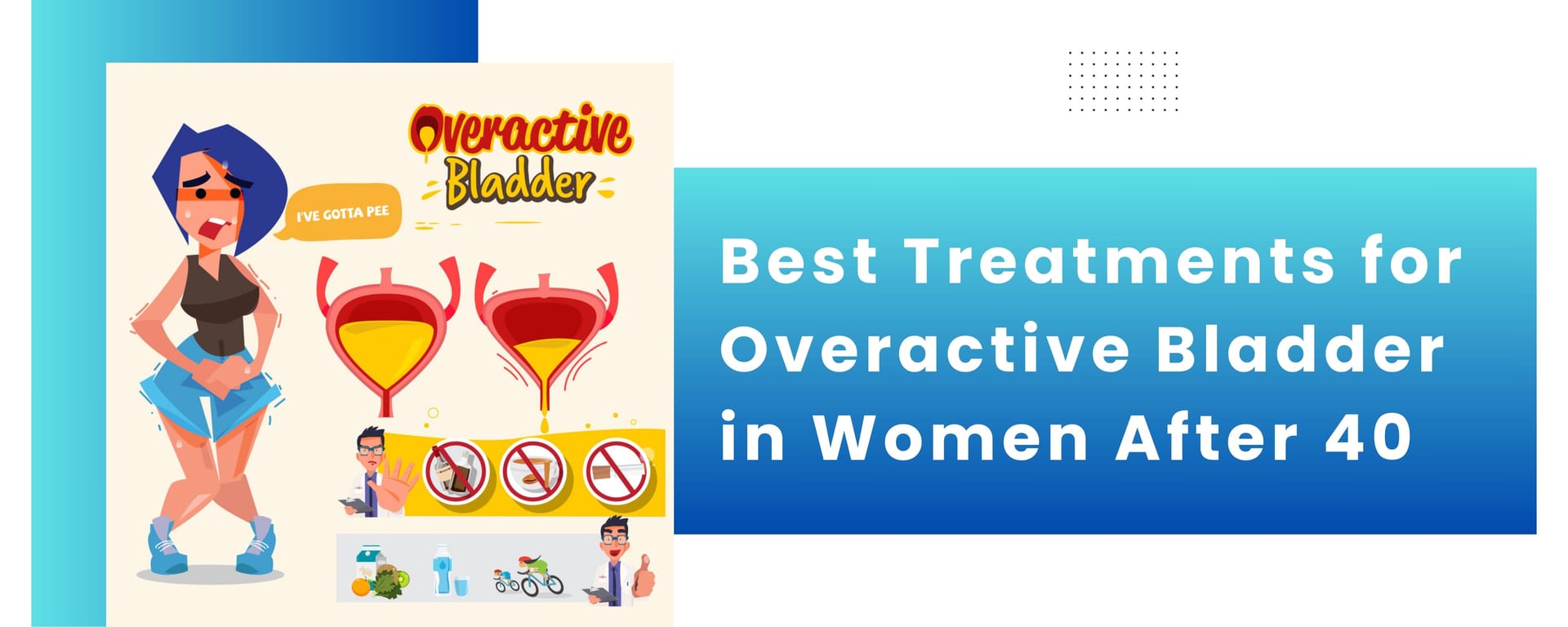
Best Treatments for Overactive Bladder in Women After 40 yrs old
Are you constantly rushing to the bathroom? Are you waking up at night with an urgent need to use the bathroom? Don't worry, ladies, you are not alone.
Overactive bladder in women is more common than most realise. It affects up to 43% of women over 40. OAB in women can disrupt your sleep, limit your social activities, and even affect your emotional well-being.
However, this condition does not just come with age. It is about your hormonal shifts, changes in muscle strength, and certain other factors. This guide will help you learn the best treatments for overactive bladder in women after 40.
At NU Hospitals, Bangalore, you’ll receive top-tier, compassionate care. You will receive personalized treatment plans from pelvic floor therapy to estrogen therapy, while working with the best urologists of Bangalore.
Understanding Overactive Bladder in Women After 40 yrs
Overactive bladder in women is a condition where you might have an uncontrollable urge to urinate that is difficult to postpone. This urgency can lead to frequent urination throughout the day and night (nocturia), and for several women, urge incontinence (involuntary leakage of urine).
This condition happens when your bladder muscles contract involuntarily, even when your bladder isn't full. While it's more common with age, it is not a normal part of aging.
Hormonal & Age-Related Triggers of Overactive Bladder
One of the significant factors contributing to OAB in women after 40 is hormonal changes, particularly those linked with your menopause.
As you might approach menopause, your estrogen levels decline significantly.
Estrogen plays a vital role in maintaining the health and elasticity of your bladder, urethra, and surrounding pelvic tissues.
-
Weakening Bladder & Pelvic Tissues
Lower estrogen levels can lead to thinning and weakening of your urethral and vaginal tissues, making them less supportive of your bladder.
-
Bladder Irritation & Sensitivity
Your bladder lining can become more sensitive and prone to irritation, leading to increased urgency and frequency.
-
Collagen Loss and Muscle Weakness
Reduced collagen is also linked to estrogen decline, which can affect the structural integrity of your pelvic floor, increasing bladder control issues.
Estrogen therapy can help restore the health of the tissues, reducing OAB symptoms.
Pelvic Floor Exercises & Bladder Training
One of the most effective treatments for OAB in women is strengthening your pelvic floor. Pelvic floor therapy involves bladder exercises such as Kegels. These exercises target the muscles that support your bladder, uterus, and bowels, helping you gain better control.
Kegel Exercises for Women Over 40 yrs
-
How to Identify Pelvic Muscles
Identify your pelvic floor muscles.
-
Correct Kegel Technique
Squeeze your pelvic floor muscles, hold for 3-5 seconds, then relax for 3-5 seconds. Repeat 10-15 times, three times a day.
-
Why Consistency Matters
Like any other muscle, consistency is the key to improvement. It may take weeks or even a few months to notice significant changes.
Bladder Training & Urotherapy
Bladder training involves slowly increasing the time between bathroom visits to "re-train" your bladder to hold more urine.
-
Start by delaying urination by 15 minutes.
-
Gradually increase the delay over time.
-
Keep a bladder diary to track your progress and identify patterns.
For the best results, consider working with a pelvic floor physical therapist. They will make sure you are performing the bladder exercises correctly and develop a personalized program tailored to your needs. This individualized approach is a cornerstone of effective pelvic floor therapy.
Best Treatment Options for Overactive Bladder in Women Over 40yrs
Medications are the mainstay of treatment when behavioural changes do not work. Medications like anticholinergics and beta 3 agonists are used to treat overactive bladder. Each group has specific side effects and medications have to be taken on long term.
Surgery is considered a last resort when other treatments have failed and your symptoms are severely impacting your quality of life.
-
Augmentation Cystoplasty (Bladder Surgery)
A segment of your bowel is used to enlarge your bladder's capacity.
-
Urinary Diversion Procedures
In extreme cases, the urinary tract is rerouted to a stoma (opening) on the abdomen, where urine is collected in a bag.
These surgical options are highly invasive and carry significant risks, so they are only pursued after exhaustive consideration of all other possibilities.
Lifestyle & Diet Adjustments for OAB
Diet and lifestyle play a surprisingly large role in managing OAB in women.
-
OAB-Friendly Bladder Diet
Food to avoid
-
Caffeine
Coffee, tea, and energy drinks can irritate your bladder and act as a diuretic.
-
Alcohol
Avoid alcohol as it is a diuretic and a bladder irritant.
-
Acidic Foods
Citrus fruits (oranges, grapefruits, lemons), tomatoes, and spicy foods can worsen your symptoms.
-
Carbonated Beverages
The fizz from carbonated beverages can irritate your bladder.
-
Artificial Sweeteners
Artificial sweeteners can aggravate your OAB.
Foods you should eat
-
Fiber-rich foods:
Consume fiber-rich foods, as they help prevent constipation, which can put pressure on your bladder. Eat whole grains, vegetables, and fruits like bananas, apples, and berries.
-
Lean Proteins
Eat more fish, chicken, and eggs.
-
Water
Drink an adequate amount of water, as concentrated urine can irritate your bladder.
-
Weight Management
Excess weight can put additional pressure on your bladder and pelvic floor, worsening your symptoms.
-
Quit Smoking
Smoking can irritate your bladder and lead to chronic coughing, stressing your pelvic floor.
-
Fluid Management
Drink water, but avoid excessive intake at once. Limit fluids a few hours before bedtime to reduce nocturia.
Medications vs. Exercises vs. Surgery for OAB
Here's a comparison of common treatment approaches for overactive bladder in women:
Types of OAB Treatments |
Benefits of Each Treatment |
Risks & Drawbacks |
Who Each Treatment Works Best For OAB |
OAB Medications Explained |
Quick symptom relief, easy to use. |
Side effects, not suitable for everyone |
Moderate to severe OAB in women |
Pelvic Exercises for OAB |
No side effects, improves muscle strength. |
Requires time and motivation |
Mild to moderate OAB, urge incontinence |
Surgical Treatments for OAB |
Can resolve severe cases |
Invasive, risks, longer recovery |
Severe, treatment-resistant OAB in women |
When to See a Doctor for Overactive Bladder?
Living with an overactive bladder in women is not easy. But ladies, remember, it is a common and treatable condition. By understanding the causes, embracing lifestyle changes, committing to pelvic floor therapy, and options like estrogen therapy when needed, you can take steps towards reclaiming control.
The strength to manage OAB is within you, and with the right support, you can rediscover the freedom and confidence that a healthy bladder brings. Don't let OAB define your life after 40.
If you are struggling with an overactive bladder in women, don’t wait. Medical treatments can make a world of difference. NU Hospitals, Bengaluru, offers expert care and advanced therapies for OAB in women. Our dedicated team of urologists can provide the expert guidance and tailored treatment plans that you deserve.








