 Nephrology
 Urology
 Andrology
 Fertility (IVF)
 General Nephrology
 Paediatric Nephrology
 Dialysis
 Renal (Kidney) Biopsy
 CRRT
 Peritonial Dialysis
 Robotic Surgery
 Urinary Incontinence
 Uro-Oncology
 Laparoscopic Urology
 Reconstructive Urology
 Anaesthesiology
 Radiodiagnosis
 Nutrition and Dietetics
 Pediatric and Immunization
 Cardiology
 Intensive Care Unit




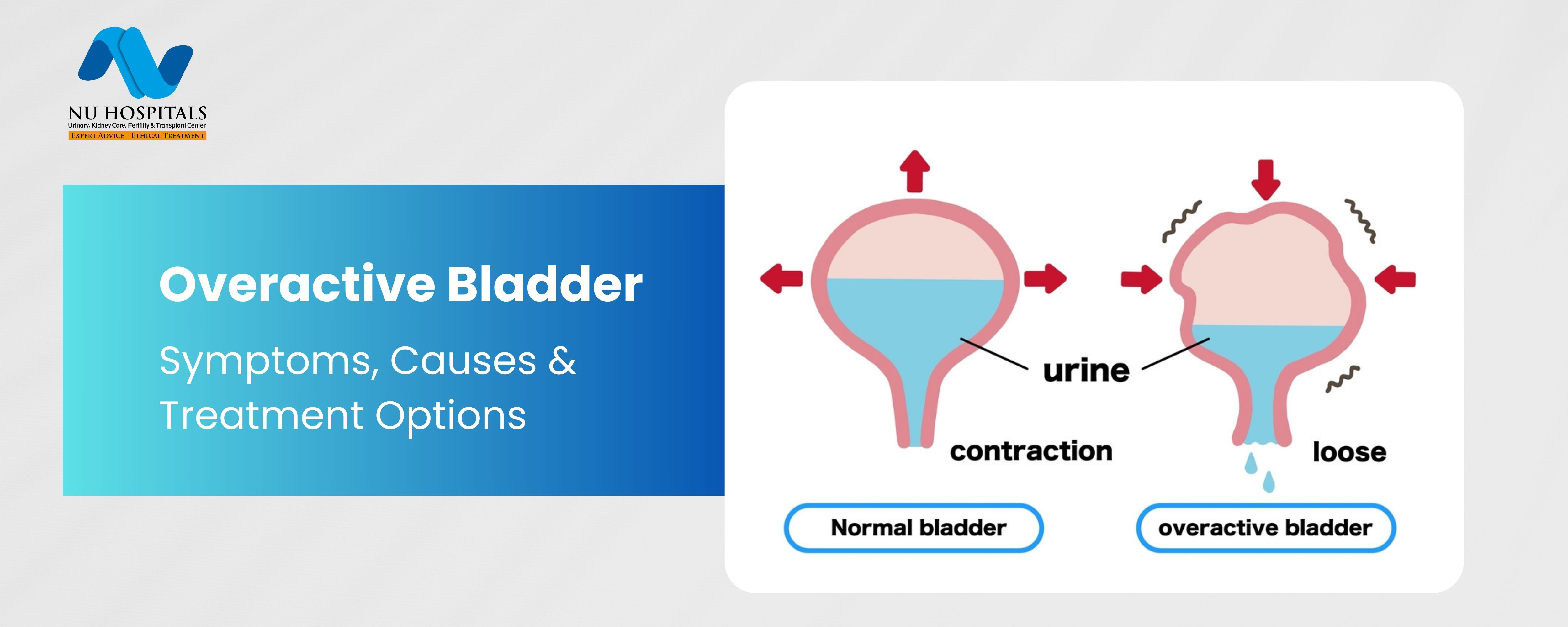
Overactive Bladder (OAB) Symptoms, Causes & Treatment Options
If you feel like you're always searching for the nearest restroom or losing sleep because of constant bathroom trips, you are not alone.
Overactive Bladder (OAB) affects nearly 1 in 6 adults globally, especially women over 40. It’s not just a physical issue; it can affect your confidence, work life, and emotional well-being.
But here’s the reassuring part: OAB is manageable with the right care and treatment.
This guide will help you understand OAB’s symptoms, causes, and treatment options so you can regain control and live worry-free.
What is an Overactive Bladder (OAB)?
Overactive bladder is one of the most common urinary conditions affecting millions around the world, especially women aged 40 and above.
The sudden urge to urinate, which is difficult to control, is called an overactive bladder.
This may seem like a minor issue, but it affects the quality of life.
Here is the good news! OAB treatment options are personalised and effective.
Read on to understand the symptoms, causes, and treatment options that help regain bladder control.
What Are the Symptoms of an Overactive Bladder?
Most Overactive bladder symptoms vary but usually include:
-
Urgency to urinate
-
Frequent urination
-
Urge incontinence
-
Nocturia
Common symptoms of OAB are:
Sudden, strong urge to urinate immediately more than 8 times a day. Leakage of urine when you are unable to reach the toilet in time. Waking up more than twice at night to urinate.
OAB symptoms are similar to bladder control issues, but the combination of urgency and frequency is key to diagnosis
What Causes an Overactive Bladder?
When the bladder muscles contract involuntarily, even when it is not full leads to an overactive bladder.
A few common triggers include:
-
Bladder muscle spasm - This is the Primary reason behind OAB symptoms
-
Conditions like stroke, parkinson’s disease, and diabetes can cause nerve problems leading to OAB
-
Hormonal Changes in women during or after menopause can also lead to OAB
-
Obesity can increase pressure on the bladder, causing OAB
-
At times, the bladder functions are affected by age-related weakening
-
Consumption of caffeine, alcohol and smoking can worsen OAB
Symptoms vs Causes vs Treatments
Symptoms |
Causes |
Treatments |
Urinary urgency |
Bladder muscle spasm |
Urotherapy & medications |
Frequent urination |
Ageing, Menopause |
Urotherapy |
Urge incontinence |
Nerve signal malfunction |
Medications |
Nocturia |
Obesity, Diabetes |
Treat the cause |
How Is Overactive Bladder Diagnosed?
A urology specialist may suggest the following to understand and diagnose OAB:
-
A detailed medical history and review of the symptoms
-
Tracking urination frequency, volume and urgency
-
Urodynamic tests to check bladder function
Overactive Bladder Treatment Options
OAB treatment is multi-faceted. Based on the severity of your symptoms, doctors may recommend:
-
Lifestyle Changes and Behavioural Therapies (urotherapy)
-
Bladder Training to gradually increase the time gap between bathroom trips
-
Pelvic floor exercises like Kegels can strengthen the bladder-supporting muscles.
-
Timed voiding: Setting bathroom schedules even without the urge helps to train your bladder
-
Limiting triggers like cutting down on liquid intake, like coffee, tea, alcohol, and spicy food.
-
Medications
-
Anticholinergics (e.g., Solifenacin, Tolterodine), to relax bladder muscles.
-
Beta-3 adrenergic agonists (e.g., Mirabegron), to increase bladder capacity.
-
Advanced OAB treatments
-
Botox bladder injections: FDA-approved, effective for resistant cases.
-
PTNS (Percutaneous Tibial Nerve Stimulation): A simple outpatient nerve stimulation therapy.
-
Sacral Neuromodulation: A small implant stimulates the nerves that control the bladder.
-
Surgery
Surgery is considered only when all other treatments fail. Surgeries might include bladder augmentation or urinary diversion surgeries.
Medication vs Exercise for OAB Management
Treatment Type |
Example |
Purpose |
Medication |
Solifenacin, Mirabegron |
Reduce bladder spasms |
Exercise |
Kegel exercises |
Strengthen pelvic muscles |
Nerve Stimulation |
PTNS, Sacral Neuromodulation |
Control bladder signals |
Lifestyle & Self-Care Tips for Managing OAB
Simple changes in daily habits can support treatment:
-
Maintain a healthy weight to reduce bladder pressure.
-
Hydrate adequately (Avoid large amounts of fluid intake before bed)
-
Limit diuretics (Cut back on coffee, tea, soda, carbonated drinks)
-
Do pelvic floor exercises regularly








