 Nephrology
 Urology
 Andrology
 Fertility (IVF)
 General Nephrology
 Paediatric Nephrology
 Dialysis
 Renal (Kidney) Biopsy
 CRRT
 Peritonial Dialysis
 Robotic Surgery
 Urinary Incontinence
 Uro-Oncology
 Laparoscopic Urology
 Reconstructive Urology
 Anaesthesiology
 Radiodiagnosis
 Nutrition and Dietetics
 Pediatric and Immunization
 Cardiology
 Intensive Care Unit





Your kidneys are silent superheroes of your body. They filter over 50 gallons of blood every single day. This helps to keep your body in balance.
However, most of us don’t care about them until it's too late.
Did you know that over 400,000 to 435,000 new cases of kidney cancer are diagnosed each year globally?
Have you been diagnosed with a kidney tumor? Are you wondering what it means and how serious it is?
Don't worry! A kidney tumor is not always bad news. Several kidney tumors are benign and may never be cancerous at all.
However, kidney cancer is among the top 10 most common cancers worldwide. Therefore, being aware and taking early action is very important.
Most kidney tumors are highly treatable when diagnosed early, especially with advanced medical care. At NU Hospitals, Bengaluru, kidney care is our top focus.
Go through this blog to learn more about kidney tumors and what your next steps must be.
What is a Kidney Tumor?
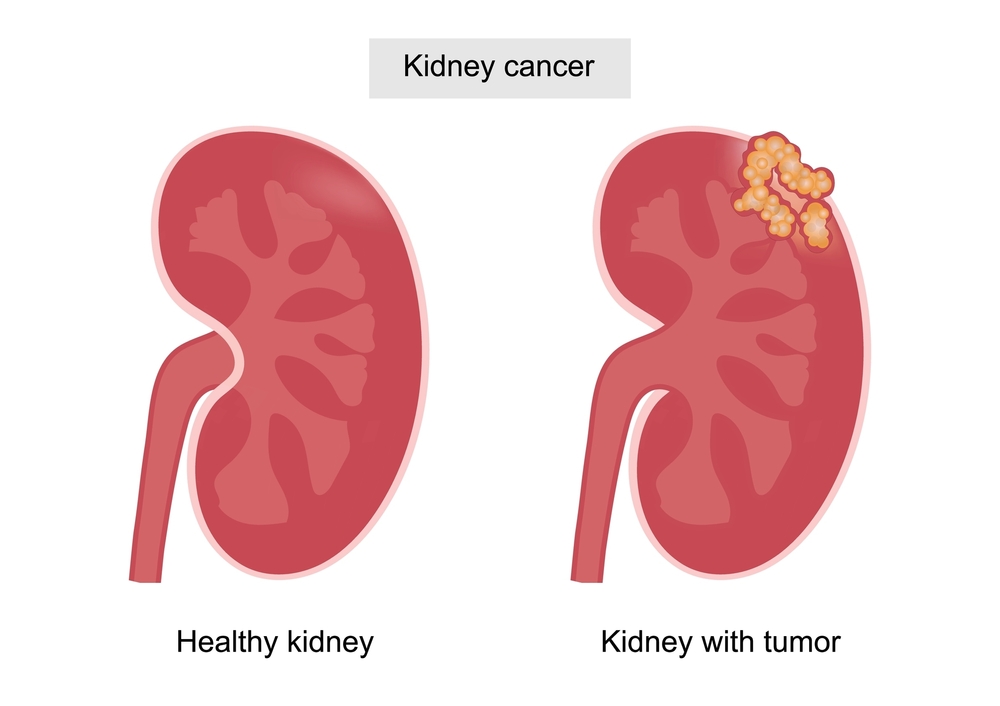
A kidney tumour is an abnormal growth of cells within your kidney tissue. It happens when your cells start to multiply where they should not.
-
It can start in the tubules of your kidney (the area where urine is initially filtered and passes through).
-
It is usually known as a renal tumour until diagnosed correctly.
-
These growths are quite common and often found during routine scans.
Is a kidney tumor serious?
Whether the tumor is serious depends on the tumor characteristics.
-
Benign growths
Benign growths are not life-threatening but some of them may need follow-up.
-
Malignant growths
Malignant growths are kidney cancer. They require immediate action to stop them from spreading.
Regardless of the type of kidney tumor, any growth in your size of the tumors must be checked by a specialist.
How Kidney Tumors Form
-
Cellular Overgrowth: Cells divide too quickly.
-
Genetic Mutations: Changes in certain genes can trigger abnormal clusters.
-
Environmental Triggers: Long-term exposure to certain toxins can sometimes cause these growths.
Benign Kidney Tumors
A benign kidney tumor is non-cancerous.
It does not spread to other parts of your body. However, it can still grow to compress nearby vessels or any part of the urinary passage.
-
Angiomyolipoma
This is the most common type. It is made of fat, blood vessels, and muscle.
-
Oncocytoma
These can look like cancer on scans. Therefore, they are tricky to diagnose.
-
Renal Adenoma
These are small, slow-growing tumors that need follow-up.
Malignant Kidney Tumors
A malignant kidney tumor is cancerous. They are quite aggressive and may spread locally as well as to distant sites.
-
Renal Cell Carcinoma (RCC)
This is the most common form of kidney cancer in adults. Almost 90% of the cases are RCC.
-
Clear Cell RCC
Of the 5 classical microscopic types, the most frequent subtype is clear cell renal cell carcinoma.
-
Urothelial Cell Carcinoma
While RCC usually starts in the peripheral areas of the kidney, urothelial cancers start in the central area of your kidney in relation to the pelvicalyceal system (urinary passage).
Symptoms and Causes
What are the symptoms of a kidney tumor?
In the early stages, kidney tumours are usually "silent." However, as they grow, you might notice:
-
Blood in the urine: It might look pink or red.
-
Back pain: Specifically, a dull ache in your side that doesn't go away.
-
A lump: Feeling a mass in your abdomen or side.
-
Unexplained weight loss: 10% loss of weight in 6 months.
-
Fatigue: Feeling exhausted, no matter how much you sleep.
-
Persistent fever: A fever that is not caused by a cold or flu.
What causes a kidney tumor?
Several factors increase your risk of kidney cancer:
-
Smoking: Smoking doubles your risk.
-
Obesity: Extra weight can change your hormones that affect your kidney cells.
-
High Blood Pressure: Chronic hypertension is linked to increased risk.
-
Family History: If you have a family history of a kidney tumor, you may be at risk.
Diagnosis and Tests
How is a kidney tumor diagnosed?
If your doctor suspects a renal mass, they may suggest.
-
Physical Exam
This can help check for lumps or high blood pressure.
-
Urinalysis
This test looks for traces of blood or abnormal cells in your urine.
-
Blood Tests
Blood tests help to check for your kidney function and blood cell counts
Test Type |
What It Shows |
Use |
Ultrasound |
Uses sound waves to find the difference between fluid-filled and solid masses |
The first step in the screening process. |
Contrast CT Scan |
Detailed image of the kidney and tumor |
Gives details of tumor size, shape, location and vascular and urinary tract relationship |
Contrast MRI |
Detailed image of the kidney and tumor |
Useful especially if CT contrast cannot be used for any reason |
Biopsy |
Tissue sample taken using a small needle, usually under Ultrasound or CT guidance |
Rarely used in general. Only used in specific indications like suspected secondary in kidney or abscess or if planning a certain specific type of treatment |
Management and Treatment
Understanding the difference between benign and malignant kidney tumours will help you choose the best treatment for you.
Difference Between Benign and Malignant Kidney Tumours
Feature |
Benign Kidney Tumor |
Malignant Kidney Tumor (Kidney Cancer) |
Growth Speed |
Very slow |
Can be fast |
Spreading |
Does not spread |
Can spread to your liver, lungs or bones |
Border |
Smooth, well-defined edges |
Irregular, ill-defined margins |
Risk Level |
Low, unless too large |
High, needs active treatment |
How is a kidney tumor treated?
1. Benign Tumors:
Observation
Either followed up with regular scans at intervals or may not need any follow up based on the imaging details.
Minimally Invasive Surgery
- If the kidney tumor is causing pain or bleeding, the tumor can be removed with the help of minimally invasive techniques like angioembolisation or surgical excision.
Symptom Management
- Treating any discomfort caused by the kidney tumor.
2. Malignant Tumors:
Surgery
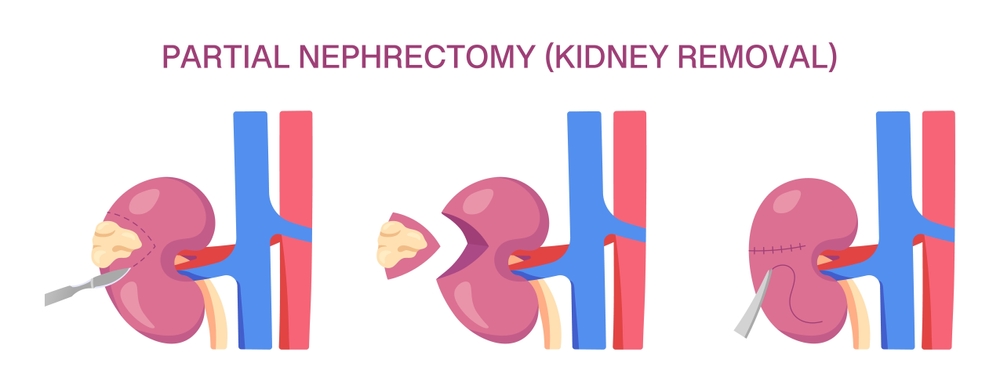
- Partial Nephrectomy removes only your tumor with a margin of surrounding healthy kidney tissue.
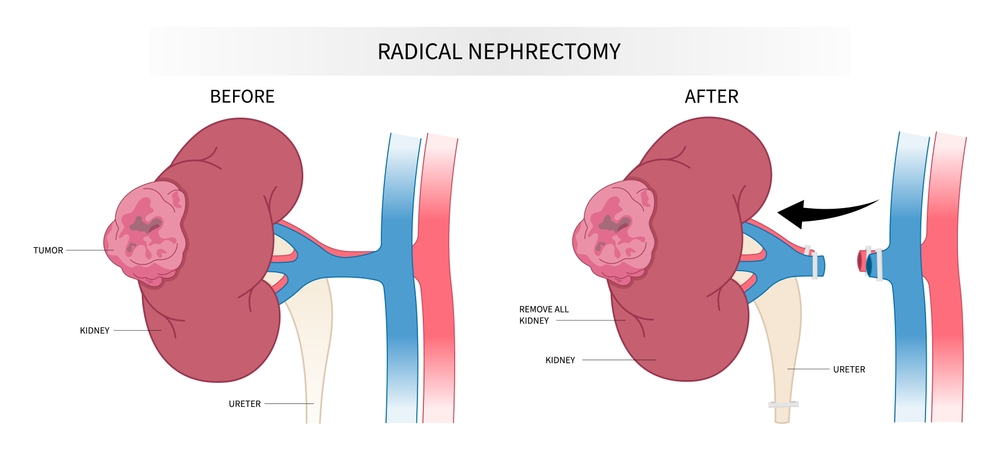
- Radical Nephrectomy removes the entire kidney.
Targeted Therapies
- It is a medicine that attacks the weaknesses of your cancer cells.
Immunotherapy
- It boosts your immune system to fight renal cell carcinoma.
Follow-up Care
- Regular check-ups will help to make sure your cancer does not come back.
Tumor type and treatment
Tumor Type |
Primary Treatment |
Aim |
Small Benign |
Observation |
No intervention |
Large Benign |
Angio-embolisation or Robotic / Laparoscopic Surgery |
Prevent organ compression or treat symptoms |
Early Malignant |
Partial or radical Nephrectomy |
Remove cancer (cure) |
Advanced Malignant |
Personalised Treatment |
Palliative |
Prevention
How can I prevent a kidney tumor?
You can reduce your chances of getting a kidney tumor with these steps:
-
Quit Smoking
It is the best thing you can do for your kidneys.
-
Manage Weight
Eat a balanced diet to stay in a healthy shape.
-
Control Blood Pressure
Keep your blood pressure in check with exercise and medicines.
-
Hydrate Properly
Drink an adequate amount of water to help your kidneys flush toxins.
-
Limit Chemical Exposure
Be careful with toxins and certain over-the-counter painkillers.
Being diagnosed with a kidney tumor can feel quite scary. It can feel like your world has turned upside down.
NU Hospitals is a leading nephrology and urology hospital in Bangalore. We specialise in diagnosing and treating complicated cases of kidney tumors.
Don't wait for your symptoms to get serious; book an appointment at NU Hospitals.








