 Nephrology
 Urology
 Andrology
 Fertility (IVF)
 General Nephrology
 Paediatric Nephrology
 Dialysis
 Renal (Kidney) Biopsy
 CRRT
 Peritonial Dialysis
 Robotic Surgery
 Urinary Incontinence
 Uro-Oncology
 Laparoscopic Urology
 Reconstructive Urology
 Anaesthesiology
 Radiodiagnosis
 Nutrition and Dietetics
 Pediatric and Immunization
 Cardiology
 Intensive Care Unit




Did you know that prostate cancer is the most common cancer in the world, affecting men?
According to PMC (PubMed Central) research, 1 in 57 men in Bangalore are at risk of prostate cancer.
Though there are no certain causes of the cancer, studies have shown that changing lifestyle, habits, diet and getting checked regularly can help in reducing the risk of prostate cancer.
This blog delves into the 10 proven ways you can prevent prostate cancer naturally.
Dear men, this read is for you, if you are looking for methods to safeguard yourself from prostate cancer.
What Is Prostate Cancer? Understanding the Basics
The prostate gland is a part of the male reproductive system. It is responsible for nourishment and transportation of the sperm. When there is rapid abnormal growth of cells inside the prostate gland, it is known as prostate cancer.
The cancer can spread to adjacent organs and later to distant organs. This develops slowly, but in a few cases, aggressive growth is possible.
Men over the age of 50 are more likely to develop prostate cancer.
Detecting prostate cancer in the early stages can help reduce the spread and treat the tumour.
Early stages may not show any symptoms of cancer, which is why long-term prostate health management is essential.
Lifestyle factors have a major impact on your prostate health:
-
Diet
-
Exercise
-
Smoking habits
How to Prevent Prostate Cancer Naturally: Science-Backed Methods
Prevention includes changes in diet, lifestyle modification and medical management.
Here are 10 science-backed methods to prevent prostate cancer naturally.
1. Eat a Prostate-Friendly Diet Rich in Vegetables and Fruits
Your diet should focus on leafy vegetables and plant-based foods. This supports prostate and overall health.
-
Include broccoli, cauliflower, and kale in your diet (cruciferous vegetables).
-
Eat antioxidant-rich food. Include berries, tomatoes, and leafy greens.
-
Avoid processed foods
-
Avoid refined sugars
-
Avoid canned drinks
Because of the anti-inflammatory and antioxidant properties, men who consume more fruits and vegetables have a lower risk of developing prostate cancer.
2. Maintain a Healthy Weight and Body Mass Index (BMI)
Obesity and high BMI raise the risk of aggressive prostate cancer.
- Maintain a healthy weight.
-
BMI within 18.5 and 22.9 is ideal in Asian population
-
Have lean proteins, whole grains, and vegetables
-
Avoid fried food and overeating
Maintaining a healthy weight can help regulate hormonal balance.
3. Stay Physically Active with Regular Exercise
Regular exercise and physical activities help you improve immunity and hormone balance.
-
Do brisk walking or moderate exercises like swimming, or any sports for about 150-180 minutes per week.
-
You can also try strength training twice or three times a week. This helps in maintaining muscle mass.
Did you know that men who exercise regularly have a lower incidence of prostate cancer?
4. Reduce Intake of Red Meat and High-Fat Dairy Products
High-fat dairy, red and processed meats are linked with increased prostate cancer risk.
-
Limit meat eating to 1-2 times a week
-
You can choose plant-based alternatives to dairy
-
Include omega-3 fatty acids. They are a healthy protein alternative.
Saturated fat and animal protein aid in the growth of IGF-1, which promotes tumour growth
5. Include Foods Rich in Lycopene and Omega-3s
-
Lycopene has a protective effect on prostate health.
-
Lycopene helps in reducing oxidative stress in prostate cells.
-
Lycopene is found in tomatoes, watermelon, and pink grapefruit. Include them in your diet.
-
Omega-3 fatty acids help in lowering inflammation and cancer risk.
-
Consume Omega-3 present in salmon, mackerel, flaxseeds and walnuts.
Quick tip: Cooked tomatoes help with increased lycopene absorption.
6. Quit Smoking and Limit Alcohol Consumption
Smoking and alcohol consumption cause serious damage to your health
-
Smoking increases oxidative stress. It can cause DNA damage, which leads to cancer development.
-
Consuming alcohol in regular intervals can cause hormonal imbalance and disrupt your immune response.
It is recommended to quit smoking and excessive consumption of alcohol. It is proven that men who quit smoking have a lower risk of prostate cancer and also have better overall health outcomes.
7. Get Regular Prostate Health Screenings After Age 50
Early diagnosis and detection help in timely intervention. Regular screenings help you catch prostate cancer even before symptoms appear.
-
PSA tests
Tests for Prostate-specific antigen help in understanding prostate infections, inflammation, BPH or cancer.
-
Digital rectal exam (DRE) done by your Doctor preferably a urologist, to check for abnormalities in the prostate.
Men with a family history and over the age of 50 should get regular screenings.
8. Manage Stress and Sleep to Support Hormonal Health
Chronic stress and poor sleep habits can affect your hormone regulation, which may lead to prostate cancer.
-
Have a sound sleep for 7-8 hours at night
-
Practice meditation, yoga and breathing techniques to handle stress
-
Do not disrupt your sleep cycle
A healthy mind and proper sleep cycle can help you balance testosterone and cortisol levels.
9. Consider Natural Supplements With Medical Guidance
Before taking any supplement, consult with an expert and take their suggestion. Natural supplements can support prostate health.
-
Saw palmetto may help with urinary symptoms and prostate health.
-
Green tea contains antioxidants that help in prostate health
-
Vitamin D is linked with a lower risk of prostate cancer
Caution: Always consult with your urologist before starting any supplements; not everything you find on the packaging is true.
10. Talk to Your Doctor About Your Personal Risk Factors
Risk factors of prostate cancer include:
-
Age
-
Family history
-
Ethnicity
-
Other medical conditions
Discuss your family history of prostate or breast cancer with your urologist.
-
Ask for genetic counselling if your family members have had cancer.
-
Follow a personalised prevention plan as suggested by your expert.
Our experts are here to help you towards a cancer-free life.
Early Warning Signs and Risk Factors for Prostate Cancer
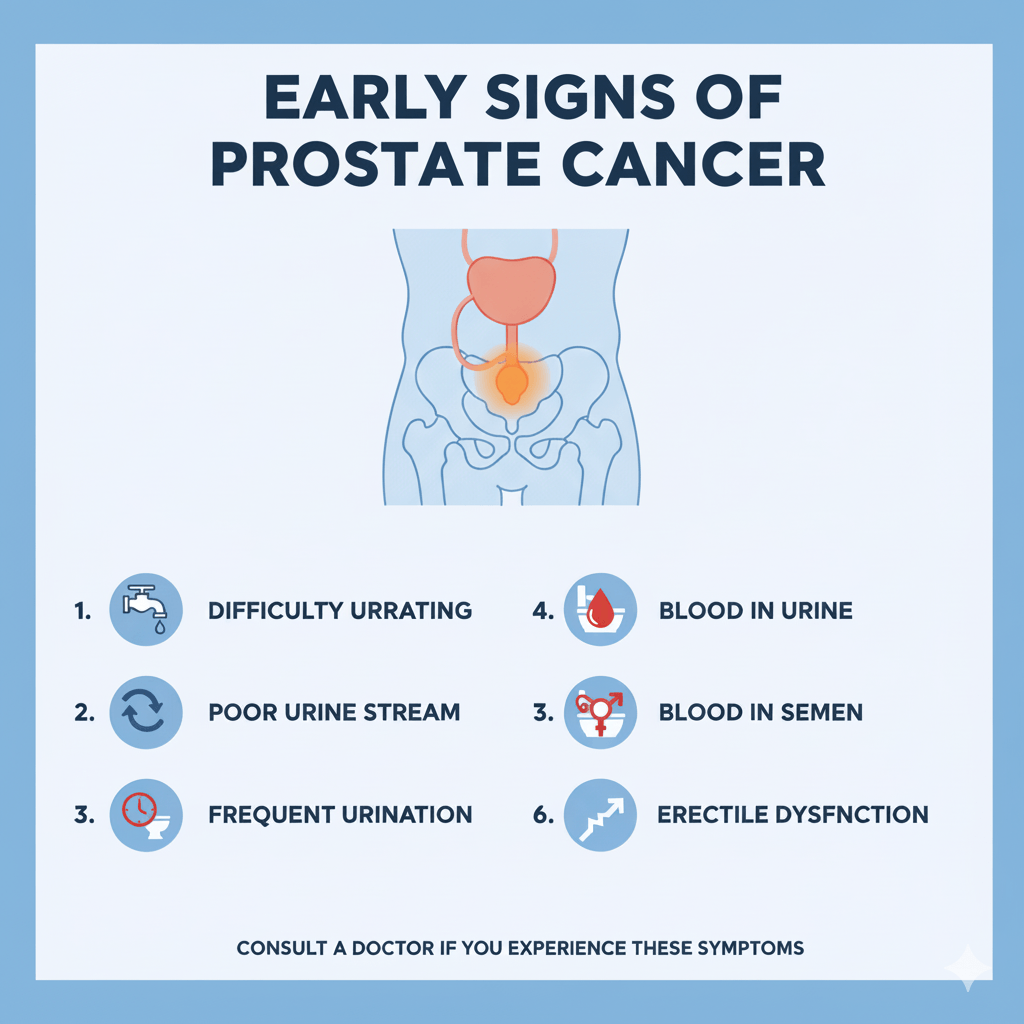
Early symptoms of prostate cancer are:
-
Difficulty while urinating
-
Poor urine stream
-
Frequent urination (especially at night)
-
Blood in urine
-
Blood in semen
Risk factors of prostate cancer include:
-
Over the age of 50
-
Family history
-
African ancestry
-
Obesity
-
Sedentary lifestyle
-
High-fat diet
Why Consult a Doctor for Prostate Health?
Even though you follow a healthy lifestyle, you should have a regular consultation with a urologist, as only lifestyle changes aren’t enough to keep you away from prostate cancer.
Experts help you with:
-
Personalised assessment of risk factors
-
Customised screening schedule based on your family history and health conditions
-
Diet plans, supplement usage, lifestyle modifications and preventive strategies
-
Early detection of the symptoms and silent conditions
Our expert urologists at NU Hospitals are here to help you with comprehensive care for prevention, management and treatment of prostate cancer.
Take Action Today: Steps Towards Prostate Cancer Prevention
Step 1: Schedule a Prostate Health Checkup
Book your consultation with our experts at NU Hospitals. We will help you with all the necessary screening and examinations to assess your personal risk of developing prostate cancer.
Step 2: Diet Changes
Follow a diet that will support prostate health.
Include
-
Vegetables
-
Fruits
-
Lean protein
-
Omega-3 fatty acids
-
Berries
-
Tomatoes
Avoid
-
Sugary drinks
-
Canned food
-
Processed food
-
Red meat
-
High-fat dairy products.
Step 3: Physical Activity
Practice 30-45 minutes of moderate exercise and walking every day. Also, include strength training at least 2-3 times a week. Be physically active despite a desk job, because a sedentary lifestyle increases your risk.
Step 4: Monitor Your Lifestyle Habits
Quit smoking and alcohol consumption. Meditate, practice yoga and breathing exercises to manage your stress levels.
Step 5: Follow Up with Regular Screenings
High-risk men should start their screening as early as 40-45 years. The risk starts at the age of 50. Schedule your annual checkups at your nearest NU Hospitals.
Step 6: Stay Informed and Empowered
Keep a track of your family history, discuss your overall health condition, what natural supplements to take, and what lifestyle changes are to be made to protect your prostate health.
If you or your loved one is worried about prostate health and wants to protect themselves from prostate cancer, visit your nearest NU Hospitals, Bangalore and consult with our expert urologists.
Book an appointment and start a cancer-free life today!








