 Nephrology
 Urology
 Andrology
 Fertility (IVF)
 General Nephrology
 Paediatric Nephrology
 Dialysis
 Renal (Kidney) Biopsy
 CRRT
 Peritonial Dialysis
 Robotic Surgery
 Urinary Incontinence
 Uro-Oncology
 Laparoscopic Urology
 Reconstructive Urology
 Anaesthesiology
 Radiodiagnosis
 Nutrition and Dietetics
 Pediatric and Immunization
 Cardiology
 Intensive Care Unit




Types, Causes, and Symptoms of Kidney Stones: Everything You Need to Know
Life changes in a moment. One minute you are just going about your day, the next moment you experience sharp pain on one side of your abdomen.
That is how your kidney stones strike, suddenly and intensely!
At NU Hospitals, we know this pain is more than physical. It can disrupt your entire life. Seek medical assistance and take charge of your life again.
How Common Are Kidney Stones?
Kidney stones are not rare. In a room of 10 people, at least 1 person will be affected by kidney stones once in their lifetime. But the numbers are constantly rising.
It is typically noticed that men are more likely to get kidney stones due to factors such as genetics, lifestyle, and diet. However, due to diet and lifestyle, women are also catching up to the numbers.
Age-Wise Division Of Men And Women Getting Kidney Stones
Age Group |
Men |
Women |
10-20 |
Low, less than 10% |
Low, less than 10% |
21-30 |
10-20% |
5-10% |
31-40 |
25-35% |
15-20% |
41-50 |
30-40% |
20-25% |
51-60 |
25-35% |
15-25% |
>60 |
10-20% |
10-15% |
What Are Kidney Stones?
Kidney stones are also known as renal calculi. They are hard, crystal-like deposits that form inside your kidneys.
Kidney stones develop when substances such as calcium, phosphorus, oxalate, and uric acid found in your urine get highly concentrated and crystallize.
These stones can vary in size, from as small as a grain of sand to as big as a golf ball.
The small kidney stones usually go unnoticed; however, the large ones can cause you severe pain and complications.
Symptoms Of Kidney Stones
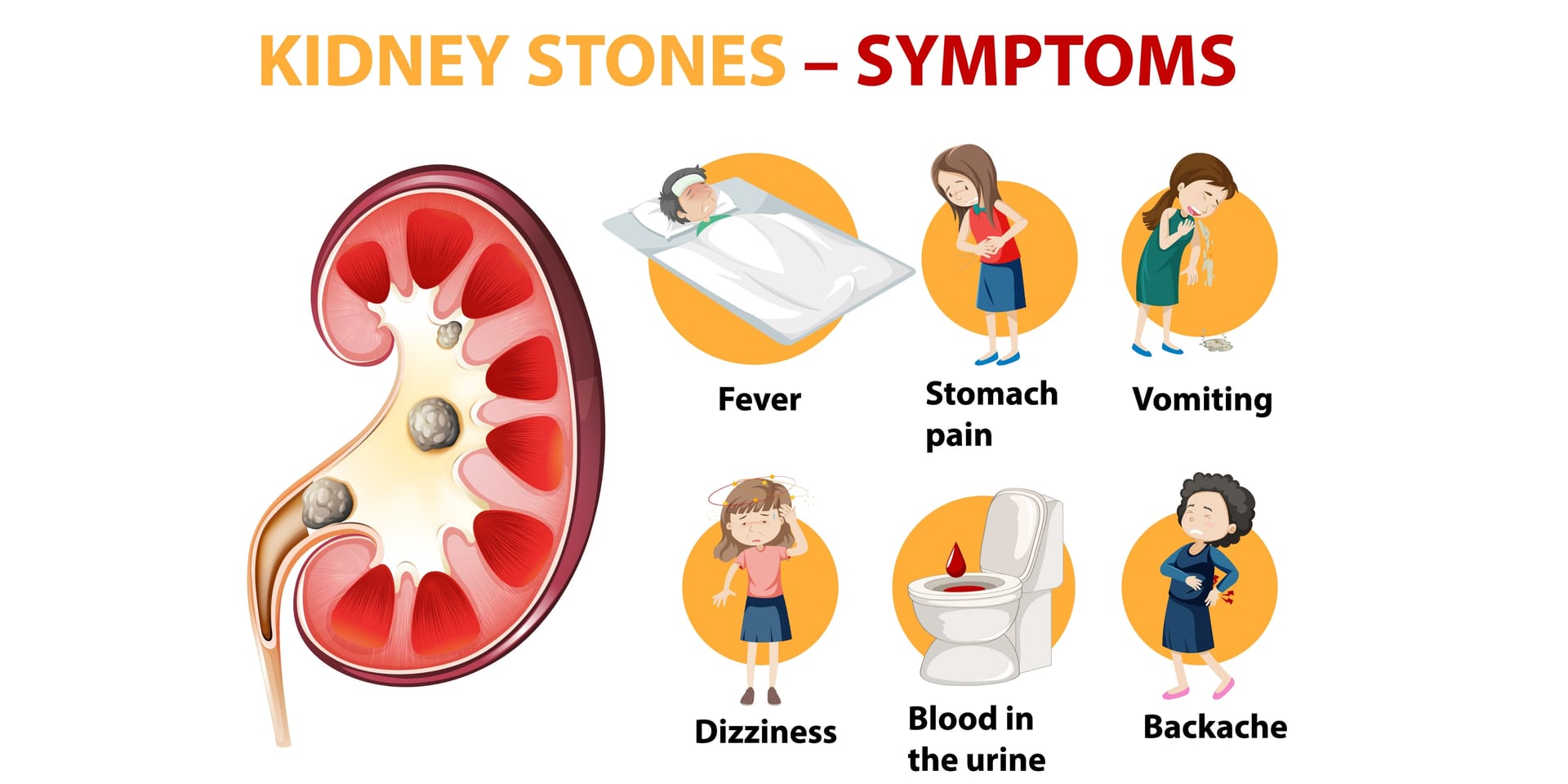
Recognising the signs of your kidney stones can make all the difference.
The most common symptom that people experience is intense pain. They describe it as the worst pain they have experienced.
Here are a few of the common symptoms of kidney stones:
-
Sudden intense pain in your back, or side
-
Sharp pain that travels from back to your lower abdomen and groin
-
Blood in urine
-
Cloudy urine
-
Constant urge to urinate
-
Pain or burning sensation during urination
-
Nausea or vomiting
-
Fever and chills
For certain people, they don't experience any symptoms of kidney stones especially if it is large stone. If you are experiencing any of the above-mentioned symptoms, seek medical assistance immediately.
Causes Of Renal Calculi (Kidney Stones)
Now, let's break down the causes of kidney stone for you:
Cause |
Reason |
Dehydration |
Not drinking enough water concentrates your urine, increasing your risk of kidney stones. |
Dietary Factors |
High sodium, high protein (especially animal protein), and a high calcium diet contribute to kidney stone formation. |
Obesity |
Excess weight alters your urine composition, increasing your risk of kidney stones. |
Medical Conditions |
Diabetes, metabolic syndrome, hyperparathyroidism, gout, renal tubular acidosis, and others affect your urine chemistry, promoting kidney stone formation. |
Family History / Genetics |
Your genetics are a strong risk factor, especially for calcium stones. |
Certain Medications |
Certain drugs and supplements increase the likelihood of your kidney stone formation. |
The causes of renal calculi are not always in your control. However, understanding these causes can help you prevent kidney stones in the future.
Types Of Kidney Stones
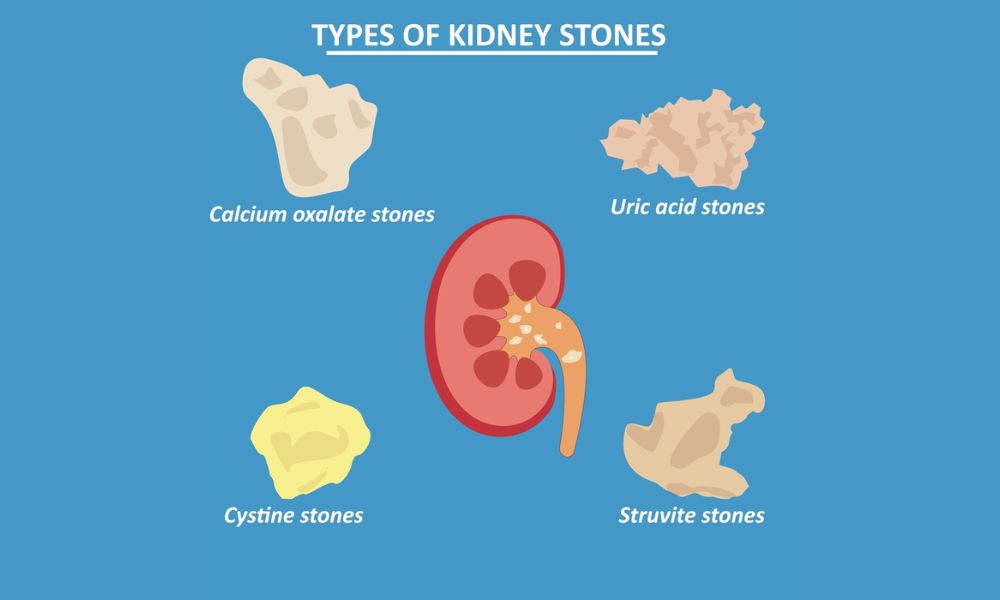
There are several different types of kidney stones, each with unique characteristics and causes of formation. However, no matter what type of kidney stones you are having, understanding the root cause can help you fight back smarter.
Type of Kidney Stones |
Causes |
Key Features |
Calcium Oxalate Stones |
|
|
Uric Acid Stones |
|
|
Struvite Stones |
|
|
Cystine Stones |
|
|
What are the Diagnosis for Kidney Stones
These tests will help your doctor in diagnosis of kidney stones: presence, size, and location of your kidney stones.
Diagnostic Test |
Purpose |
Urinalysis |
Helps to detect infection, blood, or crystals in the urine. |
Blood Test |
Helps to detect kidney function and calcium-uric acid levels |
Ultrasound |
It helps to visualize kidney stones and blockages. No radiation exposure. |
X-Ray (KUB) |
It helps to detect certain types of stones. Minimal radiation. |
CT Scan |
Most accurate. Helps to see the size, location, and number of stones. Involves radiation exposure. |
Best Kidney Stone Treatment in Bangalore
Kidney stones can be quite a painful experience for some, be it a small kidney stone or a large kidney stone. However, your treatment for a kidney stone will depend on the size and the location of your kidney stone.
-
Small stone treatment options
Most small kidney stones can be managed by diet and fluid changes. Small ureter stones can pass out of the ureter on their own with medications. Your doctor will suggest: But the time for stone to pass out of the ureter is 1 month. If it does not pass out beyond 1 month and plan endoscopic surgery to remove the stone
-
Drinking water
Staying hydrated will help to flush out your urinary system, encouraging your kidney stones to pass naturally. Do not drink excess water when experiencing acute pain.
-
Pain relievers
Your doctor may prescribe you over-the-counter medications to help manage any pain or discomfort you might feel.
-
Large stone treatment options
If you are having large kidney stones, then more than fluids are required.
Depending on the shape, location, and size, your doctor may recommend:
It is a non-invasive procedure. It uses sound waves to break your kidney stones into smaller pieces, making it easier to pass in urine. It is usually used for single renal stones less than 15 mm size and if the stone characteristics (Hounsfield unit) is less than 1000.
-
Ureteroscopy
A thin scope is passed through your urinary tract to find and remove or laser your kidney stones.
-
Precutaneous nephrolithotomy (PCNL)
It is a minimally invasive surgical procedure that removes large or complex stones through a small incision in your back.
This is rarely needed. It is only chosen when other methods are no longer effective. A small incision is made to remove your stones directly.
How to prevent kidney Stone or Reoccurance of Kidney Stone
Kidney stones are not just a medical problem, they affect every aspect of your life. So, folks learn how to prevent the risk of kidney stones to ensure that they don't take over your life.
Reach out to NU Hospitals and consult with our expert Urologist and take the first step towards a healthier tomorrow.








