 Nephrology
 Urology
 Andrology
 Fertility (IVF)
 General Nephrology
 Paediatric Nephrology
 Dialysis
 Renal (Kidney) Biopsy
 CRRT
 Peritonial Dialysis
 Robotic Surgery
 Urinary Incontinence
 Uro-Oncology
 Laparoscopic Urology
 Reconstructive Urology
 Anaesthesiology
 Radiodiagnosis
 Nutrition and Dietetics
 Pediatric and Immunization
 Cardiology
 Intensive Care Unit




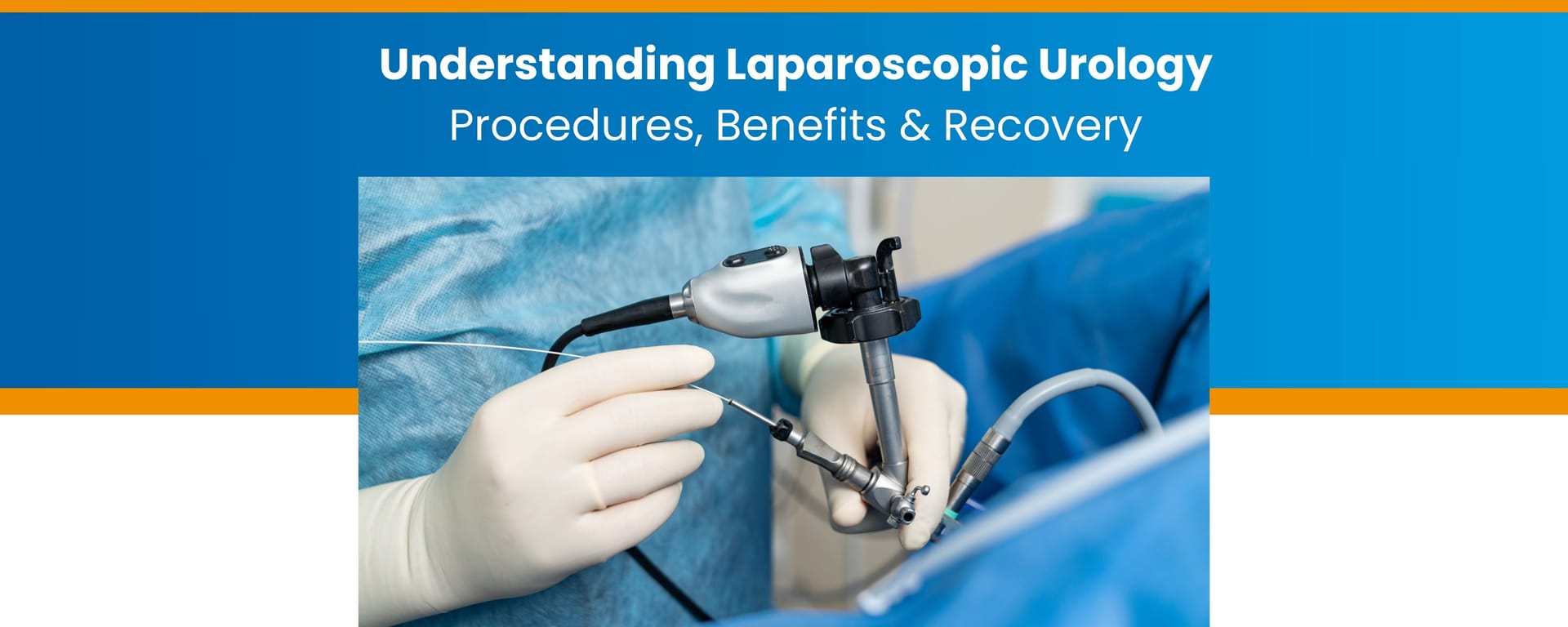
Laparoscopic urology is the method of carrying out urological surgeries with minimal incisions and special instruments using advanced technology. The approach is sometimes called “Keyhole Surgery” because it requires very small incisions. It is less painful, less risky, and speeds up patient recovery. Nowadays, people prefer laparoscopic treatment for kidney, prostate, and bladder disorders. Such surgery is highly specialized and experienced, yielding better results for most patients. Laparoscopic surgery tools are precise, and a camera skillfully controls the entire process. This minimizes errors and ensures that only the troubled spot is treated and healthy tissue is not.
In this blog, you’ll find out what laparoscopic urology is, how it compares to open surgery, what it’s used for, and what recovery is like.
What is Laparoscopic Urology?
Laparoscopic urology is a surgery performed through tiny cuts instead of one large opening. A small camera, called a laparoscope, is inserted through one of the incisions. Images of the inside of your body appear on the screen in the camera. The doctor looks at this view to direct surgical tools through other small incisions.
The size of each incision is generally 0.5 to 1 cm. Instruments are introduced through these tiny holes to operate with great accuracy. The abdomen is usually filled with carbon dioxide gas to make more space for the surgeon to see and operate, as it provides the surgeon with additional room to work.
This approach enables physicians to carry out complex operations with great accuracy. It is commonly used to treat:
-
Issues with your kidneys, such as tumors or stones
-
Prostate problems, such as an enlarged prostate or prostate cancer
-
Bladder conditions
-
Ureteric blockages
-
Adrenal gland issues
As the incisions are smaller, there is significantly less damage to muscles and tissues compared to traditional surgery.
Laparoscopic Urology vs Open Surgery
Let’s compare laparoscopic urology with open surgery to understand the differences:
Feature |
Laparoscopic Surgery |
Open Surgery |
Incision size |
Small (1-2 cm) |
Large (10-15 cm) |
Pain after surgery |
Less |
More |
Recovery time |
Faster (2–4 weeks) |
Slower (6–8 weeks) |
Hospital stay |
Short (1–2 days) |
Longer (4–5 days) |
Risk of infection |
Lower |
Higher |
Cosmetic result |
Small, almost invisible scars |
Larger visible scars |
The other significant issue is blood loss. Open surgeries are more likely to cause bleeding that could require a blood transfusion. In most cases, laparoscopy results in little blood loss. This also minimizes the need for further treatment and helps reduce overall costs in the long term.
What are the Common Conditions Treated with Laparoscopic Urology
Laparoscopy is a great tool used to help treat urological diseases. The following common conditions are treated with laparoscopic urology:
Kidney Tumors
When a tumour has been found in the kidney, laparoscopic surgery can be used to remove all or part of the kidney, depending on how big the tumour is and where it is. That’s either a partial or total nephrectomy. With laparoscopy, only the tumour can be removed, and the rest of the kidney can be saved, which is better for long-term health.
Ureteric Obstruction
Laparoscopic surgery is used to correct an obstruction in the tube that transports urine from the kidney to the bladder, which may be blocking normal urine flow. This can cause the kidney to swell (hydronephrosis), which requires immediate treatment to avoid long-lasting damage.
Prostate Enlargement
If enlarged prostate symptoms do improve with medication, it can be safely and effectively removed using laparoscopic surgery. This type of surgery uses small cuts and a camera to guide the procedure. It helps improve urine flow and reduces how often a person needs to go to the bathroom, especially at night.
Adrenal Masses
Tumors or masses in the adrenal glands may also be removed through laparoscopic surgery, which is safer and faster than open procedures. These glands are located on top of the kidneys and regulate important hormones, necessitating precise and careful surgery.
Reconstructive Urological Surgeries
Some patients require surgery to repair or reconstruct portions of the urinary system. These procedures are frequently laparoscopic, as they provide improved accuracy and healing. Procedures such as ureteric reimplantation and bladder reconstruction may be performed successfully using this technique.
What are the Benefits of Laparoscopic Urology
There are many reasons why laparoscopic urology is preferred over traditional surgery, and some of the benefits of laparoscopic urology are:
Smaller Incisions and Scars
Because the cuts are small, the resulting scars are also small and often hardly noticeable once healed. This is particularly useful for those who are conscious about looks. These scars eventually fade to the point where they are almost invisible.
Less Postoperative Pain
As muscles and tissues are not cut widely, less pain is felt after the operation. Simple painkillers can control pain for many patients. That means you can start walking, eating, and sitting up after the surgery.
Faster Recovery to Normal Daily Activities
Most people can return to normal life, including work and light exercise, within a few weeks. This is helpful because it enables you to return to your normal life sooner. You won’t have to take a long leave from work or personal responsibilities.
Shorter Hospital Stays
Laparoscopic surgery typically allows patients to go home in 1 or 2 days. It decreases the possibility of infections and also cuts down on hospital expenses. Most people also recover better, feel more relaxed, and are less homesick.
Lower Risk of Complications
Smaller incisions result in a reduced risk of bleeding and infection. Healing is smoother, and the results are superior. There is also a lower chance of scar tissue forming inside the body, as sometimes occurs after open surgery.
What are the Risks of Laparoscopic Urology
Despite its safety and effectiveness, laparoscopic urology is not without risk. There are some risks of laparoscopic urology. Here’s a look at what you should know about them if you’re considering surgery:
Bleeding
Bleeding during or after the procedure is very rare. Doctors are equipped to treat this if it does. Sometimes, you may need to stay under observation for a little longer.
Infection
Unlike any other major surgical process, there is a lower chance of infection. Your physician might prescribe antibiotics to prevent or treat this. Consult your healthcare provider if you notice any disease symptoms, such as fever, swelling, or discharge from the incision site.
Injury to Surrounding Structures
There is a small chance that your bladder, intestines, or other nearby organs could be damaged during your operation. That is rare, and this is often rectifiable right away. Surgeons try to take extra care to avoid such problems.
Risk from Anesthesia
Anesthesia is required for all surgeries, and it has its risks, especially among people with heart or lung problems. Your doctor will evaluate your health before your surgery to lower these risks. Be sure to provide a full medical history.
What is the Recovery Time for Laparoscopic Urology
For most, recovery is quicker after laparoscopic surgery than open surgery. Here’s a broad sense of what to expect:
Hospital Stay
After the operation, you have to spend 1 to 2 days in the hospital. Some people may be sent home the day after surgery if they feel well. Nurses will have you up and walking around soon after the procedure.
Return to Work
If you work in a job that doesn't exert too much, you can return to work within 1 to 2 weeks. If your job is heavy lifting or physical labour, it might take more time. You should also ask your doctor before you go back to normal, full activities.
Full Recovery
Most patients are well in 3 to 4 weeks. In the meantime, talk to your physician and care for your body. Some individuals may experience mild fatigue or weakness for a few days, but it clears up with rest and proper nutrition.
Tips for a Smooth Recovery
-
Don’t pick up heavy objects for at least 4 weeks
-
Drink adequate water
-
Eat well to heal faster
-
Go for short walks every day to help blood flow
-
Keep the operation area clean and dry
-
Keep in touch with your doctor
Laparoscopic urology is a modern and safe way of managing various urological conditions. It operates through small incisions with specialized instruments and a camera, resulting in more precise surgeries and fewer side effects. Among other advantages over traditional open surgery are less pain, faster recovery, and smaller scars.








